PastaBible Cooking guide
How to Match Pasta Shapes with Sauces
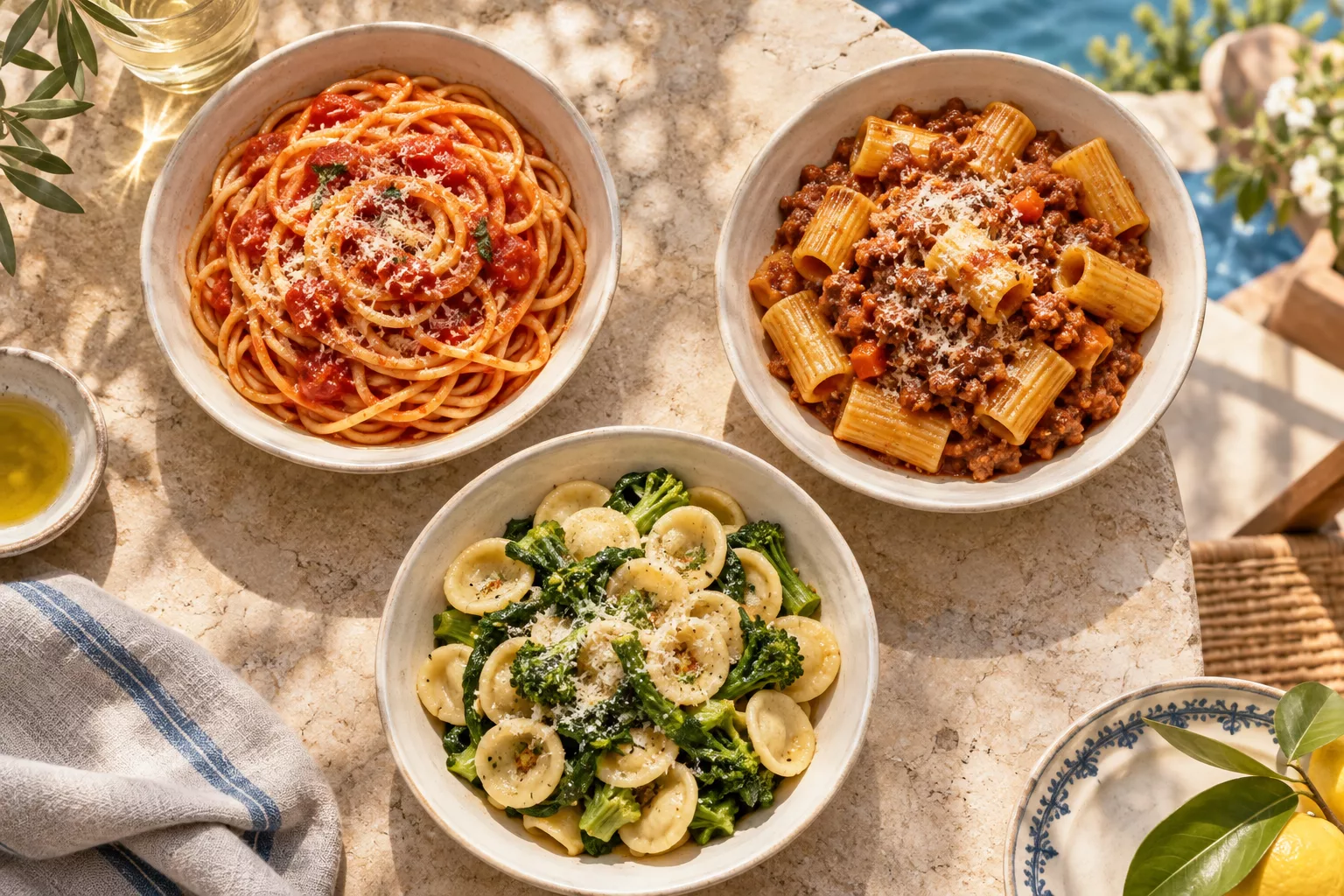
A useful pasta pairing brings noodle and sauce onto the fork together. Smooth coatings need contact; small pieces need places to gather; substantial sauces need pasta that remains noticeable alongside them. Shape matters because it changes how each bite is assembled.
There is no single pairing chart that can replace judgement. Tomato sauce can be smooth or chunky, pesto can be loose or thick, and a ragù can contain finely broken meat or larger pieces. Look at the sauce in front of you before deciding what the pasta should do.
Ask three questions about the sauce
First, consider its texture. Does it flow over a spoon, coat it thickly, or sit in distinct pieces? A fluid sauce can follow the length of a strand. A spoonful containing peas, diced vegetables, or crumbled meat needs a shape that helps collect those pieces.
Next, consider scale. Tiny tubes and very large chunks can end up as separate mouthfuls even if “tubes suit chunky sauce” sounds sensible. Chop the sauce ingredients to fit the pasta, or choose a shape that comfortably accompanies their size.
Finally, decide how prominent the noodle should feel. A thick strand or broad ribbon gives a different balance from fine spaghetti. Pairing is about the texture you want to eat, not simply finding the shape that can hold the greatest volume of sauce.
Long strands like continuous coatings
Spaghetti works well when a sauce can coat it along its length: a smooth tomato dressing, a garlic-and-oil preparation properly brought together with liquid, or a lightly textured sauce whose small pieces join the forkful.
Bucatini adds a thicker, hollow structure and a more substantial bite. Choose it when you want the pasta to have more presence. Its central hole is part of its character, but do not imagine it as a straw that must fill completely with sauce for the pairing to work.
Large vegetable cubes or loosely scattered meat can fall away from a bundle of strands. You do not have to abandon the pairing: cutting the pieces smaller, making the sauce more cohesive, or serving an intentionally rustic combination are all choices. Just recognise the eating experience each creates.
Tubes and cups gather pieces
Ridged rigatoni offers both an outer surface and an opening where small pieces of sauce can settle. A cohesive meat sauce or a chunky tomato-and-vegetable dressing suits that structure. The tube also gives a satisfying bite in a dish with a substantial sauce.
Orecchiette has a shallow cup rather than a tunnel. Small vegetables, broken florets, and crumbled ingredients can sit against that hollow. Pieces that are much larger than the cup will not suddenly fit because a pairing guide calls the shape a good collector.
Do not rely on geometry to compensate for a dry sauce. Ridges and hollows need a dressing that can move across them. Tossing the pasta with enough moisture distributes ingredients more effectively than spooning a thick mound on top at the table.
Ribbons and folds change the balance
Broad ribbons expose a generous surface while folding around the sauce. They can give finely textured ragù a satisfying partner, particularly when the sauce is cohesive enough to travel with the pasta. A delicate fresh egg ribbon also has its own flavour and tenderness, so avoid burying it under an unnecessarily heavy quantity.
Farfalle combines thin wings with a pinched middle. A light cream dressing, a loose herb sauce, or finely cut vegetables can sit among its folds. Pay attention to the thicker centre when cooking rather than judging only the soft outer edge.
The pasta’s ingredients matter alongside its silhouette. A fresh ribbon and a dried ribbon of similar width may feel different on the fork. Use the fresh-versus-dried guide when texture, rather than shape alone, is driving the choice.
Turn a familiar sauce into several pairings
With smooth tomato sauce, begin with spaghetti when you want a continuous, light coating. Keep the tomatoes in small pieces and try rigatoni for a more textured mouthful. Add finely cut vegetables and a cup-shaped pasta becomes another sensible option. The sauce family stays the same while the eating experience changes.
For pesto, loosen the dressing enough to coat the chosen pasta without forming dense green lumps. Twists, strands, and small shaped pasta can all work in appropriate preparations. The traditional relationship between Ligurian pesto and particular local shapes remains meaningful, but it does not make every home substitution a mistake.
With ragù, consider the meat’s size and the sauce’s consistency. Broad ribbons or sturdy tubes are useful directions, but the word ragù covers more than one preparation. A regional recipe can specify a pairing more precisely than a general shape rule.
Fix an awkward pairing before replacing it
If most of the sauce remains at the bottom of the bowl, first ask whether it was properly combined. A short finish with the pasta may help more than changing the shape. If the dressing is too thick to spread, add a little suitable liquid; if the pieces are too large, cut them smaller next time.
If every bite feels heavy, reduce the amount of sauce or choose a pasta with more distinct structure. If the pasta disappears beneath an intense dressing, use a less concentrated coating or a more substantial shape. These are practical adjustments, not tests of authenticity.
For a useful comparison, keep a favourite sauce similar across two meals and change only the shape. Notice what stays on the fork, what collects below it, and whether you enjoy the noodle itself. That observation is more useful than memorising a long list of supposedly forbidden combinations.
Pairing questions
Must every ridged pasta get a thick sauce?
No. Ridges offer surface detail, but they do not demand a heavy dressing. A lighter sauce can work if it coats the pasta and has enough flavour for the portion.
Can I substitute what is already in the cupboard?
Usually, yes. Choose the closest structure and adjust sauce texture or ingredient size where needed. Keep expectations realistic: a bowl made with tiny shells will not eat exactly like one made with broad ribbons.