Fresh tomatoes
Ripe, flavorful tomatoes can make a bright, lightly cooked sauce with a living texture. Watery or underripe fruit needs more reduction and still may lack depth. Peeling or passing is a texture choice, not a universal rule.
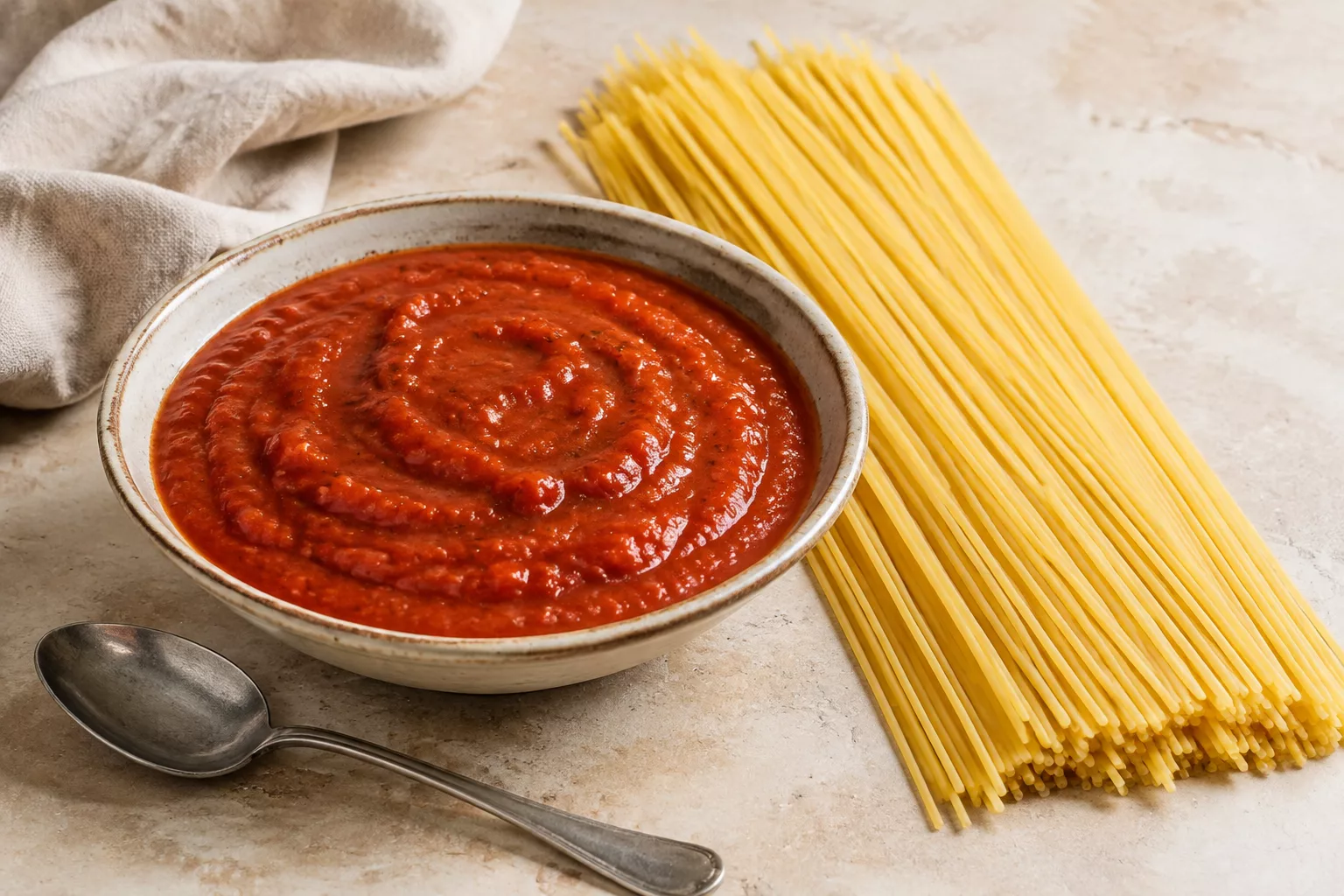
Italian sauce guide
Not one fixed recipe, but a flexible family shaped by the tomatoes, aromatics, cooking time, region, and pasta it is meant to dress.
Choose your tomatoes →The essential idea
In a pasta context, “tomato sauce” describes many preparations: fresh tomato warmed just long enough to collapse; a smooth sauce from passata; whole peeled tomatoes simmered and crushed; or tomato enriched with aromatics, chilli, seafood, cured pork, vegetables, or cheese. Italian regional cooking offers examples of all of these, so no single ingredient list defines the whole category.
Italian usage also shifts with context. Pomodoro simply means tomato and often names a straightforward tomato dressing. Salsa is a broad word for sauce; salsa di pomodoro can mean cooked, seasoned tomato sauce. Sugo often refers to the prepared condiment that dresses pasta and may contain much more than tomato. Everyday and regional speech overlaps, so these are useful distinctions rather than rigid legal categories.
Choose the base
The label tells you about texture and concentration, not whether the product is automatically better. Match the format to the sauce you intend to make.
Ripe, flavorful tomatoes can make a bright, lightly cooked sauce with a living texture. Watery or underripe fruit needs more reduction and still may lack depth. Peeling or passing is a texture choice, not a universal rule.
Whole peeled tomatoes give the cook control: crush them coarsely for a rustic sauce or pass them for a smoother one. Their packing juice becomes part of the sauce and should be reduced to the desired consistency.
Passata is sieved tomato, generally without skins and seeds. Its even, fluid body is useful for quick, smooth sauces, but it is a tomato ingredient—not necessarily a finished, seasoned sauce.
Concentrato or tomato paste supplies intensity and body in a small amount. Cook it briefly in fat to disperse it and soften its raw edge; use it to support tomatoes rather than assuming it must replace them.
Flavor direction
There is no universal requirement to begin every tomato sauce with both onion and garlic.
Gently softened onion builds sweetness and body. It suits many everyday sughi and longer-cooked sauces, but need not appear in a spare garlic-led preparation.
Briefly warming a clove in olive oil gives a cleaner, sharper perfume. Remove it or leave it in according to the dish; avoid taking it past golden into bitterness.
Olive oil carries aroma and helps the finished sauce coat pasta. Basil is especially effective added late, when its fragrance stays distinct rather than disappearing into a long cook.
Carrot, celery, chilli, parsley, oregano, or other herbs belong to particular preparations and regional habits. Their presence can be appropriate without becoming a universal rule.
Core technique
Tomato sauce can be quick or patient. Control comes from deciding on texture, then managing heat, water, and the final toss.
Select fresh or whole tomatoes for visible pieces, passata for a smooth base, or combine formats when you need both body and freshness.
Soften onion without darkening, or perfume olive oil briefly with garlic. Scorched garlic and browned tomato solids turn bitter and cannot be repaired with sugar.
A broad pan encourages reduction; moderate heat preserves control. Stop early for a bright sauce or continue gently for a thicker, rounder result.
Salt changes as water evaporates. Taste near the end before adding more; assess acidity only after the sauce has reduced to serving consistency.
Transfer pasta before it is fully done, loosen the sauce with cooking water as needed, and toss. Starch, tomato liquid, and olive oil should form a coating rather than separate on the plate.
Texture & balance
Reduction is not automatically improvement. Each endpoint serves a different kind of pasta dish.
Fresh tomato, visible juice, and a brief cook. Best when the fruit itself is ripe and aromatic.
Passed or blended tomato makes an even coating for strands and small shapes.
Crushed whole tomatoes retain irregular pieces that suit ridges, cups, and tubes.
Longer evaporation concentrates flavor and creates body for robust pasta; stop before it becomes pasty or scorched.
Tomato variety, ripeness, preservation, and reduction all affect perceived acidity. Salt can reveal sweetness; olive oil rounds the palate; gentle cooking integrates flavors. If a particular batch remains sharply acidic, a very small amount of sugar may balance it, but sweetness should not become the dominant taste. Concentrated products need dilution and cooking appropriate to the dish.
Shape pairing
A fluid, smooth sauce behaves differently from one filled with tomato pieces, vegetables, or cured pork.
A fine tomato sauce can coat the full length of each solid round strand without leaving large pieces behind.
→ RigatoniRustic & substantialRidges hold a reduced base while the wide tubes capture tomato pieces, vegetables, or additions such as guanciale.
→ OrecchietteChunky & vegetable-ledThe concave centers collect small pieces and thicker tomato condiments; a very thin sauce alone can feel less purposeful.
→ FarfalleLight & piece-basedA light tomato-and-vegetable sauce can settle around the folds; very heavy reduction may overwhelm the thin wings.
→Tradition in context
Spaghetti al pomodoro foregrounds tomato, olive oil, and often basil. Arrabbiata brings tomato together with garlic and chilli, commonly with penne. Amatriciana combines tomato with guanciale and Pecorino Romano, while puttanesca adds assertive preserved ingredients. These names describe distinct traditions, not interchangeable upgrades to a universal base sauce.
Formulas vary among towns, households, restaurants, and documented sources. It is more accurate to explain what a version is doing than to declare every variation authentic or inauthentic.
Common mistakes
Most problems begin with excessive heat, unfocused seasoning, or treating the pasta and sauce as separate components.
Sweetness can mask acidity without improving an underripe tomato or a scorched base. First check tomato quality, salt, reduction, and heat; a small amount of sugar is a contextual correction, not an Italian rule.
Hard boiling can catch dense tomato on the pan and reduce the liquid before flavors integrate. Keep the simmer active enough to concentrate, but stir and adjust the heat.
Onion, garlic, celery, carrot, chilli, herbs, cheese, and butter can all be valid somewhere; piling them together obscures the intended style. Choose a clear direction.
Pasta and sauce stay separate when they never meet in the pan. Finish them together and add cooking water only in small amounts, allowing each addition to emulsify.
Food safety
For cooked sauce treated as leftovers, FoodSafety.gov advises refrigerating within two hours (within one hour above 90°F / 32°C), using shallow containers for rapid cooling, and eating refrigerated leftovers within four days. Reheat leftovers to 165°F / 74°C.
Freeze sauce if it will not be used within that refrigerator window. This guidance concerns cooked leftovers—not home canning. Shelf-stable home preservation requires a tested canning process appropriate to tomato acidity; this guide does not provide one.
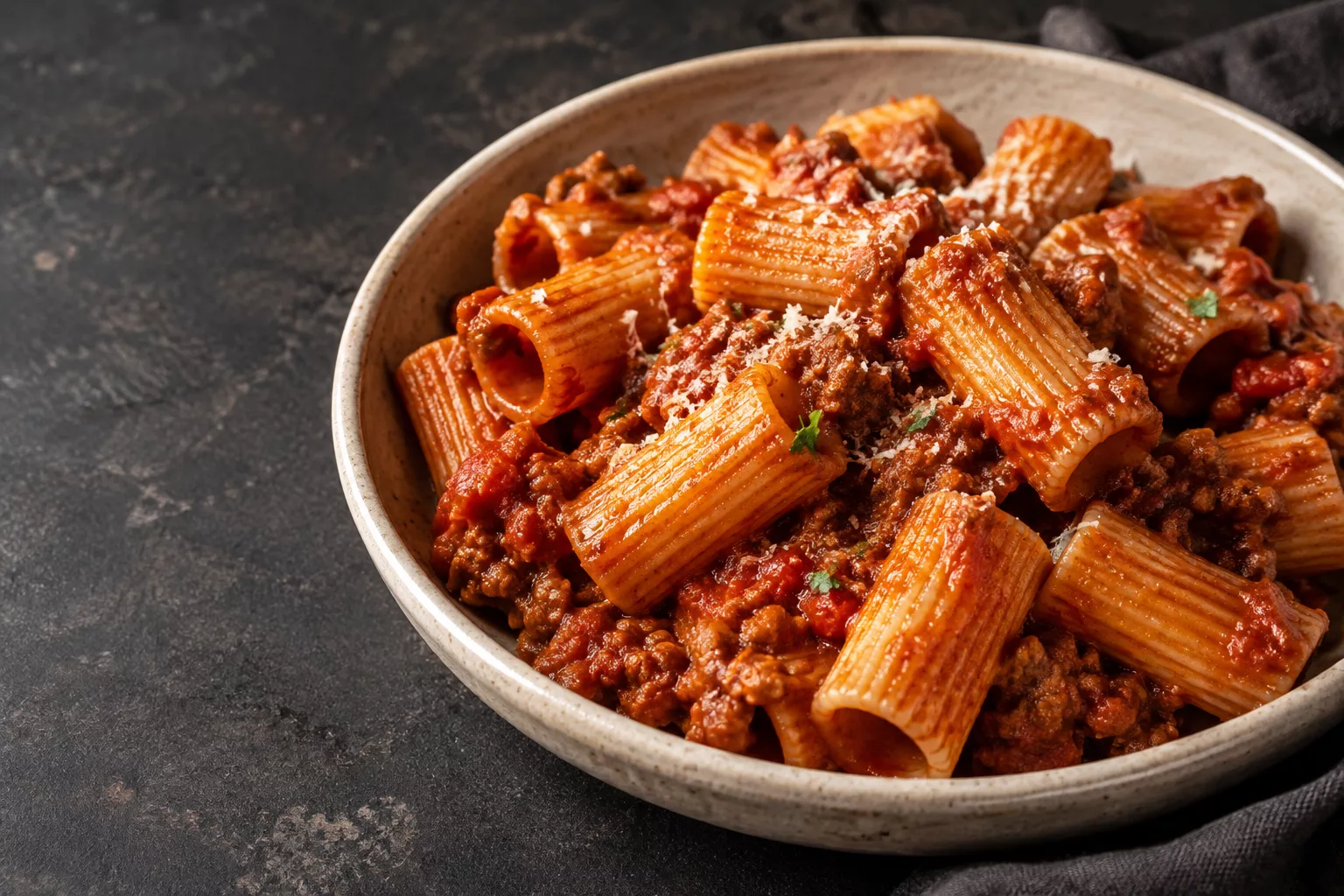
Follow the family tree
Tomato may support a meat sauce, but ragù is defined by more than adding mince. Explore how aromatics, browning, meat, and patient cooking change the structure—and see the idea in the existing rigatoni recipe.
Read the Ragù guide →Open the rigatoni recipe →Recipe is an editorial draft; no kitchen-testing claim is made.