A spoon dragged through the pot leaves a path that closes slowly—not a watery puddle or a dry mound.
Pasta recipe
Rigatoni with
Slow-Cooked Ragù
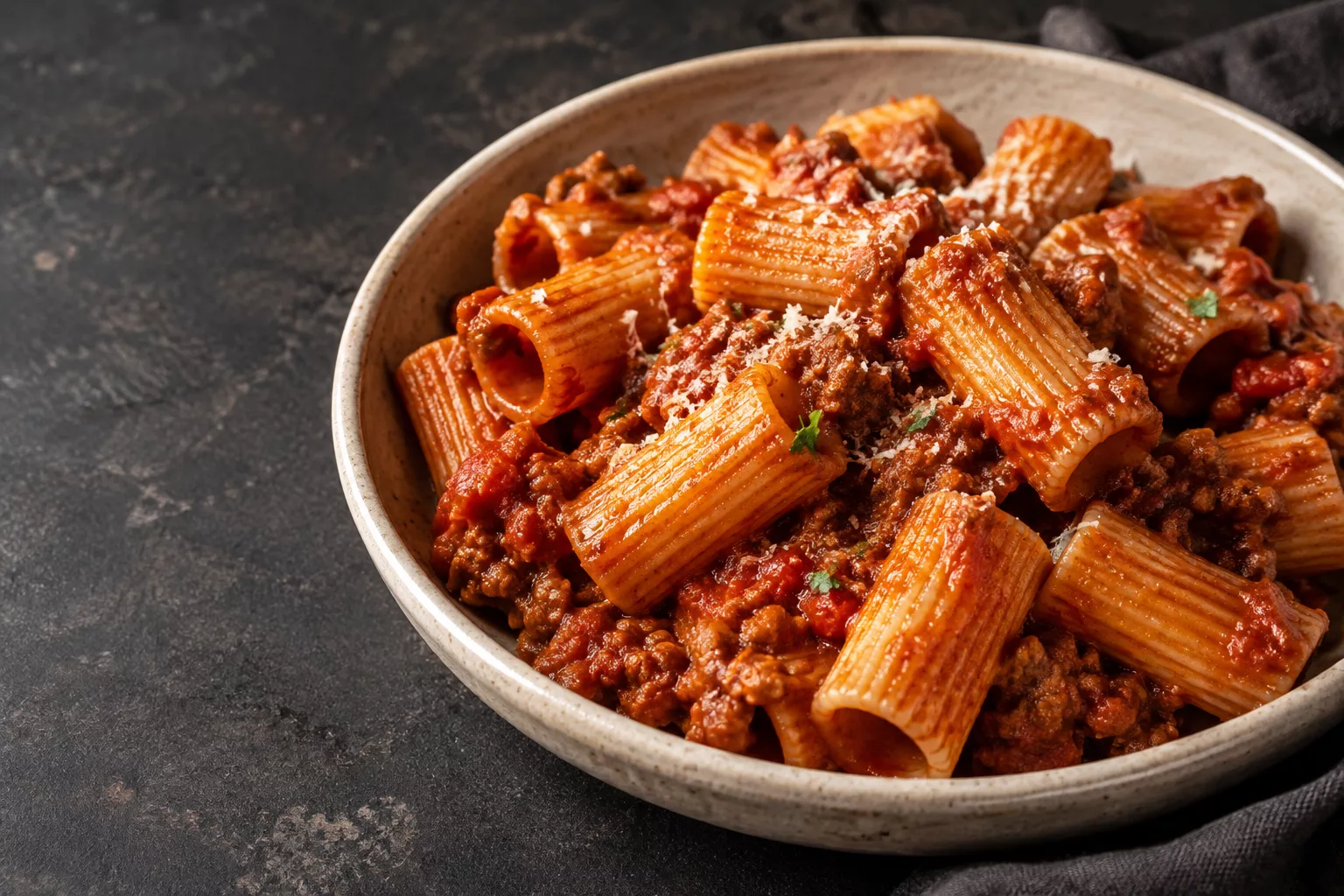
A deep tomato-and-meat sauce built to settle inside rigatoni’s tubes and cling to every ridge.
Editorial draftThis recipe has not yet completed PastaBible kitchen testing.
Why it works
Texture meets texture
Ragù should not merely sit beneath the pasta. Finely chopped vegetables and meat collect inside the tubes; the reduced tomato base catches on the ridges; and a final toss with starchy cooking water turns the sauce into a coating rather than a separate layer.
Rigatoni’s sturdy walls also buy you time. They can finish in the pan without losing their structure while the sauce loosens, emulsifies, and moves into the hollow centers.
Method
Cook with the end in mind
Keep the ragù loose enough to finish with the pasta; it will tighten as it coats the ridges.
- 01
Build the soffritto
10–12 minWarm the olive oil in a wide, heavy pot over medium-low heat. Add the onion, carrot, celery, and a small pinch of salt. Cook slowly until the vegetables are soft and sweet, with no hard edges; avoid deep browning.
- 02
Brown the meat in stages
8–10 minRaise the heat to medium-high. Add the beef and pork, breaking them into small pieces. Let the moisture cook away, then allow the meat to take on some color. Crowding and constant stirring will steam it instead.
- 03
Concentrate and deglaze
5 minStir in the tomato paste and cook until it darkens slightly. Add the wine, scrape up the browned layer from the pot, and simmer until the sharp alcoholic aroma has faded.
- 04
Simmer low and slow
1 hr 30 min–2 hrAdd the tomatoes, stock, bay leaf, and black pepper. Bring to a gentle simmer, then cook partially covered. Stir occasionally and add a splash of water if the sauce tightens before the meat is tender. The finished ragù should be thick enough to cling, but still fluid enough to coat pasta.
- 05
Cook the rigatoni
Package time minus 2 minBring a large pot of water to a boil and season it generously. Add the rigatoni and stir well during the first minute. Begin tasting two minutes before the package time; drain while the center is still firm, reserving at least 250 ml of cooking water.
- 06
Finish pasta and sauce together
2–3 minRemove the bay leaf. Add the rigatoni to the ragù with a splash of reserved water. Toss over medium heat until the sauce glosses the ridges and settles inside the tubes. Take the pan off the heat, fold in most of the cheese, taste, and adjust the seasoning.
Kitchen checkpoints
What to look for
Firm at the center, without a white chalky core. It should withstand two more minutes in the sauce.
Glossy and mobile. Sauce should be visible inside several tubes and remain attached when the pasta is lifted.
Explore the connections
Know why this bowl works
Ingredient quantities and timings are an editorial working draft. Before publication as a finished PastaBible recipe, this dish should be cooked repeatedly, weighed after reduction, and adjusted for different pan sizes and tomato products.