Pasta shape guide
Rigatoni
ree-gah-TOH-nee · rigato, “ridged”
A broad, ridged tube built for generous sauces. Rigatoni catches ragù in three places at once: along its grooves, inside its hollow center, and around its square-cut ends.
Find the right sauce →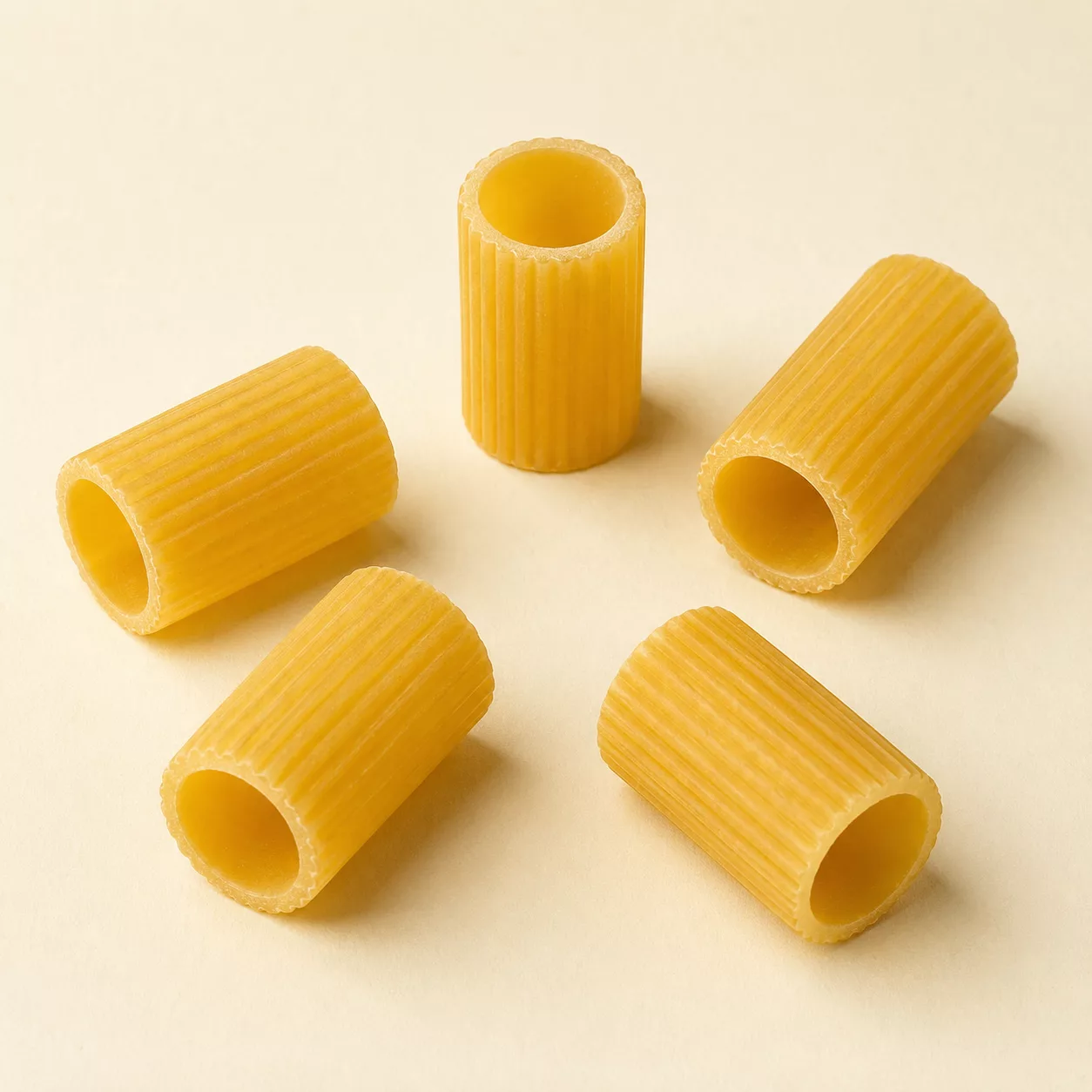
- Family
- Short pasta
- Form
- Wide ridged tube
- Associated with
- Rome & Lazio
- Made from
- Durum wheat semolina
The essential idea
Why this shape works
Rigatoni is larger than penne and traditionally cut straight across rather than on a diagonal. Its name points to its defining feature: the ridges running along the outside.
Those ridges increase the surface available to hold sauce. The wide center catches small pieces of meat or vegetables, while the substantial walls keep a satisfying al dente bite—even beneath a dense sauce or after time in the oven.
Grip thick and smooth sauces
Captures meat and vegetables
Stay resilient in baked dishes
Sauce pairing
What goes with rigatoni?
Choose sauces with enough body to meet the shape. Fine, watery sauces tend to slip past it; texture is the point.
Slow-cooked ragù
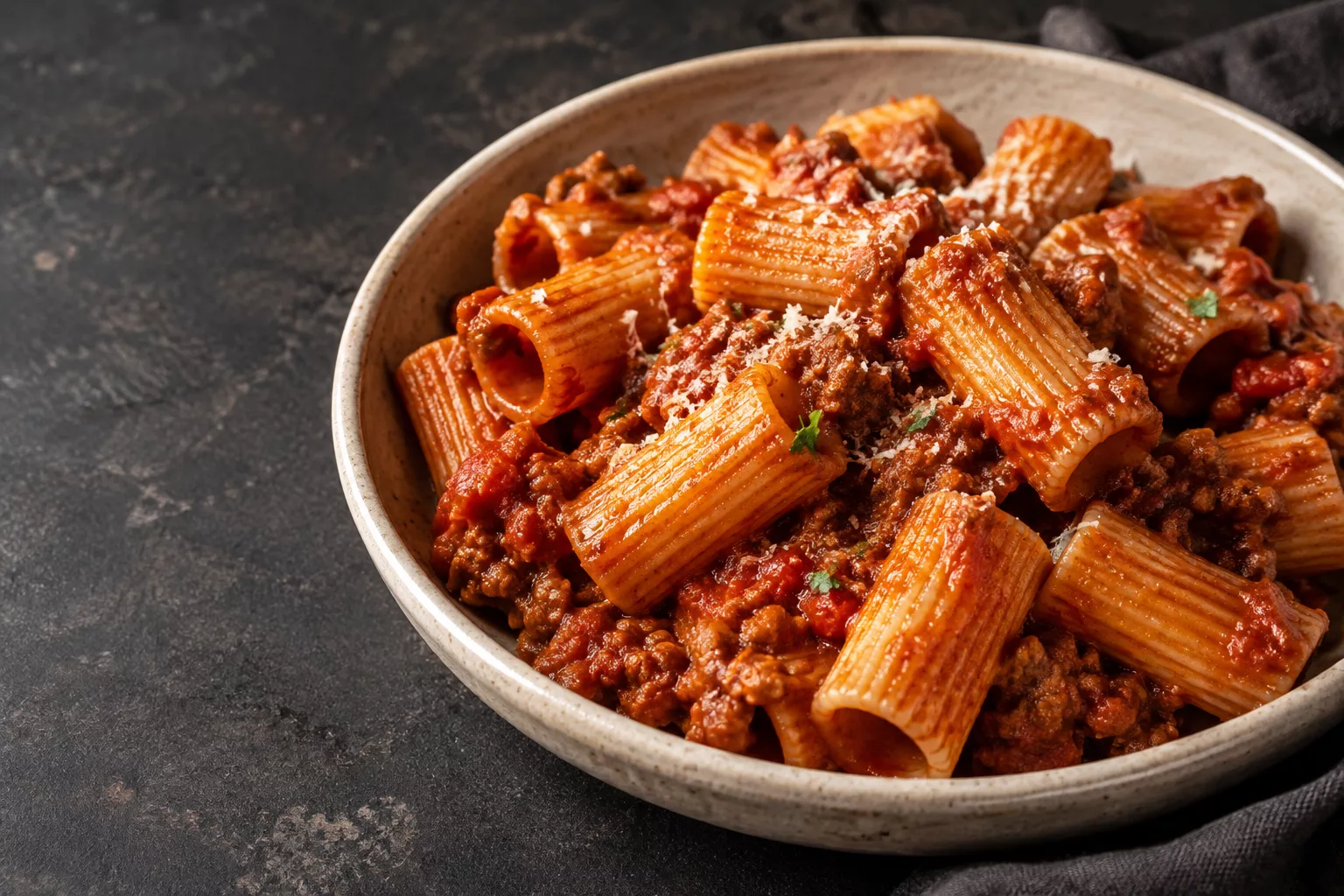
Meat and vegetable pieces lodge inside the tubes while the sauce grips every ridge.
Amatriciana
Tomato, guanciale, and Pecorino Romano suit rigatoni’s sturdy bite and Roman character.
Mushroom & cream
A smooth dairy sauce coats the outside; finely chopped mushrooms give the tubes something to capture.
Pasta al forno
Thick walls hold their shape through baking and stand up to tomato, cheese, and crisp edges.
A natural match
Rigatoni with slow-cooked ragù
Chunky ragù demonstrates the shape better than almost any other sauce: it clings to the ridges and hides pockets of meat inside the tubes.
- Time
- 2 hr 30 min
- Difficulty
- Moderate
- Why it works
- Texture meets texture
Tradition
At home in Rome
Rigatoni is strongly associated with Rome and Lazio, where its robust structure feels made for assertive sauces. It is a familiar partner for amatriciana—tomato, guanciale, and Pecorino Romano—and for the cheese-and-pepper richness of gricia.
In Roman cooking, the pasta is not a neutral carrier. Its size and texture are part of the sauce.
Know the difference
Rigatoni vs. similar shapes
Look first at the cut of the ends, then the width and surface.
| Shape | Body | Ends | Surface | Best uses |
|---|---|---|---|---|
| Rigatoni | Straight, wide tube | Square | Usually ridged | Chunky sauces, baking |
| Penne | Narrower tube | Diagonal | Smooth or ridged | Tomato, pesto, vegetables |
| Ziti | Long, narrow tube | Square | Usually smooth | Baked pasta, thick sauces |
| Paccheri | Very large tube | Square | Usually smooth | Seafood, ragù, stuffing |
Technique
Cook it for the sauce
The package time is a guide; the final bite is the test.
- 1Use generously salted water
Season the pasta itself, not only the finished sauce.
- 2Stir early
The wide tubes can settle together during the first minute.
- 3Taste before the package time
Look for a firm center without a hard, chalky core.
- 4Finish in the sauce
Move the pasta while still resilient and add a splash of cooking water.