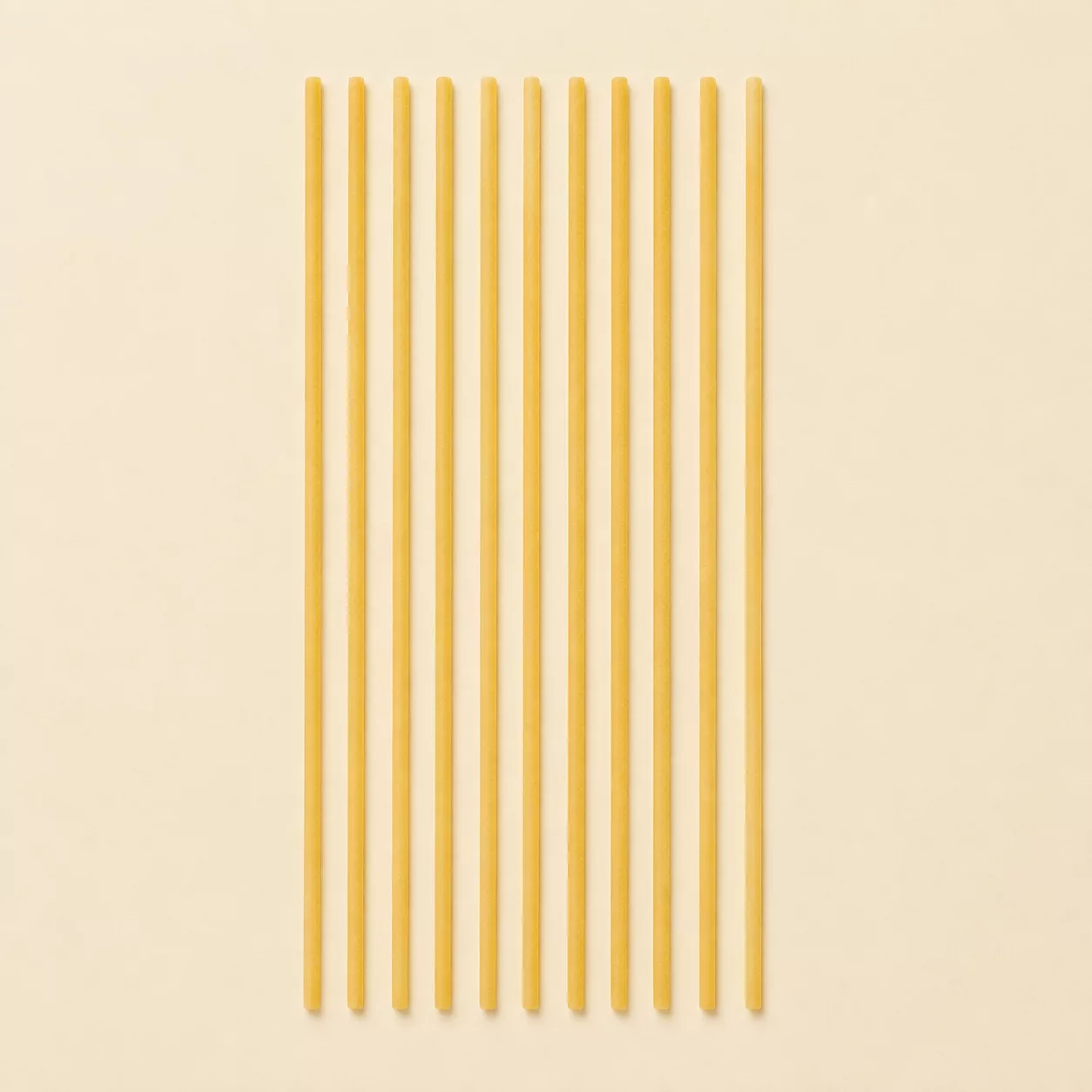
Spaghetti
A balanced long strand for sauces that form a continuous coating, from tomato and olive oil to carbonara and clam liquor.
- Works well with
- Tomato sauces, aglio e olio, carbonara, seafood
PastaBible visual guide
Length affects how pasta moves through a sauce. Ridges create grip. Tubes and cups capture pieces. Thickness changes both cooking time and the final bite.
This selected guide begins with five familiar shapes. Use the photographs to identify them, then compare their structure before choosing a sauce or dish.
Five shapes to know
Each image shows the uncooked form clearly. Open a guide for history, pairings, comparisons, and shape-specific cooking technique.
A balanced long strand for sauces that form a continuous coating, from tomato and olive oil to carbonara and clam liquor.
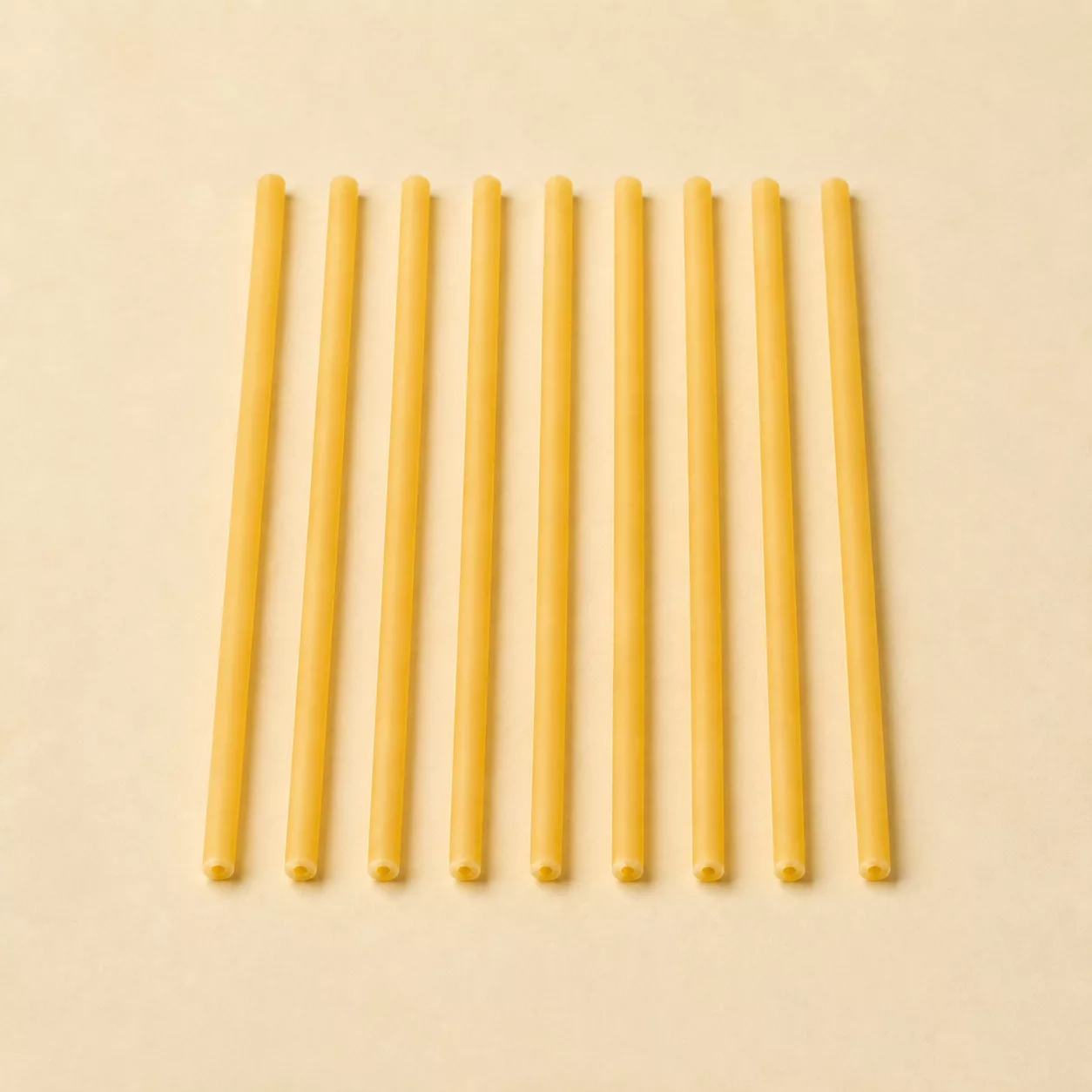
A thick, spaghetti-like strand pierced from end to end, with enough bite for assertive Roman and Lazio sauces.
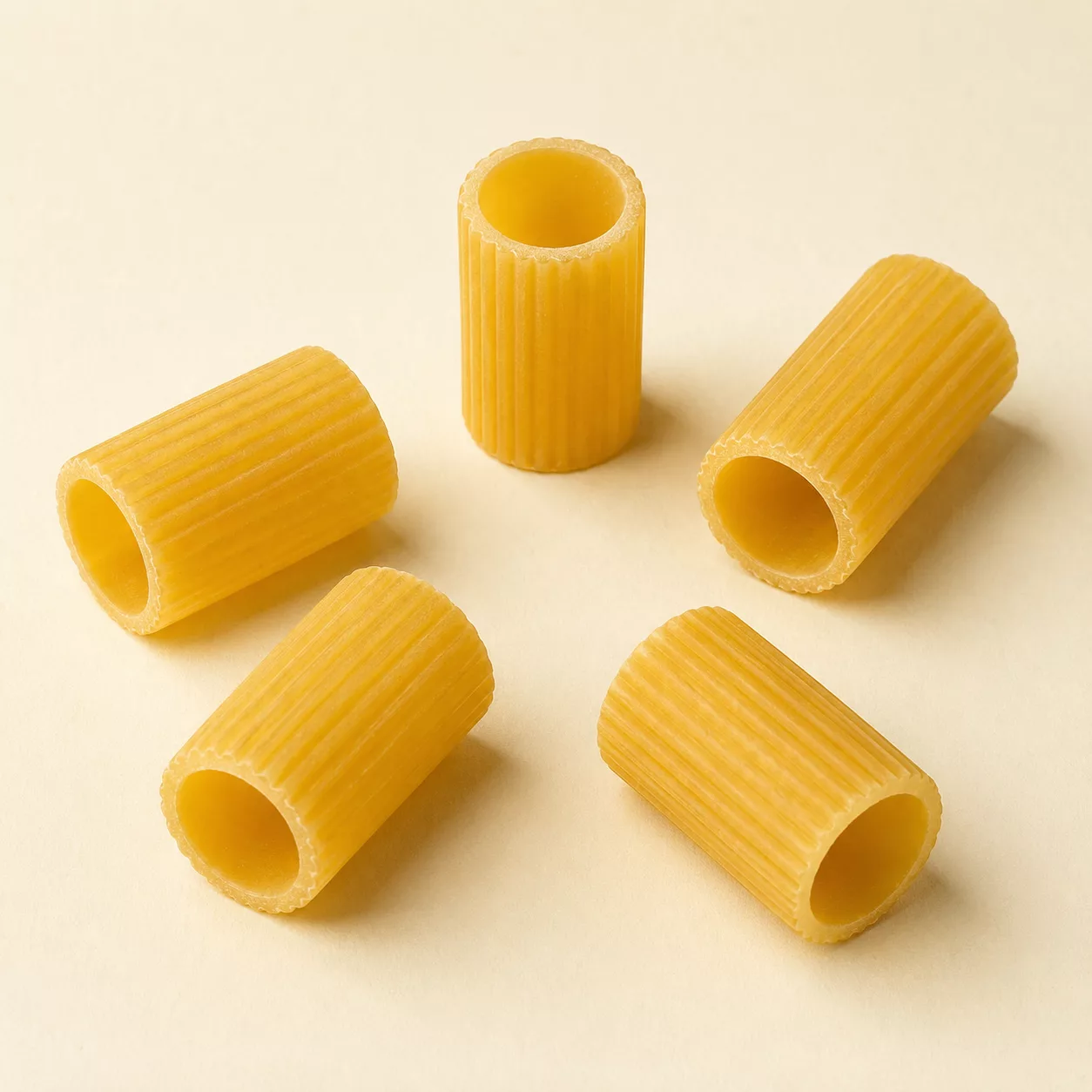
A wide, sturdy tube that catches sauce outside, inside, and around its square-cut ends.
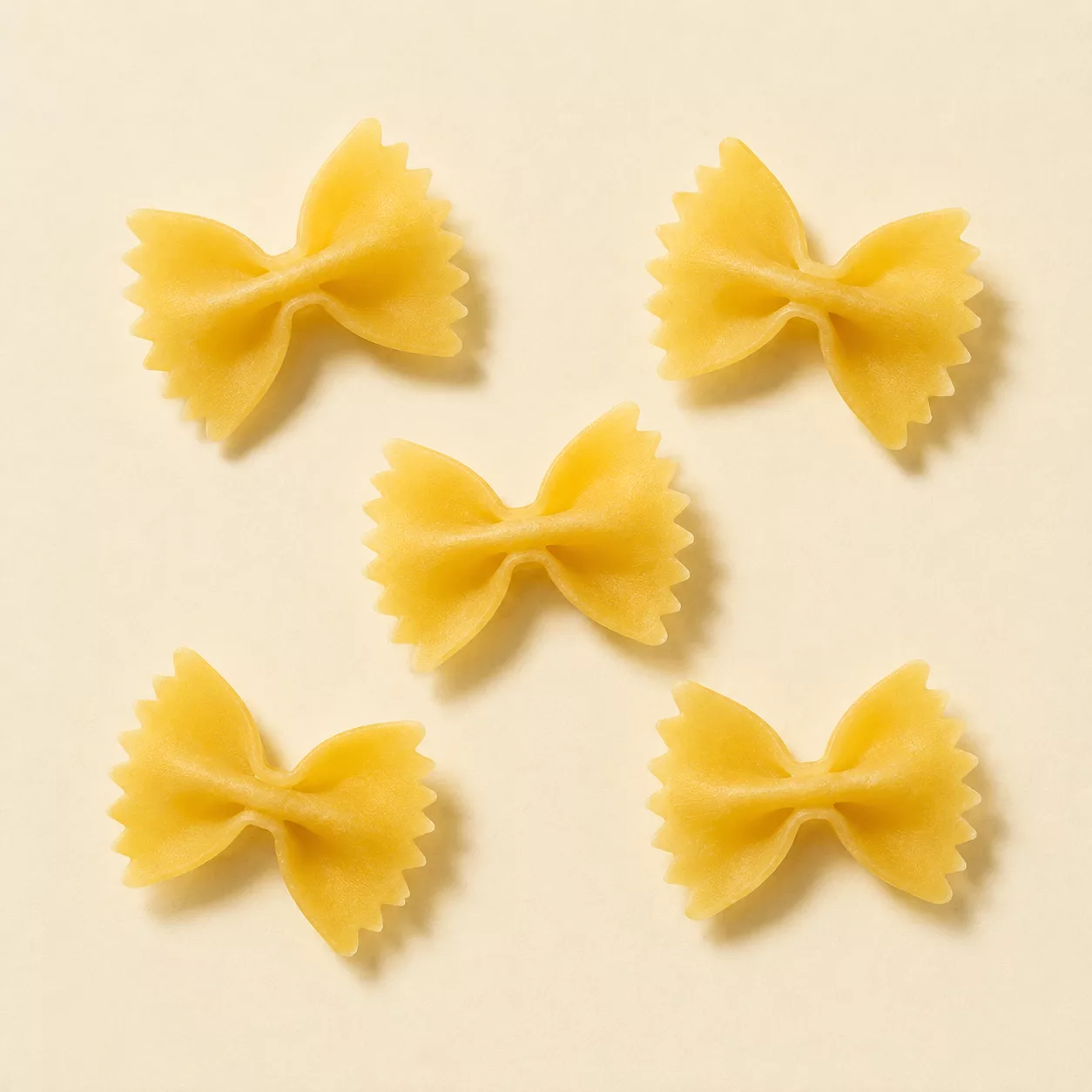
Butterfly-shaped pasta with tender wings, a firm center, and folds that distribute small ingredients through a dish.
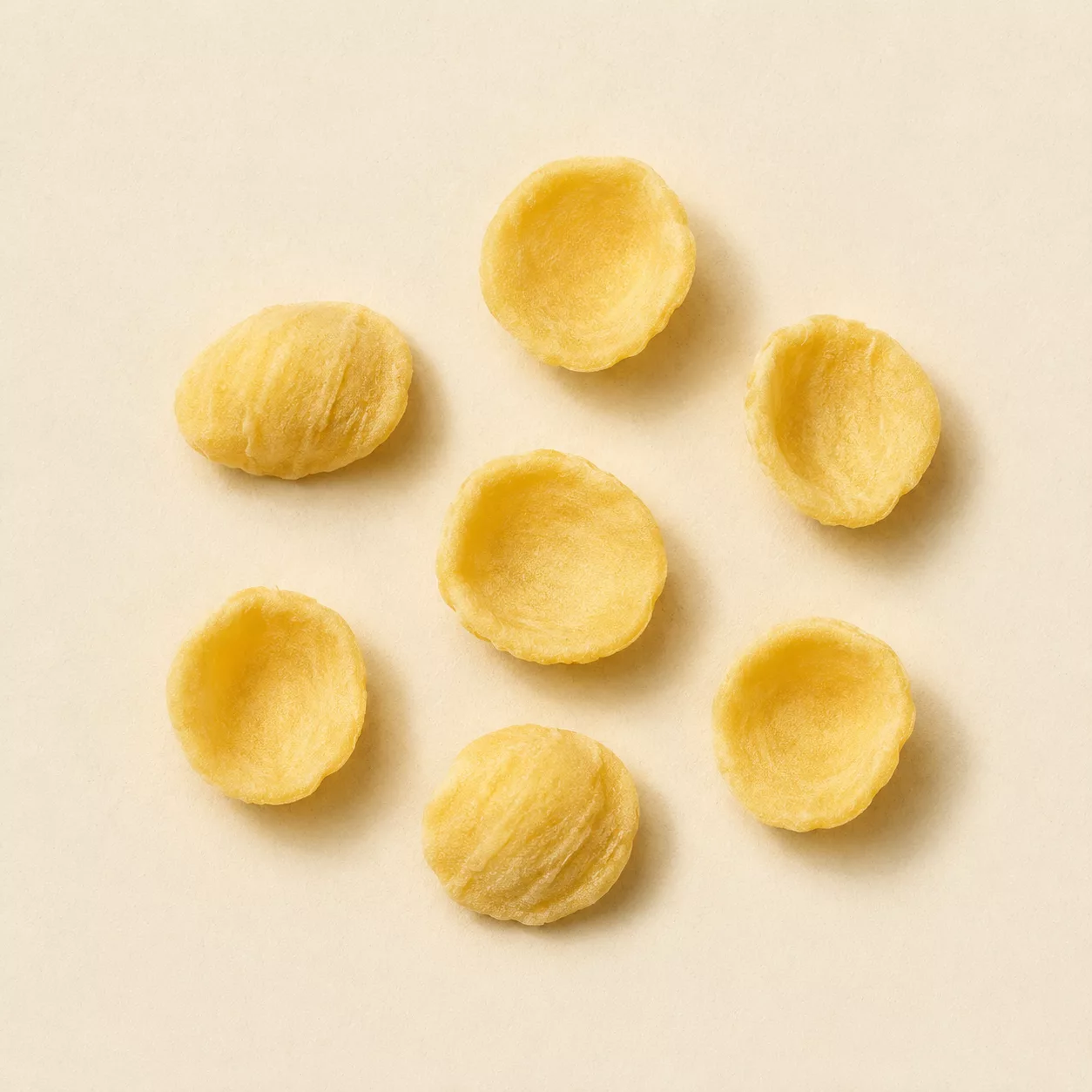
Small “ears” whose shallow cups collect chopped greens, crumbled meat, beans, and textured sauces.
Side by side
There is no universally “best” pasta shape. Match its geometry to the texture and movement of the condiment.
Swipe horizontally to compare all columns →
| Shape | Length or form | Solid or hollow | Surface & holding | Best sauce styles | Typical dishes |
|---|---|---|---|---|---|
| Spaghetti | Long, round strand | Solid | Smooth continuous surface; relies on an even coating | Fluid tomato, oil emulsions, egg and seafood | Pomodoro, aglio e olio, carbonara, alle vongole |
| Bucatini | Long, thick strand | Narrow central channel | Substantial exterior and resilient walls | Assertive tomato, guanciale and cheese emulsions | Bucatini all’amatriciana, alla gricia |
| Rigatoni | Short, wide tube | Large hollow center | Ridges grip sauce; tube captures meat and vegetables | Chunky ragù, baked, thick tomato and cream | Rigatoni with ragù, amatriciana, pasta al forno |
| Farfalle | Pinched butterfly | Solid, folded center | Broad wings and folds distribute small ingredients | Pesto, light cream, vegetable and vinaigrette | Farfalle with pesto, peas or salmon; pasta salad |
| Orecchiette | Small concave disc | Cup-like hollow | Rough dome and thick rim catch chopped ingredients | Greens, crumbled sausage, vegetables and legumes | Orecchiette con cime di rapa |
Practical guide
Start with the largest ingredient in the sauce, then consider how thick the coating is and how much bite you want from the pasta itself.
Choose long strands such as spaghetti. Tomato, oil, egg, cheese, and shellfish liquids can coat them continuously.
Use thicker bucatini when guanciale, pecorino, tomato, or pepper needs a more substantial bite.
Pick rigatoni. Its ridges and wide tube hold pieces and remain resilient in dense sauces or the oven.
Use folds or cups: farfalle distributes peas and diced vegetables, while orecchiette scoops chopped greens and crumbled meat.