01Roman icon
All’amatriciana
Tomato, rendered guanciale, and Pecorino Romano give the thick strands the fat, acidity, and savory depth they need.
Pasta shape guide
boo-kah-TEE-nee · bucato, “pierced”
A long, thick strand with a narrow channel through its center. Bucatini combines the sweep of spaghetti with the resilient walls and hollow core of a tube.
Find the right sauce →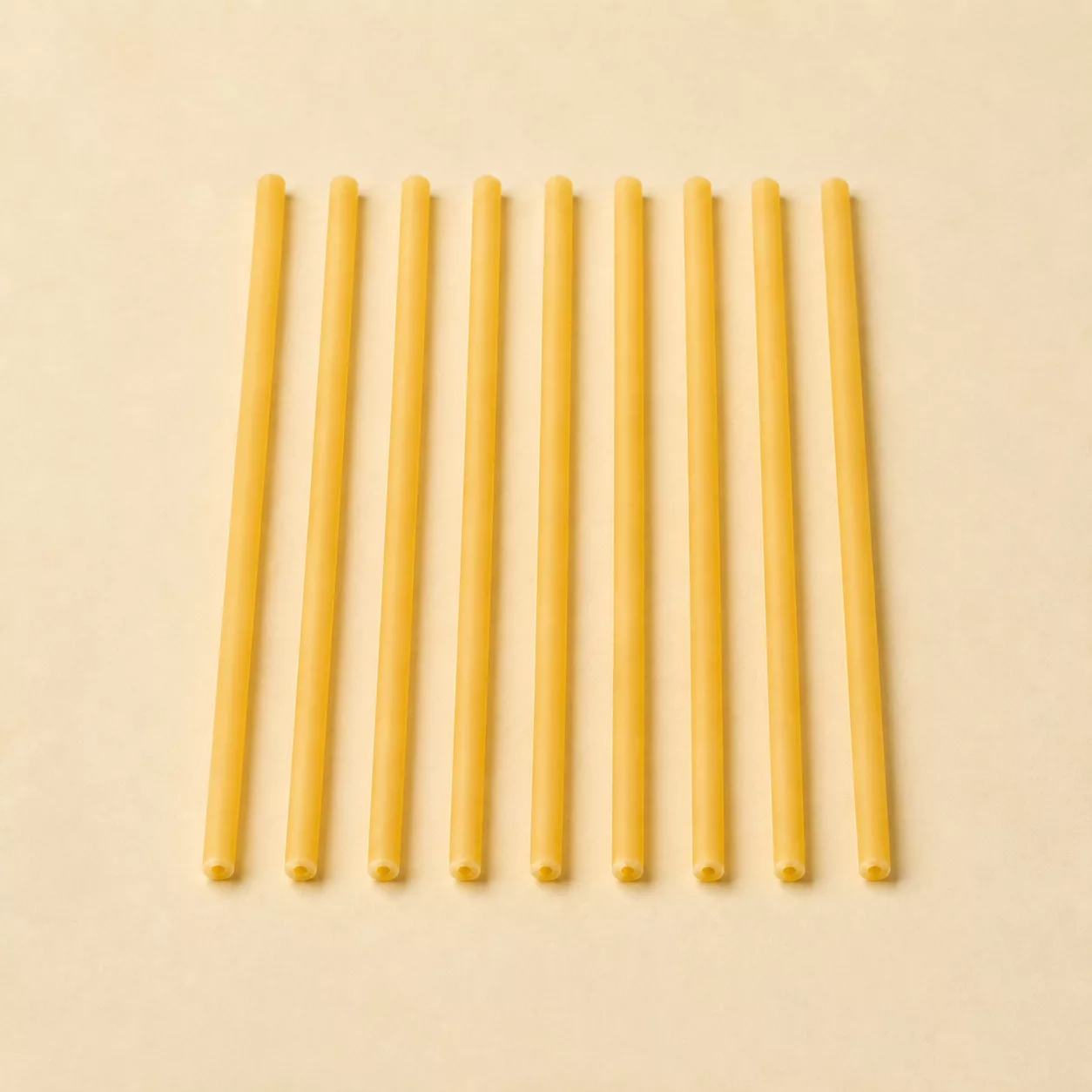
Name & identity
Bucatini is the plural of bucatino, derived from bucato: pierced or perforated. The name describes the defining channel running from one end of each strand to the other.
The shape is firmly embedded in the cooking of central Italy, especially Rome and Lazio. Some producers also connect it with Naples under the name perciatelli. Rather than assigning one uncontested birthplace, it is more accurate to recognize overlapping central and southern Italian names and traditions.
Lets boiling water reach the inner wall and catches small amounts of fluid at the ends
Create a firmer, more resilient bite than ordinary spaghetti
Provides a continuous surface for emulsified cheese, fat, and tomato sauces
Rome & Lazio
Bucatini is closely identified with Roman trattoria cooking and the assertive flavors of Lazio: guanciale, Pecorino Romano, tomato, and black pepper. Its thickness stands up to these concentrated sauces while the hollow core makes the strand feel lighter than a solid pasta of the same diameter.
That association should not be turned into a tidy invention story. Pasta names and dimensions vary among regions and manufacturers, and closely related pierced strands appear under other names in southern Italy.
Sauce pairing
Use a sauce with enough body and lubrication to travel along the thick strands. The exterior carries most of the coating; the hole adds texture and catches sauce mainly at the cut ends.
Tomato, rendered guanciale, and Pecorino Romano give the thick strands the fat, acidity, and savory depth they need.
Rendered guanciale, Pecorino Romano, pepper, and starchy water form an emulsion that grips the long exterior.
A smooth, emulsified sauce can coat the strand evenly, provided it stays fluid enough to move through a dense tangle of pasta.
Tomato-based fish sauces or vegetables such as aubergine, courgette, peppers, olives, and capers suit bucatini when cut small and bound into a cohesive sauce.
Signature pairing
Bucatini all’amatriciana is a celebrated Roman and Lazio preparation built around guanciale, tomato, and Pecorino. There is an important regional distinction: Amatrice itself traditionally identifies the dish with spaghetti, while bucatini became an especially familiar Roman choice.
Know the difference
Check the center first, then compare overall diameter, wall thickness, and whether the pasta is served as a long strand or a short tube.
| Shape | Structure | Center | Best uses |
|---|---|---|---|
| Bucatini | Long, thick, round strand | Narrow channel | Amatriciana, gricia, substantial emulsified sauces |
| Spaghetti | Long, slimmer round strand | Solid | Broad range of tomato, oil, seafood, and cheese sauces |
| Spaghettoni | Extra-thick spaghetti | Solid | Long cooking and sauces that suit a substantial bite |
| Perciatelli | Long pierced strand; sizing varies by maker | Hollow | Often used as another name for, or a close relative of, bucatini |
| Rigatoni | Wide, short tube with square ends | Large cavity | Chunky ragù, baked pasta, and pieces of meat or vegetables |
Technique
Bucatini is stiffer, thicker, and less willing to coil than spaghetti. Handle it patiently and judge doneness through the wall.
Fan the strands into fully boiling water. Do not force the dry pasta to bend; guide the submerged ends down as they soften.
The rigid strands can cross and stick before they become flexible. Separate them gently during the first two minutes.
Cut or bite through a strand. The tube should be firm without a hard, chalky ring of uncooked dough.
Water can remain in the central channels. Let the pasta drain briefly, then use measured cooking water to loosen the sauce rather than adding it accidentally.
Toss in a broad pan with enough sauce to lubricate the long strands. A dry or broken emulsion makes thick bucatini clump and difficult to turn.
Common mistakes
A cramped pot encourages sticking, forcing dry strands can snap them, and relying only on the package time ignores differences in diameter. Bucatini also needs more sauce movement than thin spaghetti: toss deliberately and serve at once before cheese- or fat-based sauces tighten.
The hole changes the bite, but it is not a straw for sauce. Build the coating on the outside and let the hollow center add resilience.