Ragù alla Bolognese
Finely ground or chopped meat, a soffritto base, restrained tomato, and a long gentle cook. Traditionally paired with fresh egg tagliatelle or layered into lasagne.
Italian sauce guide
Not one recipe, but a family of slow-cooked sauces in which meat, aromatics, time, and region determine the result.
Explore the family →The essential idea
Outside Italy, ragù is often reduced to “tomato meat sauce.” That description misses the structure. Some ragùs contain plenty of tomato; others use very little or none. Some begin with ground meat, while others braise large pieces for hours.
What connects them is transformation: aromatics soften, meat browns, wine reduces, and patient simmering turns separate ingredients into a sauce substantial enough to season pasta.
Regional traditions
Bologna and Naples provide the most famous contrast, but regional ragùs extend far beyond both cities.
Finely ground or chopped meat, a soffritto base, restrained tomato, and a long gentle cook. Traditionally paired with fresh egg tagliatelle or layered into lasagne.
Large pieces or rolls of meat simmer for hours in a more abundant tomato sauce. The sauce dresses pasta; the meat may be served separately as another course.
Wild boar, hare, duck, or other game produces darker, more aromatic sauces that often meet broad ribbons such as pappardelle.
A meat sauce without a dominant tomato base. Wine, stock, aromatics, and the meat’s own juices create the body and color.
Core technique
A successful ragù is not made by putting everything in the pot at once. Each stage prepares the next.
Cook onion, carrot, celery, or the local aromatic base until sweet and integrated.
Evaporate moisture first, then develop savory color without scorching.
Wine releases the browned layer and contributes acidity; cook away its raw edge.
Low heat tenderizes meat and concentrates the liquid without making the sauce harsh.
Adjust texture with cooking water and toss until the ragù attaches to the chosen shape.
Shape pairing
The right choice depends on whether the sauce is fine and cohesive, broad and chunky, or intended for layering.
The broad, porous egg ribbon carries a fine, cohesive meat sauce.
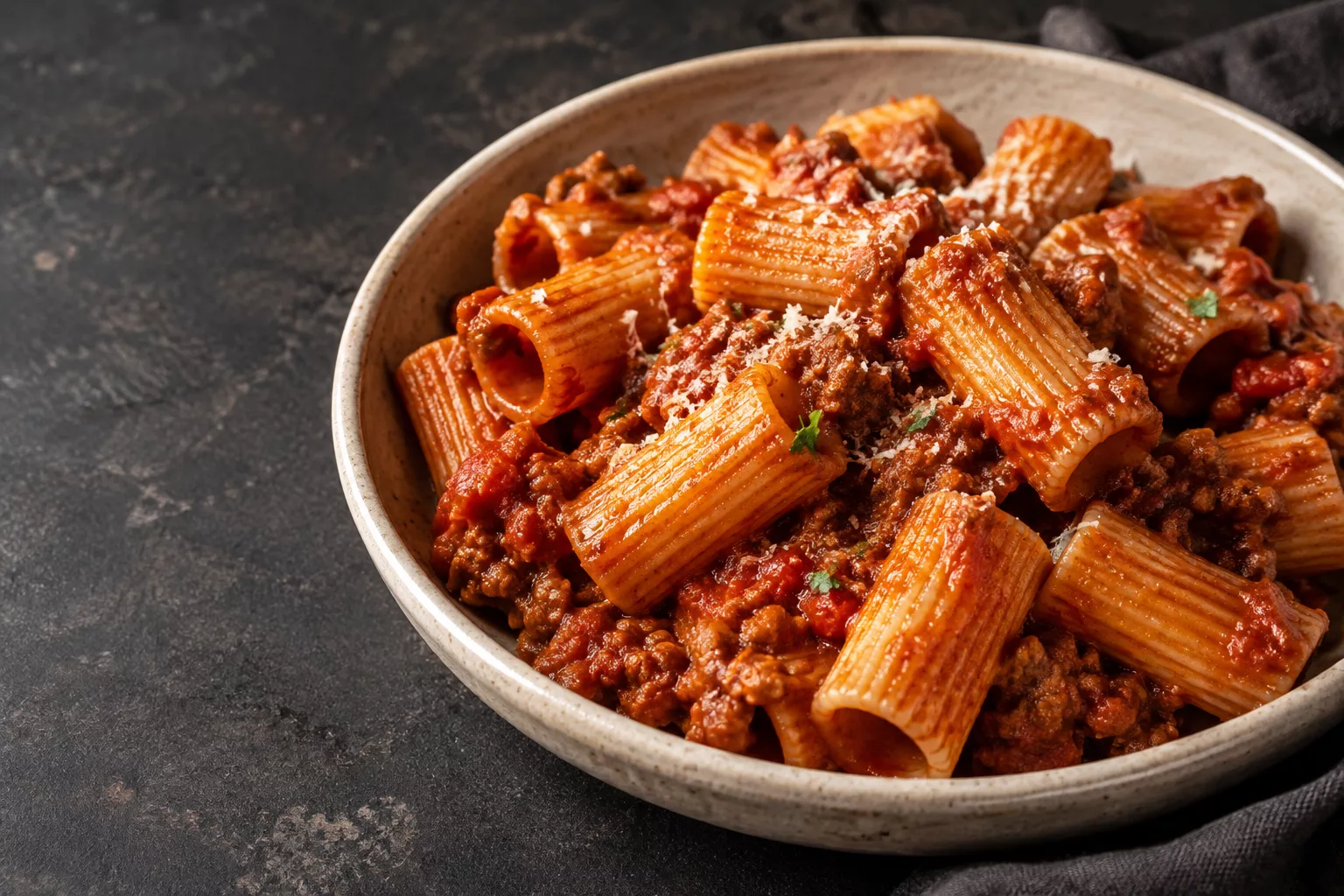
→RigatoniChunky ragùRidges grip the base while small pieces of meat settle inside the tubes.
→PappardelleGame ragùA wide, substantial ribbon balances darker meat and long braises.
→LasagneBolognese + béchamelThin layers distribute a concentrated ragù through the entire dish.
→Common mistakes
Aggressive heat tightens meat and evaporates liquid before flavors can integrate.
Wet meat steams. Brown in a wide pan or in batches before adding liquid.
Ragù begins with aromatics, meat, browning, wine, and reduction—not merely tomato plus mince.
Finish pasta and ragù together so cooking water helps the sauce cling to the shape.
Cook the connection
A working recipe that demonstrates how a chunky ragù settles inside wide tubes and grips a ridged surface.
Open the recipe →Editorial draft — kitchen testing still required.