02Oil-based
Aglio e olio
Garlic-scented oil, chilli, and starchy water form a thin emulsion that reaches every strand without hiding its texture.
Pasta shape guide
spah-GEH-tee · spaghetto, “little string”
Long, solid, round strands whose apparent simplicity makes small differences matter. Diameter, surface texture, and the final minutes in sauce determine whether spaghetti feels delicate, springy, or substantial.
Find the right sauce →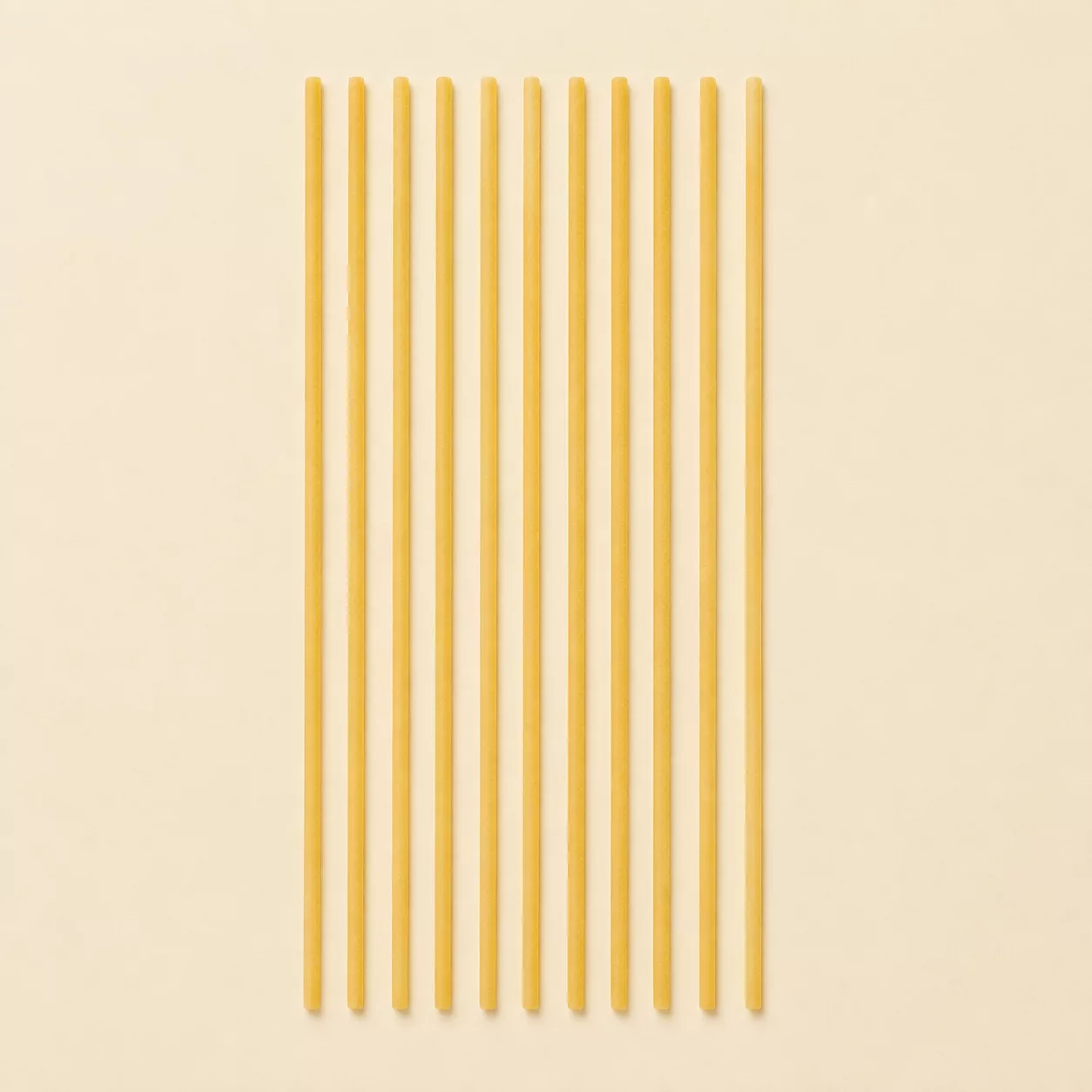
Name & history
Spaghetti is the plural of spaghetto, the diminutive of spago, a piece of string or twine. The name describes the pasta’s thin, cord-like appearance rather than a place or sauce.
Thread-like dried pastas existed around the Mediterranean long before the word spaghetti became standard; Italian sources record names such as vermicelli centuries earlier. The modern term is generally documented from the nineteenth century, alongside expanding mechanized pasta production. That language history does not support the popular story that Marco Polo simply introduced spaghetti to Italy from China.
Rolls easily around a fork and exposes sauce evenly on every side
Provides continuous resistance from the surface to the core
Turns oil, cooking water, cheese, and starch into a continuous coating
Diameter matters
There is no single universal diameter shared by every producer. Standard spaghetti sits between finer spaghettini and more substantial spaghettoni; numbered sizes and exact cooking times differ among brands.
A thinner strand cooks quickly and favors light, fluid coatings. A thicker strand takes longer for heat to reach the core, preserves a more assertive al dente bite, and can balance sauces with greater concentration or longer pan-finishing.
Sauce pairing
Spaghetti excels when a sauce can coat a strand continuously. Regional traditions differ, so the same shape moves from tomato and olive oil to eggs, shellfish, chilli, and cheese. A properly loosened pesto also coats it well, although trofie and trenette are the more specifically Ligurian choices.
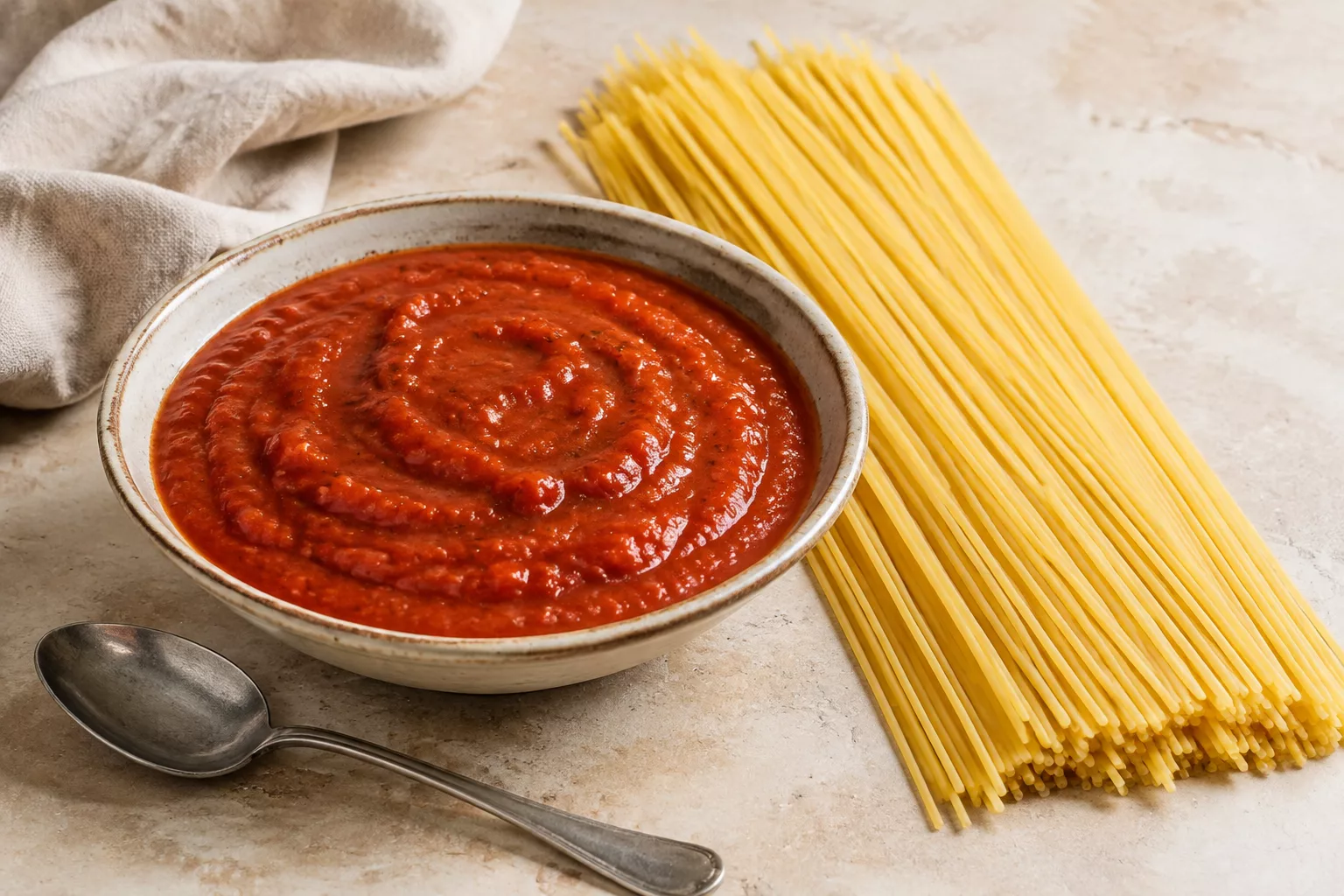
A smooth or finely textured tomato sauce spreads along the round strands; olive oil and cooking water help it cling rather than collect beneath them.
Garlic-scented oil, chilli, and starchy water form a thin emulsion that reaches every strand without hiding its texture.
Egg, Pecorino Romano, guanciale fat, pepper, and pasta water make a fluid coating; spaghetti is a classic choice, though Roman practice also includes rigatoni.
Clam liquor, olive oil, garlic, and other light seafood sauces emulsify around the strands while small pieces of seafood remain distributed through the dish.
Regional range
Spaghetti al pomodoro may be its clearest international image, but Italy’s pairings are regional: carbonara in Lazio, clams in Campania, garlic and oil across central and southern kitchens, and countless local combinations with fish, vegetables, chilli, or preserved ingredients.
Know the difference
Names describe relative thickness and geometry, but exact diameters can shift between regions and manufacturers.
| Shape | Cross-section | Relative weight | Best uses |
|---|---|---|---|
| Spaghetti | Round and solid | Medium | Tomato, oil emulsions, carbonara, seafood |
| Spaghettini | Round and solid | Finer | Quick-cooking, light oil, tomato, and seafood sauces |
| Spaghettoni | Round and solid | Thicker | Pronounced al dente bite and concentrated emulsified sauces |
| Linguine | Flat, narrow ribbon | Broader surface | Pesto, shellfish, and smooth seafood sauces |
| Vermicelli | Round and solid | Meaning varies regionally | In Italy often a robust long strand; elsewhere the name may mean very fine noodles |
| Bucatini | Round and hollow | Thick walls | Amatriciana, gricia, and substantial Roman sauces |
Technique
The package time is a reference. Diameter, pan-finishing, and the sauce’s liquid all affect when the strand should leave the water.
Use enough room for the strands to circulate. Fan them into the pot and guide the exposed ends down as they soften rather than snapping them.
Newly submerged strands release surface starch and readily stick where they cross. Stir from the bottom until they move independently.
Begin tasting before the stated time. Properly al dente spaghetti bends easily but retains a firm core without a hard, chalky point.
Starchy cooking water adjusts concentration and helps oil, cheese, egg, or tomato bind to the pasta. Add it gradually; it is a tool, not an automatic extra ladle.
Transfer the spaghetti while still resilient and complete cooking in the sauce. Tossing builds an even coating and lets the strand absorb flavor without becoming soft.
Less suitable
Very chunky ragùs with large pieces tend to fall away from smooth, narrow strands; a ridged tube such as rigatoni can capture them more effectively. Stuffed or baked preparations also call for shapes built to hold filling or survive prolonged oven cooking.
Heavy cheese sauces are not inherently unsuitable, but they must remain emulsified. If the sauce is thick before it meets the pasta, spaghetti can form a dense, sticky mass instead of separate coated strands.
Common mistakes
Breaking the strands changes how they turn around a fork; neglecting the early stir creates welded bundles; rinsing removes useful surface starch; and cooking fully in water leaves no margin for the sauce pan. The most frequent finishing error is adding pasta water without reducing or emulsifying it, producing a wet plate rather than a glossy coating.
Taste the strand, watch the sauce, and treat the final minute in the pan as part of cooking—not as an optional garnish step.