02Silky
Light cream sauces
A fluid cream sauce coats both the thin edges and dense center; peas, mushrooms, or small pieces of salmon fit naturally into the folds.
Pasta shape guide
far-FAHL-leh · farfalla, “butterfly”
A pinched, winged pasta with two textures in every piece: tender, ruffled edges and a firmer center. Farfalle works especially well with sauces and small ingredients that settle into its folds.
Find the right sauce →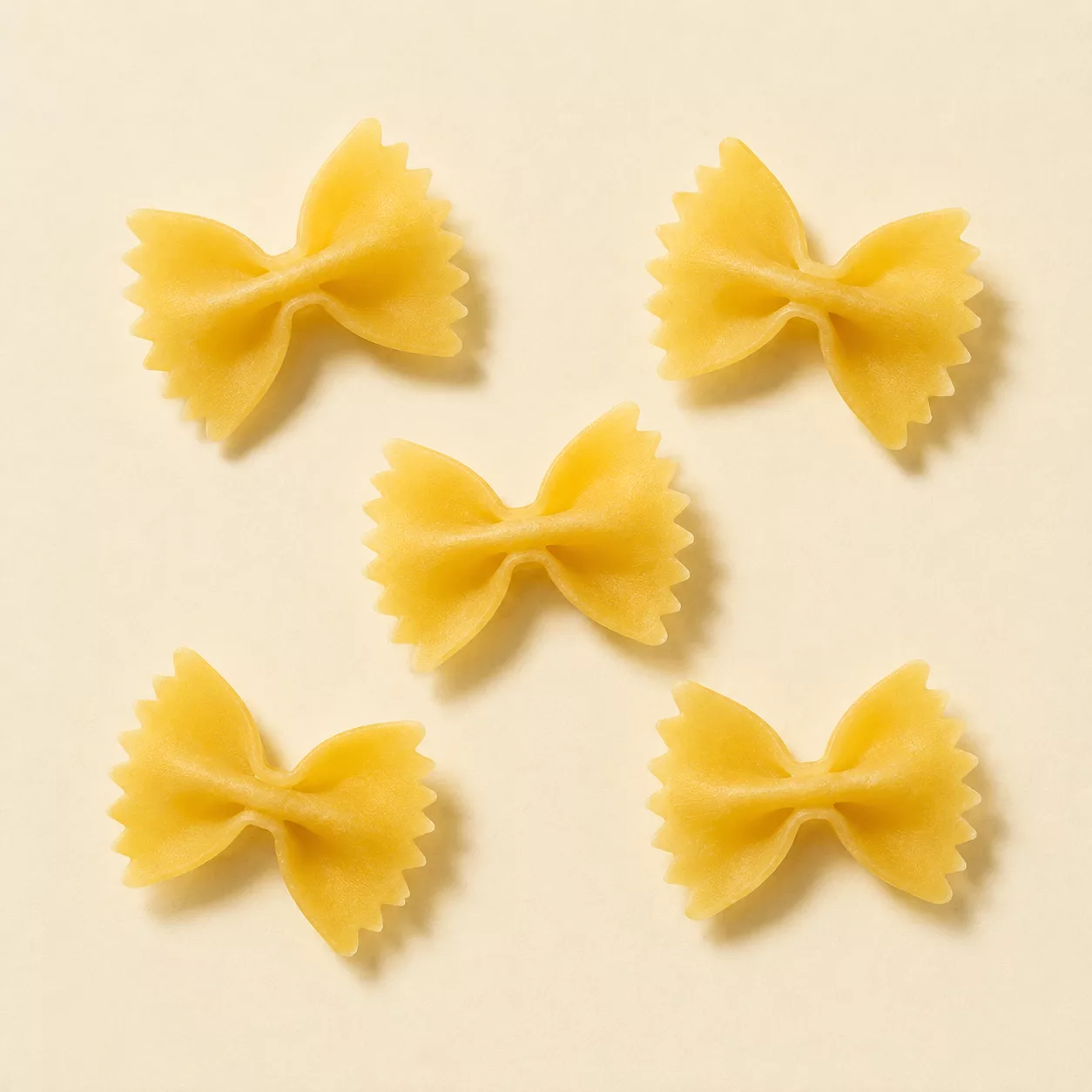
Name & origin
Farfalle is the plural of the Italian farfalla, meaning “butterfly.” English speakers also call the shape bow-tie pasta, but its Italian name describes a pair of wings gathered at the center.
The shape is widely associated with the northern regions of Emilia-Romagna and Lombardy. Accounts often date it to the 1500s, although the exact place and date are difficult to establish from surviving documentation. Fresh egg-pasta relatives in Emilia-Romagna may be called strichetti; that regional handmade form should not be treated as identical to every modern dried farfalle.
Provide broad surfaces for a light coating of sauce
Creates a firmer, pleasantly chewy middle
Catch herbs, peas, diced vegetables, and small pieces of fish
Sauce pairing
Choose a sauce that coats the wings without burying them, plus ingredients small enough to gather around the center folds.
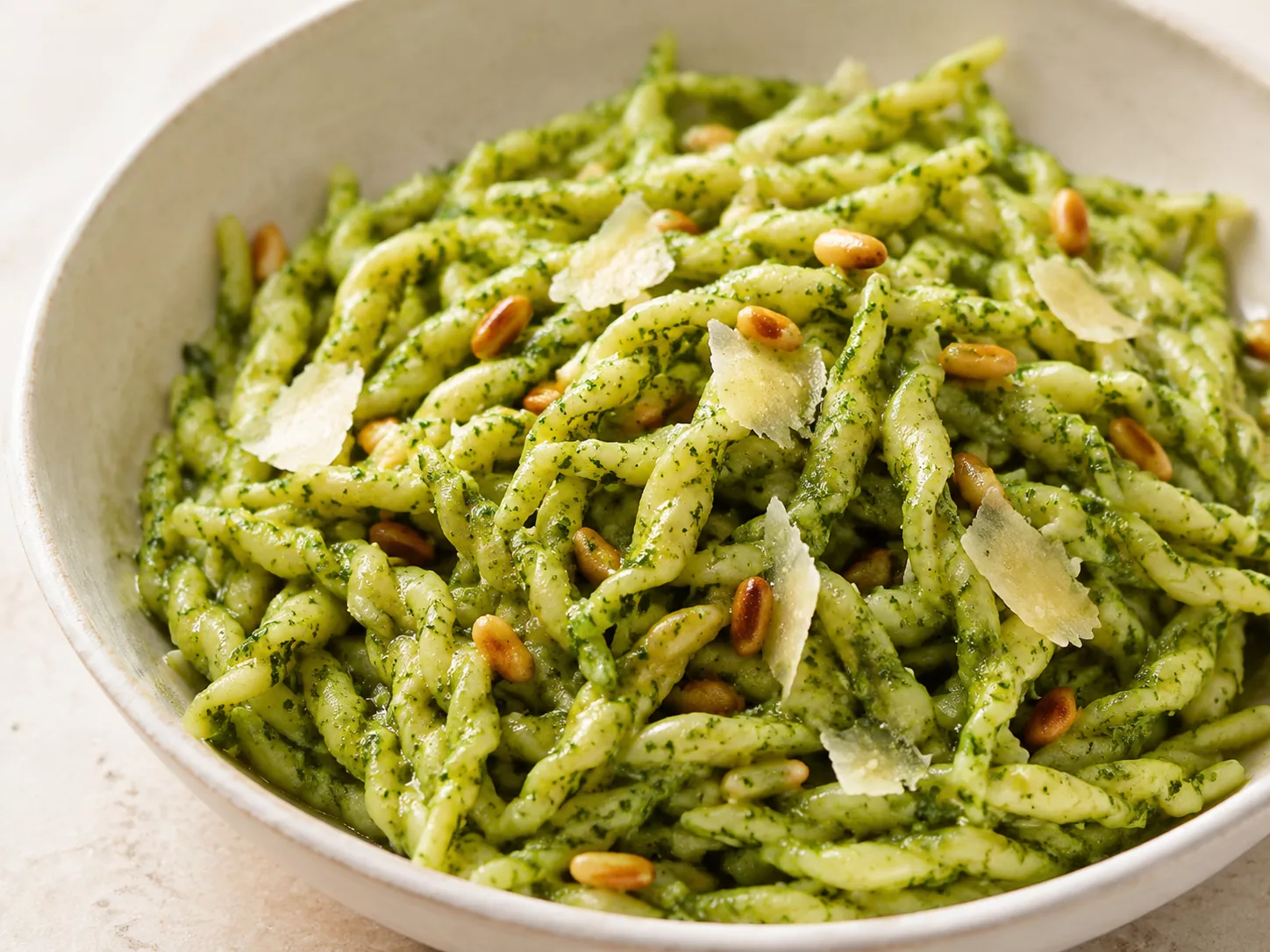
Finely textured pesto spreads across the broad wings and gathers in the pleats without overwhelming the shape.
A fluid cream sauce coats both the thin edges and dense center; peas, mushrooms, or small pieces of salmon fit naturally into the folds.
Cherry tomatoes, zucchini, peas, and finely diced roasted vegetables echo the pasta’s compact scale and stay distributed through the bowl.
The shape remains visually distinct when chilled and gives vinaigrettes, herbs, cheese, and chopped vegetables plenty of surface to cling to.
Dish ideas
Try farfalle with basil pesto and green beans; peas, prosciutto, and a light cream sauce; salmon with lemon and herbs; or a room-temperature salad with tomatoes, mozzarella, olives, and vinaigrette.
Know the difference
Look at how each shape is folded or pinched, and at the size of the center where the dough is thickest.
| Shape | Form | Texture | Best uses |
|---|---|---|---|
| Farfalle | Ruffled rectangle pinched at the center | Tender wings, firm center | Pesto, cream sauces, vegetables, salads |
| Farfalline | Miniature farfalle | Small and delicate | Soups and light preparations |
| Farfalloni | Large farfalle | Broader wings and substantial bite | Chunkier vegetables and composed dishes |
| Strichetti | Hand-pinched fresh egg pasta | Soft, rich, and delicate | Fresh-pasta preparations |
| Campanelle | Rolled cone with a fluted edge | Curled and cup-like | Thicker sauces and small ingredients |
Technique
The center is thicker than the edges, so taste through the pinched middle—not only a thin wing.
Give the broad pieces space to circulate and stir during the first minute to prevent overlapping wings from sticking.
The wings soften first. Test the thick middle for a firm bite without a hard, floury core.
Do not overcook in an attempt to make every part equally soft; the contrast is part of the shape. Reserve cooking water before draining.
Toss gently with a splash of cooking water. Vigorous stirring or a long pan finish can tear the softened wings.
Cook to a resilient al dente texture so the pasta holds its shape after cooling and absorbing dressing. Avoid letting drained farfalle sit in a sticky heap.
Common mistakes
The center contains several compressed layers of dough while the wings are relatively thin. Expect a deliberate difference in texture. Using too little water, skipping the early stir, or cooking until the center is completely soft can leave the wings stuck together or overcooked.
Judge doneness at the knot: a firm center and supple wings are the shape working as intended.