Pasta Bible · Recipes by Collection
Classic Italian Pasta
A classic pasta dish is recognisable because its ingredients, shape, and method form a clear idea. Basil pesto has a different character from a slow meat ragù; a Roman cheese-and-pepper dressing asks different things of the cook from filled egg pasta in broth. “Italian” is the beginning of the description, not the whole recipe.
Use this guide to choose a tradition to explore and understand what a recipe’s name promises. Pasta Bible’s current recipe library contains three published editorial drafts, all retaining their kitchen-testing notices. This collection connects those real pages to a wider culinary context without implying that every famous dish already has a recipe here.
Start with a place and a dish
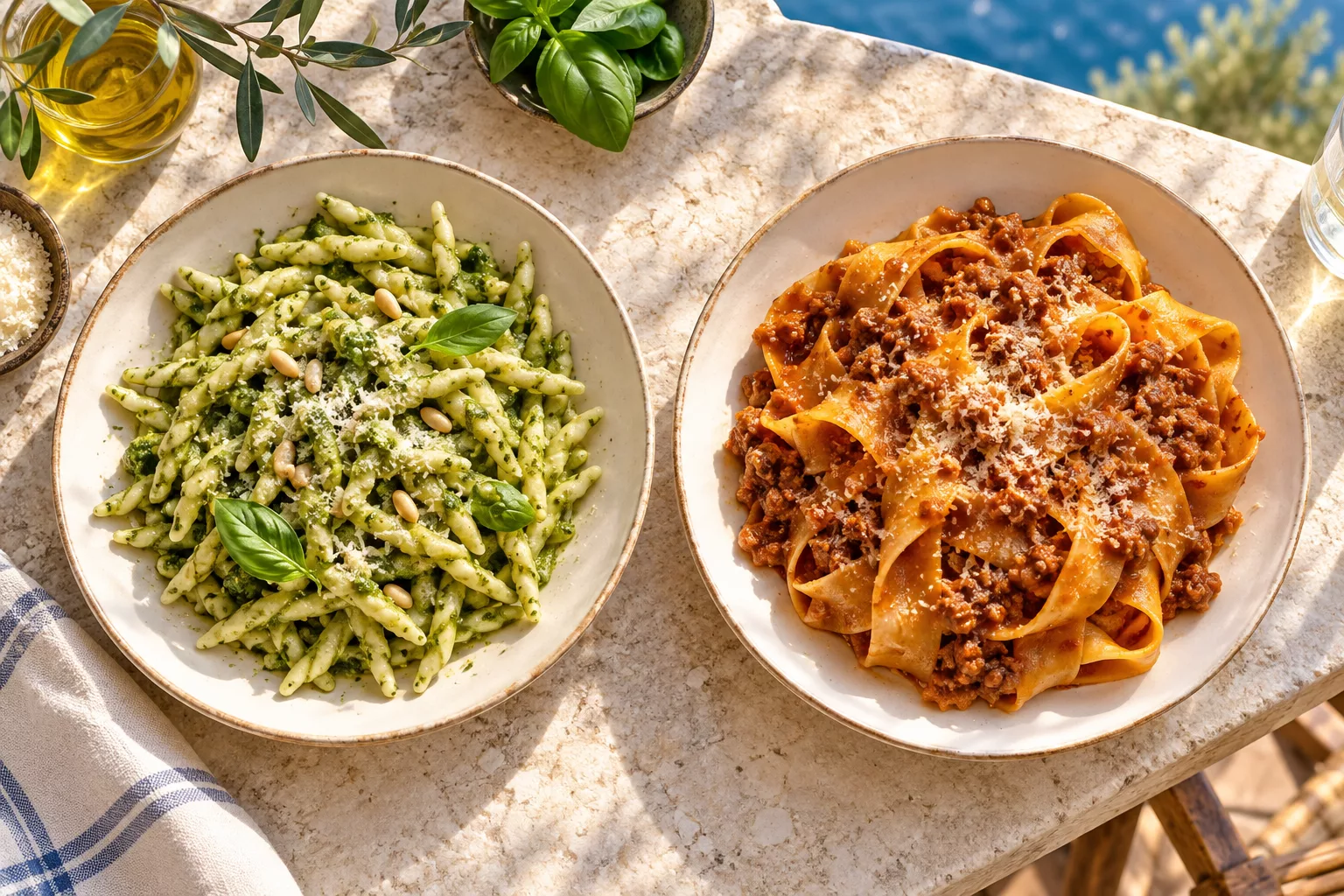
Regional names help narrow your expectations. Genoese pesto points towards Liguria and a basil-based dressing. Tagliatelle with Bolognese ragù belongs to a different context in Emilia-Romagna. Pasta alla Norma is strongly associated with Sicily. These associations are useful, but they do not mean that everyone within a region cooks one identical version.
Our guide to Italian regions and pasta explains how to read those connections. Look more closely at the city, the pasta, and the preparation before accepting a broad claim of authenticity. A regional dish can have household variations while still having features that distinguish it from an unrelated sauce.
Learn the defining flavour before adapting it
When cooking a classic for the first time, identify the ingredients doing its most important work. In a basil pesto, basil should remain evident. In a tomato-and-meat ragù, the meat and the slowly developed sauce should be integrated. In a lemon pasta, citrus fragrance and acidity need to be controlled rather than buried beneath unrelated additions.
This does not demand expensive shopping for every dinner. It asks you to understand what a substitution changes. Replacing an unavailable ingredient may be practical, but give the resulting dish an honest description. A good adaptation does not need an exaggerated claim that it is the single traditional version.
Begin with the Genoese pesto recipe
The published Pasta with Pesto Genovese draft provides a mortar-based approach and a separate option involving potatoes and green beans. It is connected to a documented Ligurian tradition, while remaining an editorial working recipe rather than a kitchen-tested result. Read the method and optional additions in their intended order.
The main lesson is to treat pesto as a prepared dressing, not as tomato sauce that needs vigorous simmering. The dish is combined away from direct heat. Fine adjustments with water help distribute the dressing, but do not erase the character of its basil, garlic, nuts, cheese, and oil. The pesto sauce guide gives further context.
Understand what the ragù recipe represents
Rigatoni with Slow-Cooked Ragù pairs sturdy tubes with a tomato-rich beef-and-pork sauce. It is a published draft intended to demonstrate slow sauce building and a useful pasta pairing. It should not be relabelled as a definitive Bolognese or Neapolitan recipe simply because it contains meat and tomato.
The word ragù covers different preparations. Our ragù guide is a better starting point for those distinctions than assuming that all red meat sauces are interchangeable. Follow the existing recipe as the particular version it is. If you want to explore another regional ragù, choose guidance that names and explains that version.
Give lemon pasta room for variation
The Spaghetti al Limone draft uses butter, olive oil, Parmigiano Reggiano, lemon, and pasta water. Its own introduction acknowledges that lemon pasta appears in different forms. Read that choice as a coherent method, not proof that other approaches using different fats or cream cannot exist.
Here the distinction between zest and juice is especially useful: one supplies fragrance, the other brings acidity. Preparing both before cooking lets you follow the recipe calmly. The dish is a good reminder that a short ingredient list can still demand a deliberate sequence and careful heat management.
Recognise names without inventing recipes
Carbonara, cacio e pepe, and amatriciana are familiar names, but they are not interchangeable labels for any rich spaghetti dish. The Lazio article explains their broad differences and the regional context. Pasta Bible does not currently publish complete recipes for those dishes, so use that page as a guide to understanding rather than a substitute for a measured method.
Likewise, the Sicily article introduces pasta alla Norma and other island traditions without claiming a corresponding Pasta Bible recipe. A collection can help you discover a dish before the recipe library covers it. What matters is making that distinction clear enough that readers know what they will find after clicking.
Respect technique without collecting rigid rules
A traditional pairing often makes practical sense: a sauce’s texture suits the pasta’s surface, thickness, or shape. Learn that relationship before changing both components. Yet a cupboard substitution can still make an enjoyable dinner. Describe the difference, follow the new pasta’s cooking requirements, and judge the finished forkful.
Be cautious with absolute claims such as “Italians always add cheese” or “real pasta never contains cream.” Different dishes use different methods. Adding cheese indiscriminately can obscure a dressing, while refusing an ingredient solely because of a broad slogan can misunderstand another tradition. Read the specific dish, not an imagined national rulebook.
Make your next classic a focused project
Choose one published recipe, read its status and full method, and buy ingredients for that version. Keep optional changes limited. Taste the result attentively: does the main ingredient remain clear, does the coating suit the pasta, and is the texture pleasant? Those observations will guide a second attempt more usefully than a verdict about authenticity alone.
For a meal with several courses, keep the rest manageable. A pasta dish that needs a careful last-minute finish is easier to enjoy when the accompaniment is already prepared. Let the named dish be the centre of the meal rather than surrounding it with competing sauces and elaborate garnishes.
Classic-dish questions
Does a registered recipe mean every family follows it?
No. A documented version can preserve an important reference point without describing every household practice. Pay attention to its purpose and location, and avoid treating it as evidence that all variation has disappeared.
Must I make the pasta from scratch?
No. Many recognised dishes suit dried pasta, while others depend on fresh egg sheets or filled shapes. Choose the pasta appropriate to the dish and your time, rather than assuming handmade always means more traditional.