Pasta Bible · Explore Italy
Sicily: Pasta, Aubergines & Island Flavours
Sicilian pasta can place vegetables, fish, nuts, or a fragrant dressing at the centre of the bowl. Those ingredients do not belong in every dish at once. The pleasure of exploring the island’s cooking comes from noticing distinct combinations rather than collecting every flavour associated with Sicily into one sauce.
Three useful starting points are pasta alla Norma, pasta con le sarde, and the busiate associated with western Sicily. They offer different relationships between pasta, sauce, and garnish. Learn each dish’s basic identity, then use that understanding to read a menu or choose a complete recipe.
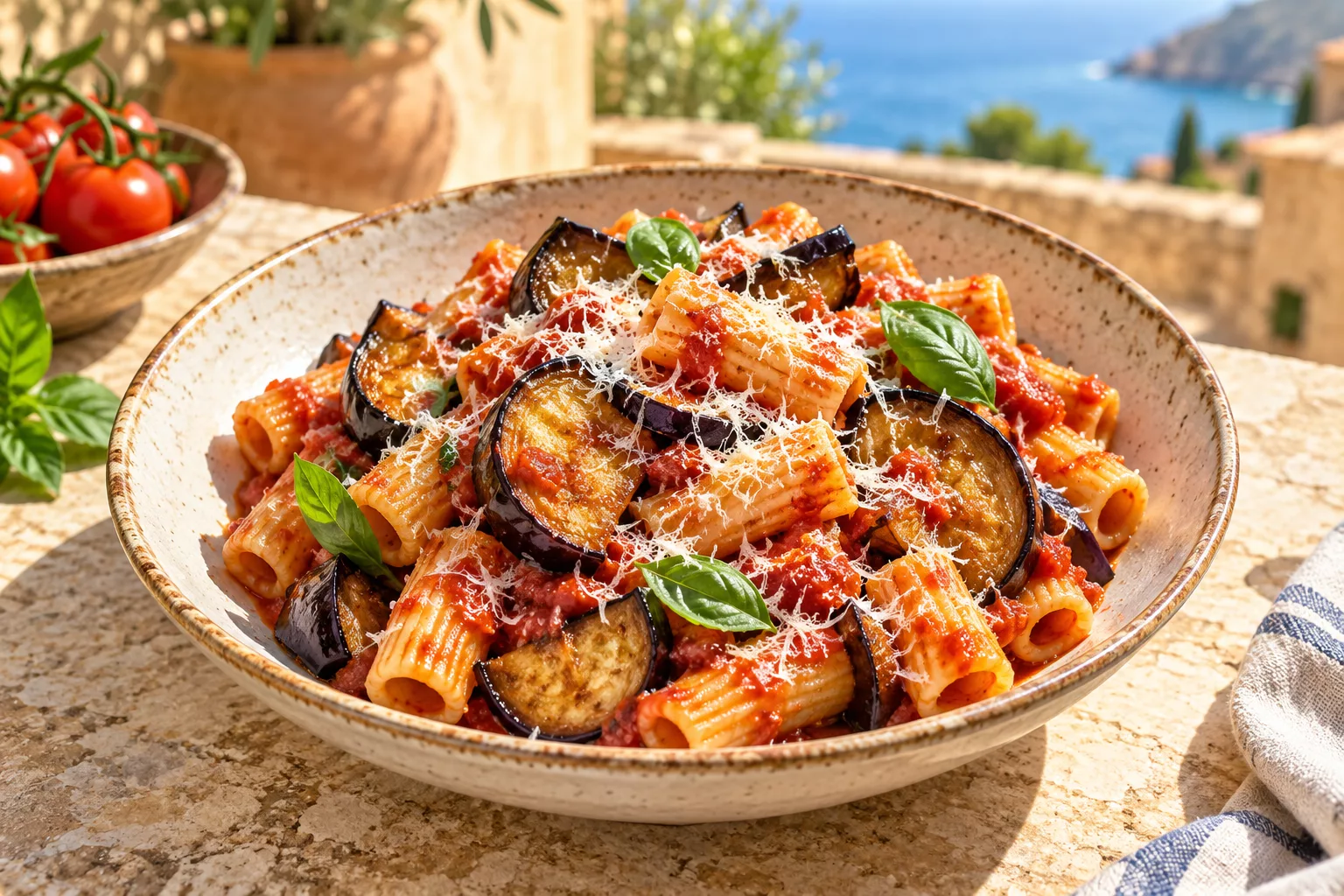
Pasta alla Norma: keep the aubergine recognisable
Pasta alla Norma is strongly associated with Catania. Its familiar combination brings together tomato, fried aubergine, basil, and ricotta salata. Aubergine is also called eggplant; ricotta salata is a salted, firm cheese, distinct from the soft fresh ricotta sold in tubs. Those distinctions matter when shopping for the dish.
The aubergine should contribute its own flavour and texture rather than disappear into an undifferentiated red sauce. Versions differ in how it is cut and arranged. A dish with slices laid over pasta eats differently from one with smaller pieces mixed through, even when the main ingredients remain recognisable.
If you prefer a baked or roasted aubergine adaptation, describe it that way. It may suit your kitchen, but it changes the preparation and texture. There is no need to claim that a personal adjustment reproduces every characteristic of the fried version.
Choose the tomato and cheese for their jobs
A tomato sauce for aubergine pasta needs enough body to coat while leaving the vegetable apparent. The tomato product guide helps distinguish whole peeled tomatoes, passata, and concentrated paste. Choose according to a recipe’s method, not the assumption that every red product can be exchanged in the same quantity.
Ricotta salata supplies a salty finishing contrast. Replacing it with soft ricotta changes both texture and moisture; another hard cheese changes flavour. If the exact product is unavailable, understand what your substitute will contribute and acknowledge the adaptation. Taste before adding extra salt to a bowl that already contains a salty cheese.
For vegetarian diners, check the cheese’s rennet information as well as the other ingredients. A vegetable-centred dish is not automatically suitable for every vegetarian. Our vegetarian pasta guide explains the shopping questions without treating all cheeses alike.
Pasta con le sarde: a different balance
Pasta con le sarde means pasta with sardines and is a recognised Sicilian preparation. Well-known versions combine the fish with fennel and sweet-savoury accents such as raisins and pine nuts. The balance is different from a plain tomato-and-fish sauce, and versions vary. Read the ingredients of the particular recipe you choose.
For a cook new to the dish, the useful starting point is its contrast of flavours. Fish, an aromatic green note, a little sweetness, and nuts have different roles. Do not increase every distinctive ingredient at once. A component that adds interest in a small amount can overwhelm the fish when treated as the main ingredient.
Use a complete fish recipe that explains cleaning, preparation, and cooking rather than improvising from a list of flavour associations. Fresh sardines and preserved sardines are different products. A pantry adaptation may be convenient, but it should be written and understood as an adaptation rather than a direct exchange with no other changes.
Busiate and the western part of the island
Busiate are associated with the Trapani area and appear with pesto alla trapanese. Their twisted shape offers a different eating experience from a straight strand or a hollow tube. The tomato, almond, garlic, and basil character of that pesto distinguishes it from the better-known basil pesto associated with Genoa.
The word pesto therefore does not guarantee one ingredient list. If you are avoiding nuts, dairy, or another ingredient, ask about the actual preparation. Do not assume that a red or pale dressing is unrelated to nuts simply because it is not the bright green pesto you recognise.
When buying busiate, check whether they are fresh or dried and follow the product’s cooking guidance. If you substitute another shape, choose one that can gather the finely textured dressing. Keep the sauce mobile enough to reach the pasta’s curves rather than leaving dry folds underneath a thick spoonful.
Use texture as a guide to finishing
These dishes invite different decisions. Aubergine pieces may need gentle mixing to retain their shape. A finely textured nut dressing needs even distribution. Fish can break into smaller pieces if worked too roughly. Think about what should remain visible before choosing how vigorously to stir or toss.
A little liquid may help a coating spread, but judge the sauce you actually have. Adding the same ladleful to every preparation can dilute one dish while barely loosening another. The finishing guide explains controlled adjustments and why not every dressing belongs over strong heat.
Keep the garnish connected to the dish
A garnish should complete a flavour or add a useful texture. Cheese, nuts, and breadcrumbs are not interchangeable finishing decorations. Before adding one, taste the pasta as a complete forkful. Ask whether the dish needs salt, crunch, richness, or nothing further.
This is especially helpful when adapting a regional dish. It is easy to make a bowl look busier while making its identity less clear. Start with the combination you intended to explore, then make a restrained adjustment for your ingredients and taste.
Explore without relying on origin legends
Famous dishes often attract memorable stories about their names and invention. An association with Catania or Trapani can be useful without requiring a single dramatic origin story to be settled. Focus first on the documented dish and the ingredients that distinguish it.
Pasta Bible currently offers these Sicilian subjects as an editorial guide, not a set of complete published Sicilian recipes. Use the tomato sauce guide and existing ingredient articles for relevant foundations. Do not mistake the discussion of a dish here for measured instructions or a claim that it has been kitchen-tested by Pasta Bible.
Sicily questions
Is ricotta salata simply fresh ricotta with salt stirred in?
No. It is a distinct firm product with different moisture and texture. Stirring salt into soft ricotta will not reproduce its grating or finishing behaviour.
Does all Sicilian pasta contain fish?
No. Pasta alla Norma is an obvious vegetable-led example. The island has varied pasta traditions; a regional label alone does not tell you the ingredients.
Can I use Genoese pesto for a Trapanese dish?
You can make a meal with it, but you will have changed the dressing’s identity. The two pestos have different defining ingredients. Name the sauce you actually use rather than treating “pesto” as one universal formula.