PastaBible Ingredients guide
A Guide to Tomatoes for Pasta Sauce
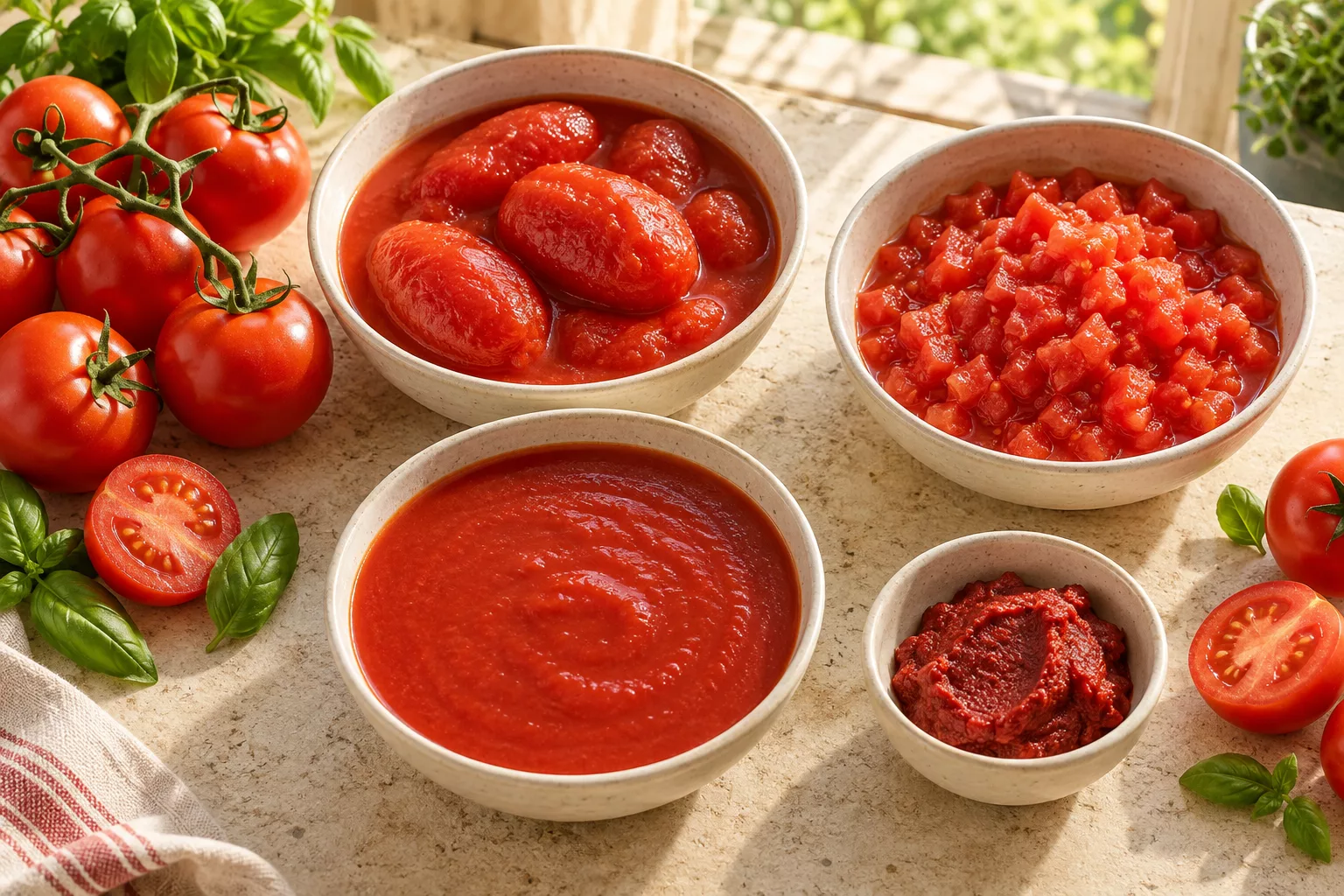
The best tomato for a pasta sauce depends on the sauce you want. Ripe fresh tomatoes can make a bright, lightly cooked dressing; whole peeled tomatoes offer control over texture; passata gives a smooth starting point. Concentrated paste plays another role altogether.
Choose by ripeness, consistency, and intended cooking method rather than assuming the most expensive tin is always the answer. A reliable preserved tomato can be more useful than a fresh tomato that has little flavour, especially when the recipe needs a dependable base rather than a seasonal showcase.
Fresh tomatoes: buy for flavour first
For a quick sauce, look for ripe tomatoes with a flavour you enjoy. Cherry and small plum tomatoes can work well in a pan because they can soften into juicy pieces while keeping some character. Larger tomatoes offer different balances of flesh, seeds, skin, and juice.
Cut the tomatoes to suit the pasta. Small pieces can join a forkful of spaghetti more easily than large wedges; a rustic short-pasta dish can welcome more substantial pieces. If the tomatoes release a lot of juice, allow that liquid to reduce before the pasta enters the pan.
Peeling and removing seeds are texture choices, not compulsory acts of Italian correctness. For a smooth result, skin and seeds may be distracting. For a rustic dressing, keeping them may suit the dish. Do not discard the juice automatically if the sauce needs moisture and flavour.
Whole peeled tomatoes give you options
Whole peeled tomatoes let you decide how far to break them down. Crush them gently for a textured sauce, chop them for smaller pieces, or blend them when a smoother result is wanted. Include the packing juice unless the method gives a reason to drain it.
Break the tomatoes in a bowl before adding them if you want to avoid chasing slippery pieces around a hot pan. Crushing by hand is optional; scissors, a spoon, or a knife can be more comfortable. The point is controlled size, not a ritual.
Read the label for added salt and other ingredients. Products differ, so season after tasting rather than assuming every tin starts equally bland. Once you find a brand that suits your cooking, it can provide a useful baseline for judging changes in method.
Passata is a smooth base, not necessarily a sauce
Passata is strained tomato, typically smooth and free of the obvious pieces found in chopped tomatoes. It is convenient when you want a uniform coating without blending a finished sauce. Check the ingredients: some products contain salt, herbs, or other additions.
A bottle of plain passata still needs whatever cooking and seasoning your dish requires. It is not automatically a ready-made pasta sauce. Start with chosen aromatics and fat, add the passata, then cook until its flavour and consistency suit the preparation.
Names vary internationally. “Tomato purée” can mean a smooth tomato product in one market and a concentrated paste in another. Use the label, concentration, and appearance together. A thick spoonable concentrate is not a volume-for-volume replacement for a bottle of fluid passata.
Chopped tomatoes and paste do different jobs
Chopped tomatoes offer ready-made pieces, making them convenient for a rustic sauce. Some products retain a distinct diced texture even after cooking; check the ingredients and judge the result rather than assuming all chopped tomatoes will collapse into a smooth liquid.
Tomato paste is concentrated tomato. A small amount can deepen an aromatic base, reinforce a sauce, or form part of a recipe built specifically around diluted concentrate. It is not simply a thicker version to substitute freely whenever another tomato product is unavailable.
When a method calls for cooking paste with aromatics, stir it carefully and watch for scorching. Add the recipe’s liquid when appropriate. Double-concentrated and other products vary in intensity, so use a coherent recipe or make a restrained adjustment rather than emptying a tube into a delicate sauce.
Match the product to the evening
For a light, fresh-tasting dressing, use ripe fresh tomatoes and a short, attentive cook. For a smooth weeknight base, passata saves a blending step. For a sauce where you want control over both smoothness and pieces, whole peeled tomatoes are a flexible choice.
For a long-cooked dish, choose a product that suits the full recipe rather than expecting time alone to improve any tomato. Reduction concentrates what is already there, including salt and an unpleasant flavour. Long cooking also changes the character; it is not the only route to a good sauce.
The Italian tomato sauce guide covers sauce families and technique. Once the sauce is ready, finish the pasta with it so the tomato coats the noodles instead of remaining a separate layer.
Adjust balance without chasing a formula
Taste before deciding a tomato sauce needs sugar. First check seasoning, reduction, and whether the aromatics have cooked properly. A small sweet adjustment can be a personal choice for a particular batch, but it is not a compulsory ingredient or a reliable way to erase every harsh flavour.
If the sauce is watery, give it time to reduce before adding pasta. If it is already thick enough but lacks freshness, think about the intended dish before adding more paste. A little basil or a finishing oil may be more appropriate, while some preparations need neither.
Avoid judging tomatoes entirely by a famous variety name on the front of a tin. Read the full description and choose a product that performs well in your sauce. This guide does not treat a variety claim as proof of a protected geographical designation.
Tomato-shopping questions
Can I blend chopped tomatoes instead of buying passata?
Yes, when a smooth texture is the aim. The result may differ in consistency and flavour, so adjust the cooking and liquid rather than assuming the two products are identical.
Should all tomato sauce contain garlic and onion?
No. Either, both, or neither may suit a particular preparation. Choose aromatics deliberately and give them appropriate cooking time. Adding every available flavour can obscure the tomato rather than improve it.
Which pasta should I serve with a smooth tomato sauce?
Spaghetti is a useful starting point. For a thicker or chunkier result, consider rigatoni. The sauce’s final texture matters more than whether its tomatoes began fresh or preserved.