Pasta Bible · Cooking
How to Balance Acidity in Tomato Sauce
Taste a spoonful of tomato sauce on a piece of pasta before adding anything sweet. If it is sharp and thick, a splash of water may be all it needs. If it is thin and tastes of raw tomato, a short simmer may help. If the fruit is there but the flavour feels flat around the sourness, try a little salt or olive oil. Sugar is an option when the tomato lacks sweetness. Test it on a spoonful before changing the whole pan.
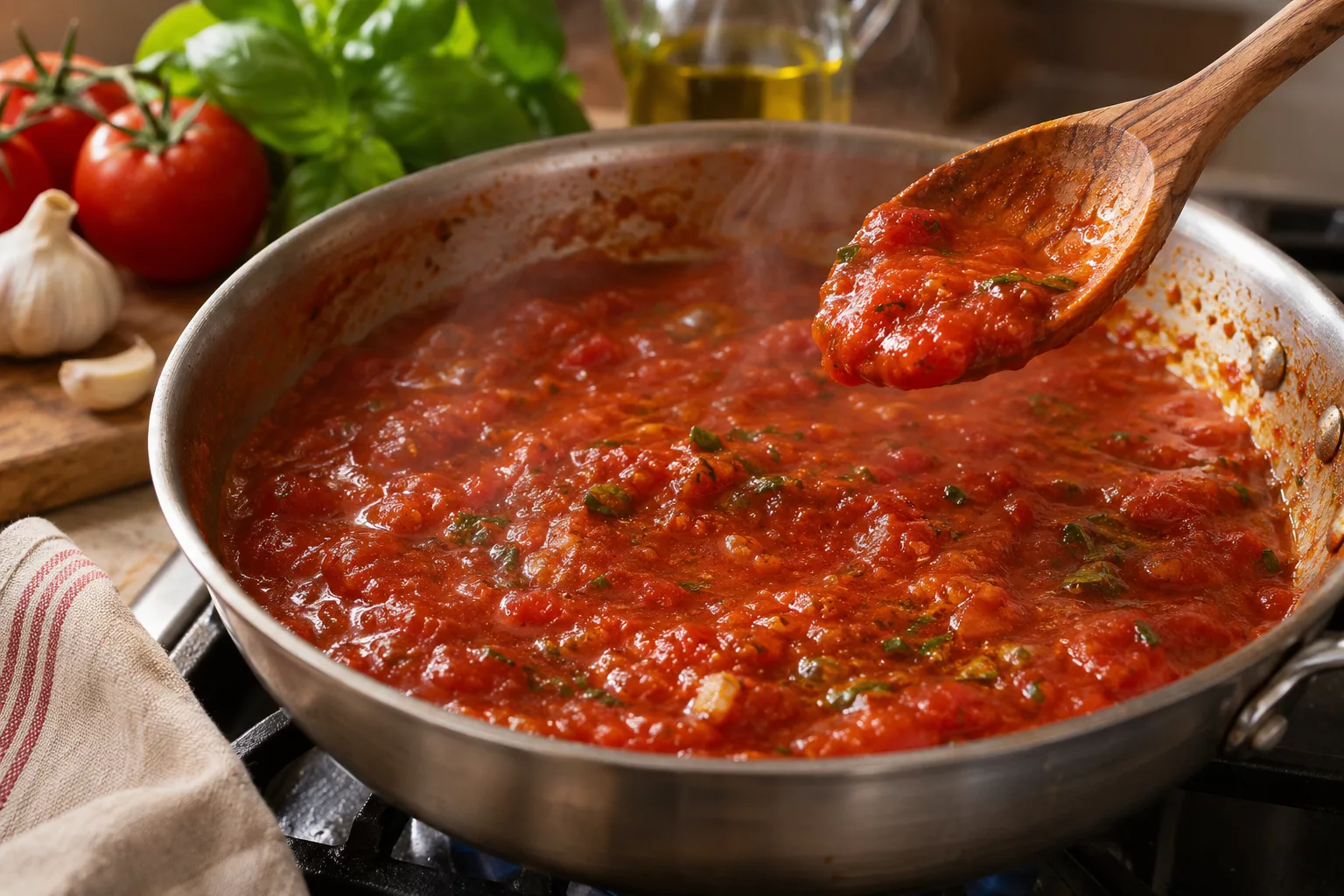
What makes one tomato taste sharper than another?
Tomato flavour comes from sugars, acids and aromatic compounds together. A fruit can contain plenty of acid and still taste beautifully balanced if it also has sweetness and a full aroma. Variety, ripeness at harvest and growing conditions all influence that balance. A bright red colour or a plum shape is a poor guide to how much sugar a particular pan will need.
Fresh fruit brings the character of the season and the individual tomato. Preserved tomatoes can give you ripe flavour when fresh ones are watery, but brands and batches differ. Whole peeled tomatoes come with packing juice or purée, passata is strained, and paste has already lost much of its water. Added salt or citric acid may appear on the label. Taste the contents as well as reading the tin. Our guide to tomato products covers the differences in more detail.
Follow the water as the sauce cooks
Cooking fresh or canned tomato softens the flesh and changes its aroma. A briefly cooked sauce may lose a raw, green edge as it simmers. At the same time, water leaves the pan as steam. Sugar, salt and much of the acid remain in a smaller volume. Reduction can make a lively sauce taste richer or concentrate the very sharpness you wanted to soften. More time is helpful only if you know which change you are waiting for.
Drag a spoon across the bottom. If the sauce is already thick enough to leave the metal exposed for a moment, taste a small portion with a few drops of warm water. If the flavour opens up, loosen the pan gradually. If the sauce is watery and sharp, simmer a sample down and compare. A wide uncovered pan reduces faster than a deep covered pot, so the same number of minutes can produce two very different results.
Season for the whole forkful
Salt helps bring the flavour of the fruit into focus. Try a few grains in a small sample, stirring well and giving them time to dissolve. If the tomato now tastes fuller, a little salt in the pan may be enough. Salt cannot remove the tomato's acid, and a salty sauce is hard to reverse. Consider the capers, cheese or cured meat that will arrive later before making a second adjustment.
Fat works differently. A little olive oil folded through the sauce changes its mouthfeel and adds its own aroma. Butter can give a soft dairy finish. Neither needs to float in a layer on the surface. Turn the seasoned sauce through the pasta and taste again. If the oil is particularly peppery or bitter, adding a great deal can introduce another strong sensation when you were trying to soften the first.
Sweetness can come from more than the sugar bowl
A little sugar can balance sourness without making a savoury sauce taste obviously sweet. Use a small pinch in a tasting portion, dissolve it fully and compare with the untreated sauce. Sugar changes what you taste while the acids remain. If the tomato now tastes bright and rounded, scale up cautiously. If it tastes like sweetened sour tomato, sweetness was probably not the missing piece.
A gently softened onion can contribute sweetness and aroma from the beginning of cooking. It changes the style of the sauce as well as its balance. That may suit a slow vegetable dressing but feel intrusive in a quick garlic and tomato sauce. A naturally sweeter batch of unsalted tomato can also soften a very intense one. Blend a little of each on a spoon to see whether they improve each other.
Keep baking soda as a last adjustment
Baking soda reacts with acid and can make the sauce foam. Its effect differs from sweetening, and it is easy to take away the lively flavour that made the tomato appealing. If you choose to try it in a sauce for immediate eating, use only a few grains in a separate small sample, let the bubbling subside and taste. A heavy hand can leave a flat or soapy flavour and soften the tomato pieces until they lose definition.
Keep that experiment separate from preserving tomatoes. A sauce adjusted for dinner has a different purpose from a tested canning formula that specifies its acid ingredients. For everyday pasta it is usually easier to control the outcome with dilution, seasoning or a different blend of tomatoes. Once a pot has lost its fresh edge through excess baking soda, restoring the original flavour is difficult.
Tomato sauce questions
What if the sharp flavour is actually bitterness?
Taste for a scorched note from garlic, browned paste or the bottom of the pan. If the sauce has caught, lift the unburnt portion into a clean pan without scraping up the dark layer. Sugar cannot recover badly burnt garlic. A fresh aromatic base can be a better use of time than repeated attempts to season away the bitterness.
Should I add pasta water or plain water?
Taste the cooking water. A little can loosen a concentrated sauce while helping it coat the pasta. If the sauce already contains salty olives or anchovies, choose plain warm water instead. In puttanesca, taste a forkful with a caper as well as the tomato before deciding whether the pan needs any further seasoning.
Can I keep the bright flavour in a quick summer sauce?
Yes. Use ripe tomatoes you like raw, keep reduction modest and taste at serving temperature. A lightly dressed strand should still taste fresh. A trace of tartness that seemed pronounced on a spoon can be exactly what gives a whole plate of pasta its lift.