Pasta Bible · Sauces
Puttanesca Sauce: Olives, Capers and Anchovies
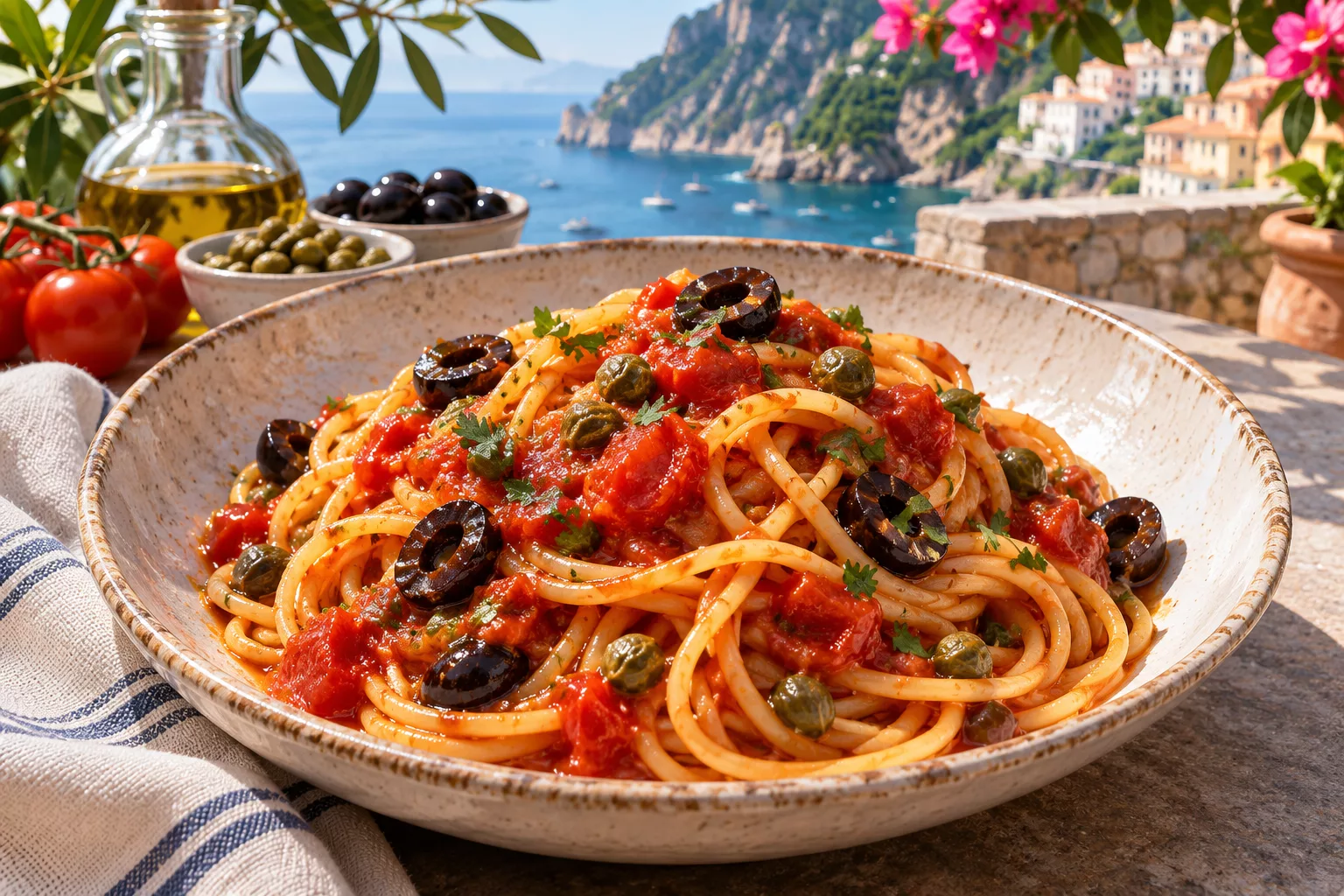
Puttanesca is a tomato sauce in which olives and capers should still taste like themselves. A forkful of spaghetti brings up soft tomato, a fleshy piece of olive and the occasional sharp caper. In versions made with cured anchovy, the fish seasons the whole forkful. Warm it gently in olive oil and break it up before adding the tomato. Sprinkle in salt only after tasting all these ingredients together.
From Naples to Lazio
In Naples and elsewhere in Campania, the combination of olives and capers has a life of its own. One familiar Neapolitan preparation brings them together with tomatoes, garlic and oil, without fish. Anchovies are particularly associated with the Lazio version. This is a useful distinction when choosing a dish, though regional descriptions and individual cooks overlap. A Neapolitan cook may use anchovies, and the word on a menu tells you little about the contents of a particular pan.
The name has attracted stories about brothels, hurried meals and late-night restaurant guests. Accounts disagree even on where the decisive meal took place. An older reference to pasta with olives or salted fish can document a combination people ate without telling us when they began calling it puttanesca. What links the dishes on the table today is easier to recognise than the occasion on which someone named them.
Choose ingredients that leave room for each other
Start with a tomato you enjoy on its own. Whole peeled tomatoes crushed by hand give an irregular, juicy sauce. Passata gives a smoother coat and throws the olive pieces into sharper relief. If the tomatoes come in thick purée, use some plain water to give them room to cook. An intensely reduced tomato base can make the combination with cured fish and olives taste almost like a spread.
Dark, fleshy olives bring a little bitterness along with the salt. Taste one before cutting the rest. A soft olive can be torn into two or three pieces while a firm one benefits from a finer chop. Pit them yourself or check pitted olives for fragments. Leaving a few large pieces is appealing, but leaving every olive whole makes the last mouthful on the plate quite different from the first.
For smaller, brighter accents, use caper buds. Rinse off packing salt and soak briefly if a tasted bud is still fiercely salty. Drain vinegar-packed buds well, especially with tangy tomatoes. Chop some capers to spread their flavour and leave a few whole to bite into. Pouring the packing liquid into the pan at the outset makes it difficult to judge either salt or acidity later.
Work the anchovy into the oil
Oil-packed cured fillets are convenient here. Prepare whole salt-packed fish first by removing surplus salt and the backbone. Warm a little olive oil with garlic over gentle heat. Add the fillet in pieces and press with the back of a wooden spoon. It loosens into fine savoury flecks. The pieces need enough warmth to soften, but a hard fry gives them crisp edges that resist breaking up.
Introduce chilli gently if you want heat. Once the garlic smells sweet and the fish has dispersed, stir in the tomato. A splash from the tomato tin brings any soft bits back into the sauce. Follow with the prepared olives and capers. Give them time to share their flavour without cooking everything down to the same texture. Fresh parsley stirred through near the end offers a clean finish, particularly with a generous measure of anchovy.
Match the cut to the fork
Spaghetti picks up fluid tomato readily and twists around small olive pieces. Linguine offer a wider ribbon with much the same advantage. If you have short pasta, try casarecce or ridged tubes and cut the olives small enough to lodge in a curve or opening. A sauce with roughly chopped olives is easier to eat on those shapes than on very fine strands that slip away from the pieces.
Move the pasta into the sauce while there is still a little bite left. Turn it until the liquid at the bottom travels with it. If it looks dry, add a small splash of water. Taste your cooking water first. With a particularly salty batch of capers or anchovies, hot plain water will loosen the sauce without pushing the seasoning further. Divide the solids between the plates as you serve.
Taste a complete mouthful
Taste some dressed pasta with an olive and a caper before reaching for more salt. If the plain tomato tastes dull but that forkful tastes balanced, leave it alone. If individual bites are harsh while the surrounding sauce tastes good, remove and chop some of the larger pieces. Uneven distribution can masquerade as poor seasoning. When the whole pan tastes salty, more unsalted tomato or additional unsalted pasta actually spreads that salt through more food.
Puttanesca questions
Can I make it without fish?
Yes. Build the base with garlic, oil and tomato and give the olives and capers plenty of space. There is no need to find a substitute for each fillet. Choose plain olives if serving someone who avoids fish, since some stuffed olives contain anchovy. For a different dish where the fish plays a larger role, see anchovies in pasta cooking.
What if I have only green olives?
Use them if you like their flavour. Taste for bitterness and cut a small amount into a spoonful of tomato before committing the whole pan. A firm green olive can bring a pleasant bite, although the finished dish will taste different from one made with soft dark olives.
Should the sauce sit on top of the pasta?
Save a few pieces for the top if you like, but dress the strands first. A mound of undressed spaghetti with all the sauce in the centre leaves the first bites pungent and the last ones bare. Turning them together for a moment gives the olives and capers a tomato coating to travel in.