Pasta Bible · Ingredients
Anchovies in Pasta Cooking
For an anchovy that seasons a whole pan of pasta, choose cured fillets packed in oil, or clean and desalt a salt-packed anchovy. Warm the prepared flesh in olive oil and press it with a spoon until it breaks into fine flecks. Fresh anchovies are a different proposition. They cook into tender pieces of fish and make a good main ingredient in their own right. Buying the right form matters more than finding the largest tin.
Read past the picture on the lid
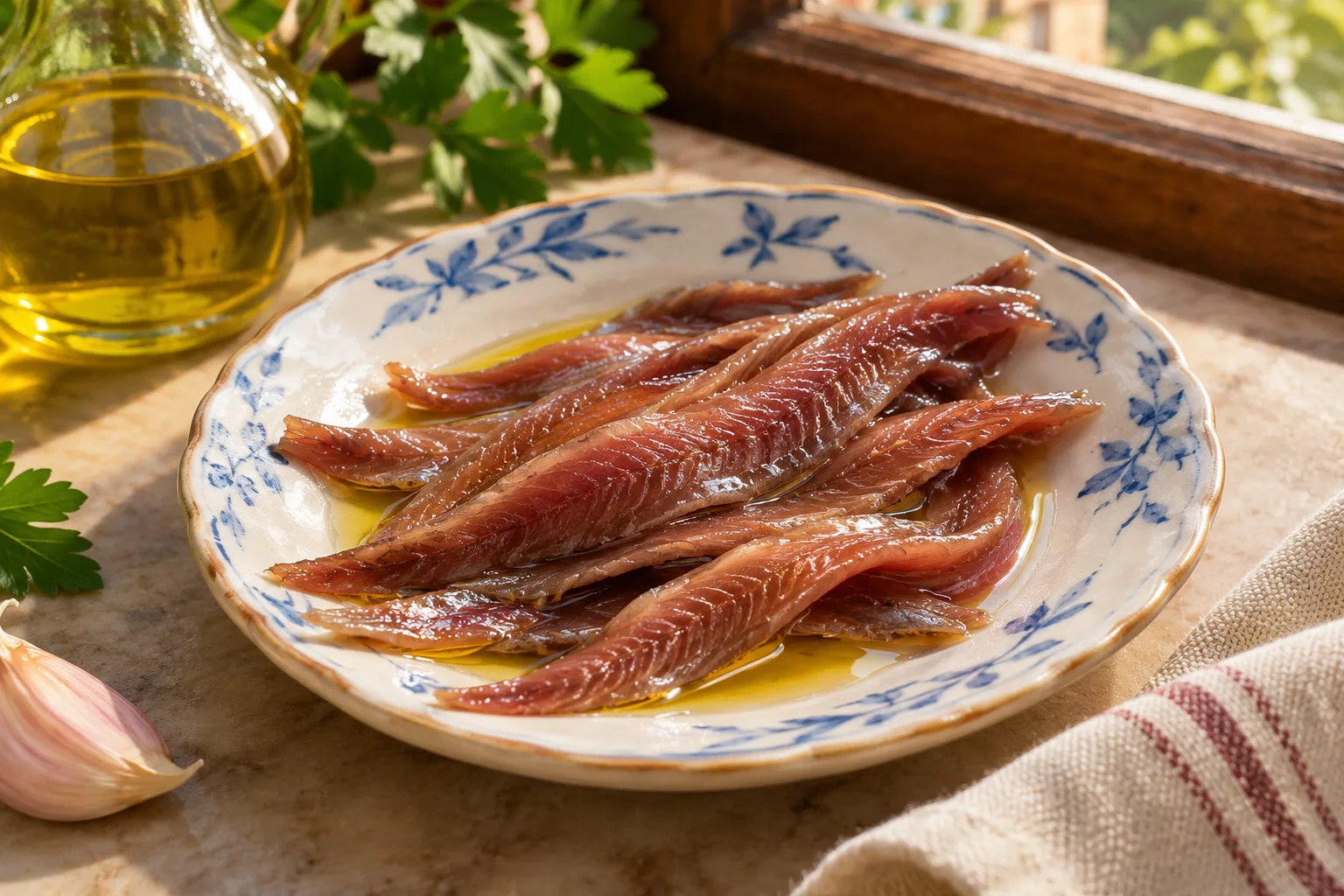
A small brown fillet lying flat in oil has usually spent time maturing with salt before packing. That cure concentrates the flavour and changes the flesh. The fillet is easy to lift out, portion and break down. A single fillet can bring depth to garlic and tomato while remaining difficult to pick out in a finished forkful. Look at the ingredient list for chilli, herbs or other added seasonings if you want a plain base.
Salt-packed anchovies may arrive whole, with backbone and skin intact. Their appeal is control over the cleaning, salt and portion size. Brush off excess salt, rinse the fish you intend to use and follow the packer's directions for soaking. Open along the belly and lift out the backbone, checking each side for coarse bones. Pat the fillets dry. The resulting pieces can do much the same job as cured fillets in oil, but the preparation and salt load differ.
Fresh anchovies have silvery skin and moist, delicate flesh. Buy prepared fillets or ask the fishmonger to clean them. Fold them into a dish designed to cook fresh fish, leaving them in pieces if you want their texture. Pale vinegar-marinated anchovies, often sold as boquerones, are a further distinction. Their tang is attractive on a finished dish, but they will change a sauce written for a deeply savoury salt cure.
Anchovies and sardines in the same cupboard
A European anchovy and a European sardine are different fish. Packaging can make the distinction less obvious, especially when both are sold in small tins with olive oil. Read the fish name as well as the packing medium. Common canned sardines have plump flesh that flakes readily. If folded through pasta, those flakes remain a substantial part of the dish. They do not reproduce a cured anchovy's intensity spoonful for spoonful.
You can make excellent pasta with either. For sardines, plan a dressing and a pasta shape that carry pieces of fish, and fold them in late enough to keep some intact. For a background seasoning, use the cured anchovy first. A tin of lightly cooked anchovies can behave more like other tinned fish than like dark cured fillets. The species alone does not tell you how the contents will act in a pan.
How a fillet disappears
Warm a film of olive oil gently. Tear or chop the cured fillet, slide it in and press the pieces against the pan as they soften. The fish is breaking apart and dispersing through the oil. It is fine if you can still see tiny fragments. If it sticks or the edges begin to crisp immediately, move the pan away from the heat. Browning the fish makes it harder to distribute evenly.
For puttanesca, add tomato once the anchovy has dispersed and the garlic is fragrant. For a dressing without tomato, let a splash of pasta water and the movement of the strands carry the flavoured oil. Anchor the finished texture with toasted breadcrumbs if you want crunch. Toast the crumbs separately so the moisture needed to finish the pasta does not soften them before they reach the plate.
Season in stages
Taste a prepared cured fillet to judge the pack. If olives, capers or hard cheese are also going in, begin with less fish and hold back extra salt. Season the cooking water with the eventual dressing in mind. Taste a dressed piece of pasta before deciding that a sauce needs another anchovy. Adding a whole one at the end can leave a concentrated salty patch.
If you do need more, soften a small piece in a spoonful of oil in a separate pan, then stir that into the sauce. If you have gone too far, extend a tomato dressing with unsalted tomato or combine it with more unsalted pasta. Squeezing in lemon can brighten the flavour but leaves the same amount of salt in the dish.
Keeping the rest of the pack
Read the label before opening as well as after. Some cured anchovies are semi-preserved and need cool or refrigerated storage even in a sealed pack. Follow the manufacturer's temperature and use-by directions for that particular product. Refrigerate opened oil-packed cured fillets promptly in a covered container and keep them under their oil as directed. Use clean utensils and note when you opened the pack.
Salt-packed fish may have different instructions, including keeping the remaining fish in their original brine. Desalt only what you need. Do not apply an unopened pack's date to an opened container or assume that covering fish with more oil restarts its storage life. Fresh anchovies need the cold handling of other perishable seafood. Refrigerate them promptly and cook soon, or freeze promptly if you will use them later.
Anchovy questions
Can I leave anchovies out for someone with a fish allergy?
Make a separate fish-free sauce from the start with clean utensils. Once a fillet has broken up, the fish is present throughout the oil and the sauce. Removing visible pieces cannot make that serving suitable. Check any prepared sauces or stuffed olives you intend to add as well.
Does anchovy paste need the same amount as a fillet?
Check the product. Pastes differ in concentration and may contain salt, oil or other ingredients. Stir a small dab into the warm base, taste the finished sauce on pasta and adjust. Follow the tube's own refrigeration and opening instructions. Its packaging and formulation can differ substantially from those of a jar of fillets.