Pasta Bible · Cooking
How to Use Breadcrumbs on Pasta
Toast breadcrumbs in a separate pan until they smell of toast and feel crisp after a moment on a cool plate. Dress the pasta first and scatter the crumbs over it just before eating. Fine crumbs give an even, sandy crunch. Larger pieces bring little bursts of texture, particularly over soft vegetables or a smooth sauce. A modest scattering usually does more for the dish than a thick blanket that absorbs the dressing.
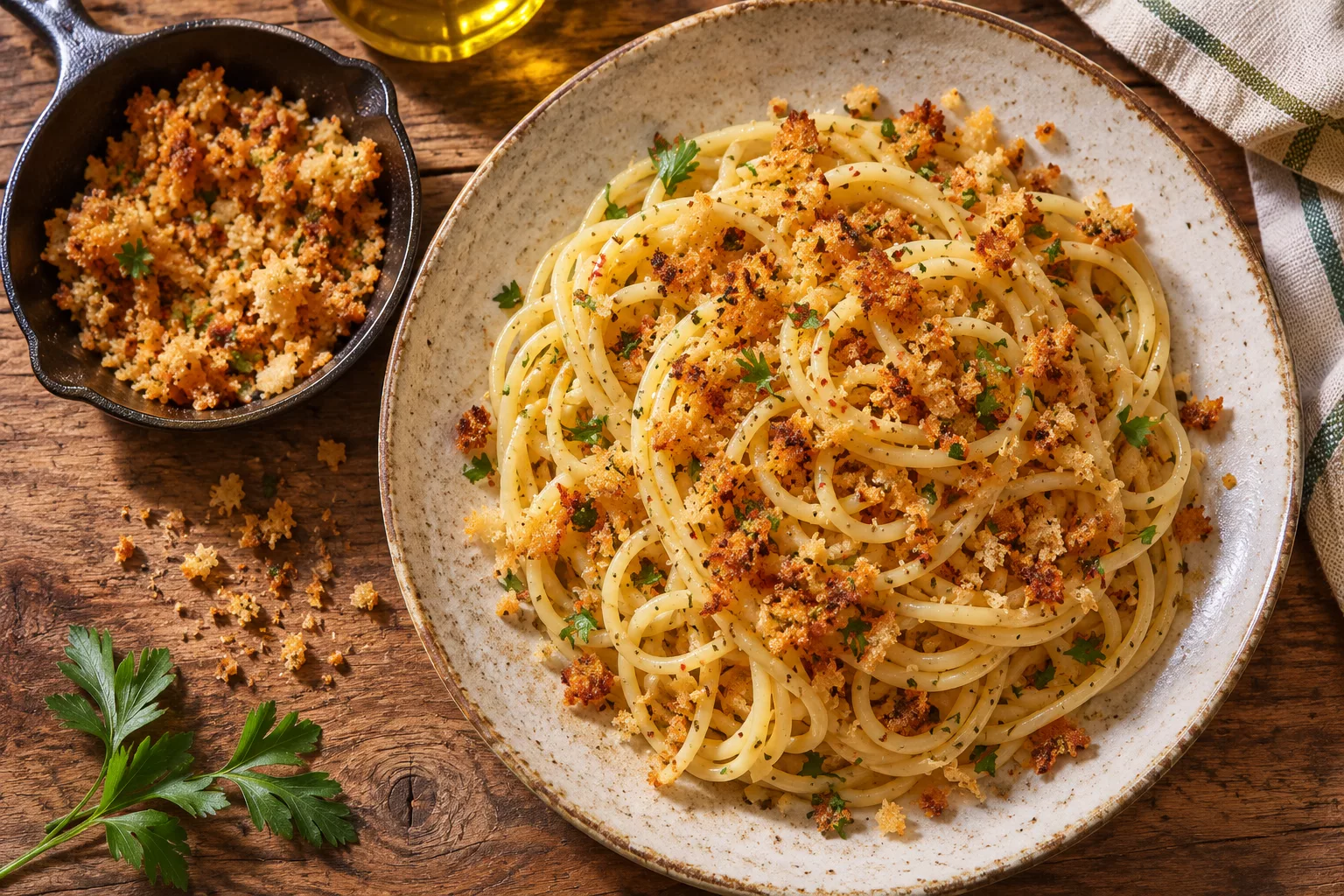
Choose bread for the bite you want
Fresh breadcrumbs made from the soft interior of a loaf begin pliable and slightly damp. Torn or pulsed into irregular pieces, they can develop crisp edges with a little substance left in the middle. Give them time to lose moisture before looking for colour. If a mound of fresh crumbs is steaming itself in a small pan, spread it more thinly or toast in two batches.
Dry crumbs start further along. Fine dry crumbs toast quickly, fall between strands and take up liquid as soon as they meet sauce. Choose them for an even dusting over spaghetti. Coarse dry crumbs keep their individual shape and give a more audible crunch. They are particularly good over roasted vegetables, where browning and soft flesh already offer contrasting textures.
Crumb size and freshness are separate choices. Fresh bread can be grated finely and a dry loaf can be crushed coarsely. A processor makes short work of a soft interior, but stop and look between pulses. A mixture of powder and very large chunks is awkward in the pan because the powder burns while the chunks are still pale. Sieve out either extreme and toast the two sizes separately if necessary.
How much crust belongs in the pan?
The interior of a plain, unsweetened loaf produces a mild topping that will pick up garlic or olive oil. A little crust adds darker pieces and a deeper toast flavour. Thick, hard crust broken into rough shards can be uncomfortable on tender pasta. Cut it away or grind it more finely. Taste strongly flavoured bread before using it. Rye, seeds or a sour crust can make an interesting topping if their flavours suit the sauce.
A slightly firm piece of sound bread is easy to grate. Fresh bread is equally useful if you allow for the extra drying time. Packaged plain crumbs are convenient, particularly for a fine coating. Seasoned crumbs may already contain salt, dried herbs or cheese. Read the ingredients before adding any of those to the pan, especially if the sauce also includes cured fish.
Toast by sound, smell and colour
Heat a shallow layer of crumbs in a wide pan over moderate heat. A thin film of olive oil gives a richer flavour and helps seasonings cling. For a drier topping, toast in a clean pan and adjust the oil in the sauce instead. Stir and sweep the edges towards the centre. A patch that stays against the metal too long can turn bitter before the rest browns.
Listen as you stir. Soft crumbs drag quietly at first and sound distinctly drier as they roll over one another. Lift a few onto a saucer and let the steam escape before tasting. Colour can be deceptive with a dark loaf. Once the aroma is pleasantly toasty, tip the batch onto a cool plate. Leaving it in the frying pan while you finish the pasta lets the residual heat continue to brown the smallest pieces.
To perfume the crumbs with garlic, warm a bruised clove in the oil and remove it before toasting. Finely minced raw garlic can burn among the crumbs where it is hard to see. Fold in delicate grated lemon zest or chopped parsley towards serving time. Keep wet additions to the sauce itself. Lemon juice poured directly over the topping undoes the effort you spent making it crisp.
What crumbs bring that cheese does differently
In Sicilian pasta c'anciova, a dressing with anchovy can meet a finishing layer of toasted crumbs, known locally as muddica atturrata. Bread has its own flavour and purpose in that dish. Describing crumbs only as a cheap replacement for grated cheese misses the difference you feel as you eat. Hard cheese brings salt and savour and can soften into the dressing. A toasted crumb stays distinct long enough to crackle under the teeth.
Consider how that contrast fits your sauce. Over anchovy-seasoned pasta, mild crumbs temper the intensity of a salty bite. Over soft aubergine or a thick tomato dressing, coarse crumbs break up a run of similar textures. With a light garlic and olive oil sauce, use a finer, smaller scattering and leave enough moisture on the strands to carry it.
Breadcrumb questions
Why did the pasta go dry at the table?
Some of the liquid has moved into the bread. Dress the pasta a touch more loosely and sprinkle just part of the topping over each serving. Pass the rest separately so people can add more as they eat. If mixing crumbs into the pan intentionally, keep that portion small and save dry crumbs for the surface.
Are breadcrumbs suitable for someone avoiding gluten?
Ordinary wheat breadcrumbs contain gluten. For a gluten-free meal, choose bread or crumbs labelled gluten-free, check the pasta and other ingredients, and use clean utensils and a pan free of ordinary crumbs. Wheat allergy is a separate consideration. Check wheat on the ingredients and allergen labels as well, and agree the choice with the person eating.
Can I prepare the topping before boiling the pasta?
Yes. Plain toasted crumbs can wait on a plate while you cook. Spread them out and let steam escape rather than piling them hot in a covered bowl. Finish moist herbs at the last moment, dress the pasta, and put the crumb plate within reach. That sequence keeps the contrast intact even when the pasta needs a little longer than expected.