PastaBible Cooking guide
How to Finish Pasta in the Sauce
Finishing pasta in its sauce turns two cooked components into one dish. Instead of placing a spoonful of sauce on a mound of drained noodles, you combine them while the pasta can still take on moisture and the sauce can settle into an even coating.
The technique needs coordination more than spectacle. Have the sauce ready, move the pasta at the right moment, and use small additions of liquid to control the finish. A gentle stir can do the job; you do not need to throw a heavy frying pan into the air.
Prepare the landing place first
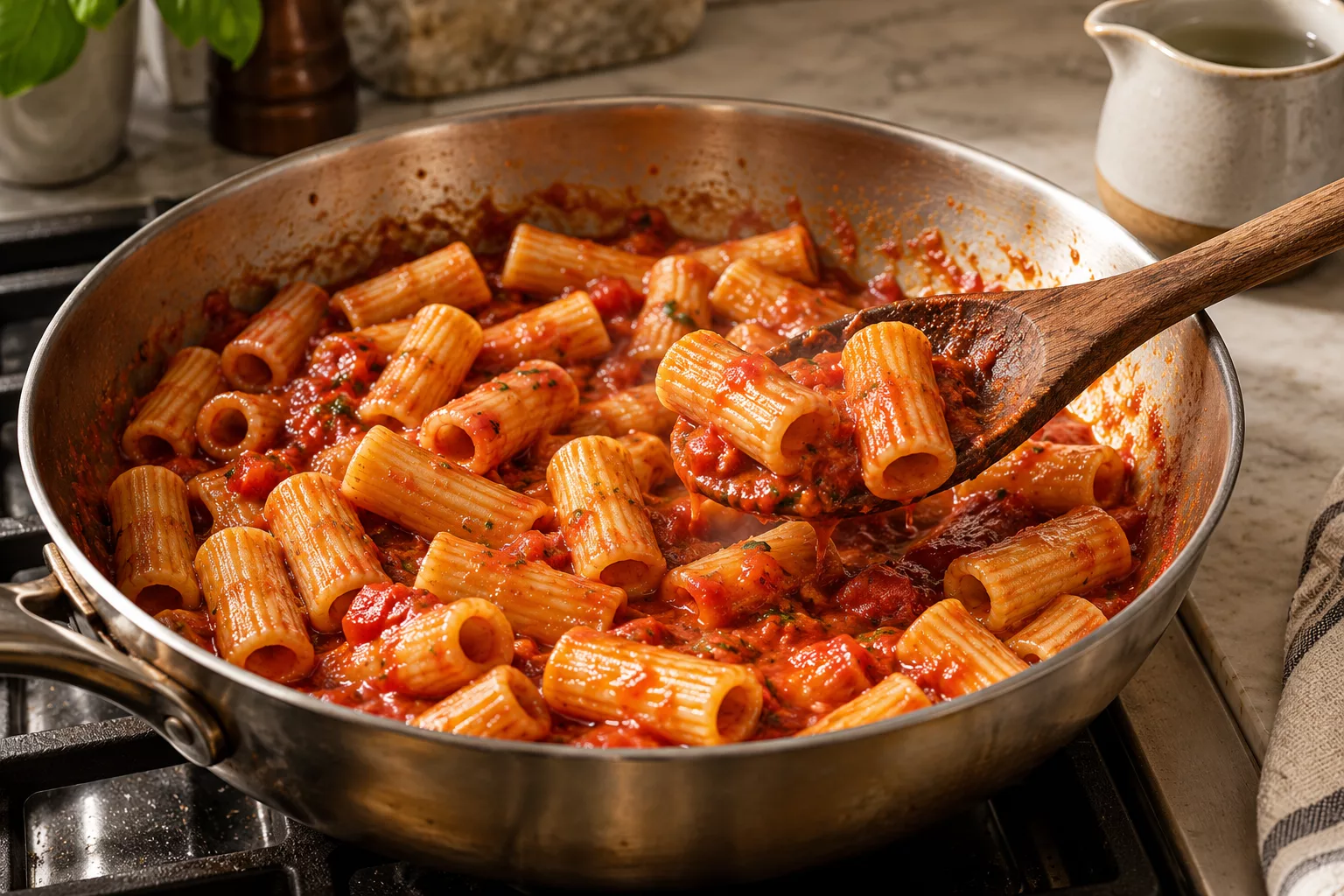
Choose a pan roomy enough for the cooked pasta and sauce with space to move them. A deep frying pan, sauté pan, or wide saucepan can work. A small pan filled to the rim makes mixing difficult and encourages you to leave pockets of undressed pasta underneath.
Cook the sauce to the point where its main ingredients are ready before the pasta arrives. A pan finish is not a substitute for cooking raw meat or softening large vegetables. If the sauce needs longer, wait to start the pasta rather than holding cooked noodles in a colander.
Set out tongs for long strands or a broad spoon for short shapes, a heatproof jug for cooking water, and serving bowls. Grate any finishing cheese now. These preparations give you time to concentrate on texture during the brief final stage.
Decide whether the sauce should be heated
A simmering tomato sauce or a loose ragù can cook with the pasta for a short finish. Start with the sauce fluid enough to move, rather than already reduced to a dense paste. The noodles need available moisture if they are expected to soften further.
Fresh herb sauces need another approach. For pesto, use the warmth of the pasta and some cooking water to loosen the dressing away from direct high heat. An uncooked sauce does not become better merely because it has spent time bubbling in a pan.
Cheese-based dressings also need controlled heat. Prepare the liquid and pasta first, then add cheese with the pan off the heat or sufficiently cooled for the chosen method. This guide does not cover raw-egg sauces, which require their own carefully specified cooking and safety instructions.
Transfer pasta with a little cooking left
For a hot pan finish, taste before the package’s stated endpoint and transfer when the pasta is a little firmer than you want to serve. The difference should be something the planned finish can actually cook out. A thick, chalky centre will not disappear during a quick coating.
For a dressing mixed away from the heat, cook the pasta closer to its final eating texture in the pot. The al dente guide explains why the endpoint depends on the shape and the next step.
Before draining, reserve some cooking water. Lift long pasta with tongs if that is comfortable, or use a skimmer for short shapes. A colander is also fine. Do not shake the noodles dry for an extended period, rinse them for a hot sauce, or leave them sitting while you begin another task.
Make the coating in small adjustments
- Combine. Add the pasta to the prepared sauce and turn it gently so the bottom and top receive equal attention.
- Loosen. If the pan looks dry or the sauce sits in thick patches, add a small splash of reserved water around the pasta.
- Move. Stir, fold, or toss to distribute the liquid. Keep the heat suitable for the sauce rather than automatically turning it to maximum.
- Taste. Check both the noodle’s centre and the seasoning of a dressed bite. Repeat a small adjustment only when it is needed.
“A splash” is intentionally responsive here. The amount depends on the sauce you started with, how wet the pasta was during transfer, and how much finishing time remains. Pouring in a full jug because it was reserved defeats the purpose of keeping it available.
Watch the pan, not a fixed countdown
The sauce should spread over the pasta and remain mobile when you draw a spoon through it. A little liquid in the pan is not automatically a failure. A watery pool that immediately runs off every piece suggests too much; dry clumps suggest too little.
If the pasta needs more cooking but the pan is drying out, add liquid and maintain a gentle simmer. If it is already ready, avoid prolonged reduction with the noodles still in place. The pasta’s texture is more important than forcing the last spoonful of sauce into an exact visual ideal.
For delicate fresh ribbons, use a folding motion rather than vigorous stirring. For sturdy rigatoni, turn the tubes so sauce reaches their openings as well as their ridges. Different shapes need different handling even when the underlying technique stays the same.
Finish seasoning and serve
Make the final salt adjustment after any cheese or salty garnish joins the dish. Cooking water also contributes salt, so taste before adding another pinch. If the sauce is already seasoned enough but still needs moisture, use plain hot water.
Add delicate herbs or a finishing drizzle of olive oil according to the dish, not as an automatic flourish. Sometimes a tomato sauce already has enough richness; sometimes a little aromatic oil adds exactly what it needs. Keep the coating slightly loose enough to survive the journey from pan to bowl.
The existing Rigatoni with Slow-Cooked Ragù editorial-draft recipe shows how a textured sauce and sturdy pasta can meet in this final stage. Follow its quantities and method when making that particular dish.
Pan-finishing questions
Can I use the pasta pot instead?
Yes, if it has enough room and you can control its heat. Reserve water before draining, then combine in the pot. Remember that a heavy pot can stay very hot after the burner is switched off, especially when adding cheese.
Does every pasta dish need this step?
No. Baked pasta, filled pasta served with a spooned dressing, and particular regional preparations can follow different methods. Pan-finishing is a useful option for many hot sauced dishes, not a rule that overrides every recipe.