PastaBible Cooking guide
What Al Dente Really Means
Al dente means “to the tooth”: pasta that is cooked but still offers a pleasant resistance when you bite it. It should not crack, taste floury, or make your jaw work through a stubborn raw centre. Equally, it should not collapse into a soft, indistinct mouthful.
The phrase is most useful as a sensory description, not an exact number of minutes. A thin strand, a thick tube, and a tender egg noodle can all be well cooked without feeling identical. Learn what to taste for, then use the packet and the clock to help you find it.
Recognise resistance without rawness
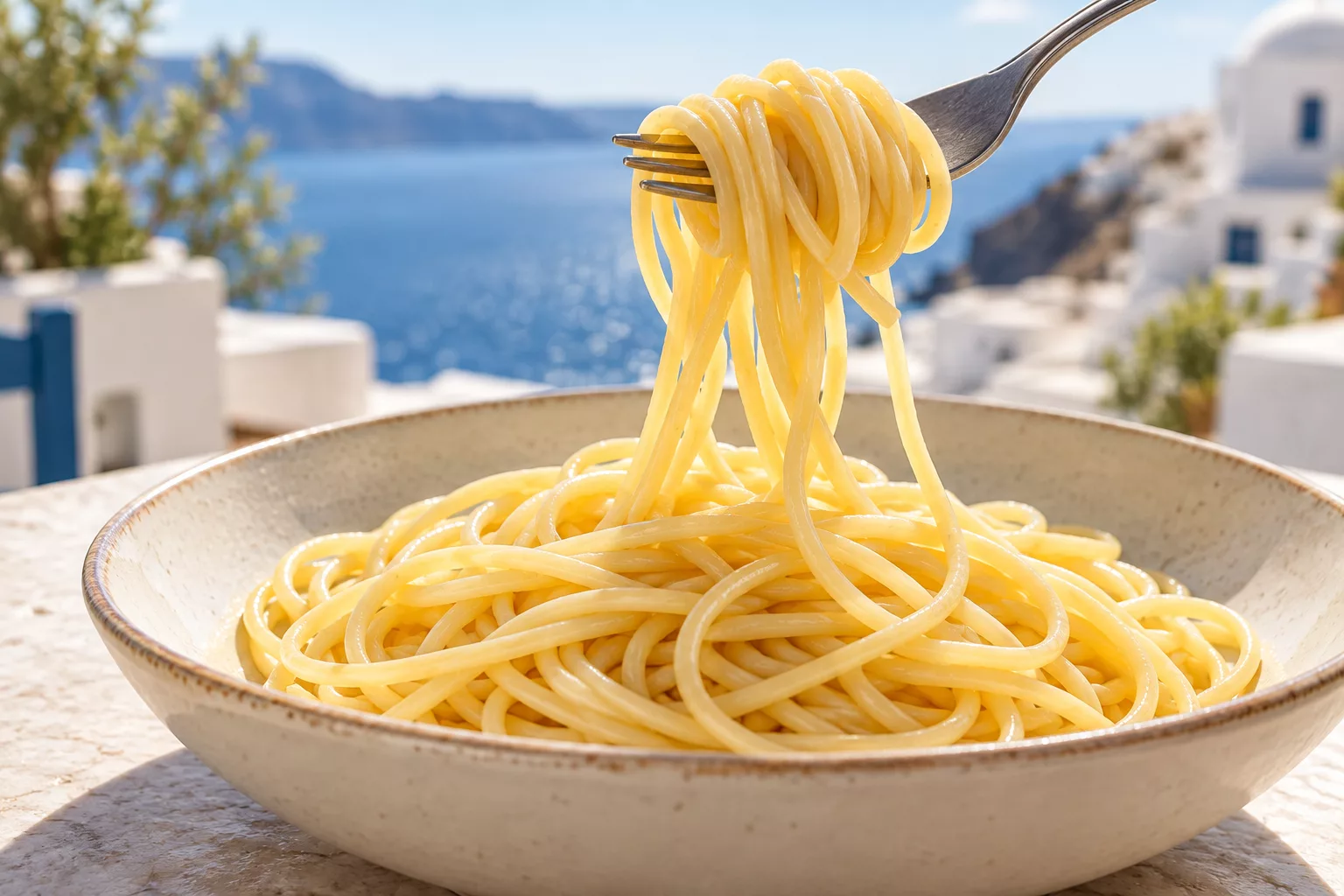
Take a piece from the pot, let it cool enough to bite safely, and pay attention to its whole thickness. With dried wheat pasta, the outside should feel hydrated and yielding. The middle should give a small, clean resistance, followed by an easy bite through.
A hard or chalky centre is a reason to keep cooking, not a badge of authenticity. Pasta that sticks unpleasantly to your teeth or breaks with a brittle little snap is different from a firm, cooked strand. At the other end, a piece that folds into paste under light pressure has moved beyond the texture most people mean by al dente.
Try a second piece when the shape has uneven thickness. Farfalle, for example, has a pinched middle and thinner wings. Tasting only an edge can hide an undercooked centre.
Use package times as a checkpoint
The producer knows the intended thickness and formulation of the product, so package instructions are a sensible place to begin. Start checking shortly before the stated endpoint, especially with an unfamiliar brand. Read whether the number is labelled al dente, fully cooked, or intended for a later baking step.
Set a timer when the pasta goes in unless the pack says otherwise. Stir, bring the water back to a steady boil, and avoid wandering away for the final minutes. Small differences in thickness, batch size, and your pot can change how the printed time works in practice.
When you find a result you like, remember the brand, shape, and method together. “Nine minutes” without those details is not a transferable cooking rule. The next bag of spaghetti may need a different checkpoint even if the name on the front looks familiar.
What happens as pasta cooks
Water moves into pasta during cooking, starch swells, and the structure softens. Research on cooked pasta describes this progression from the outside inward. The kitchen consequence is simple: the exterior can look ready while the centre still needs time.
This is why colour alone is a weak test. A pale line inside a cut piece can provide a clue about hydration, but lighting, ingredients, and the shape make that clue inconsistent. It does not replace tasting. Nor does throwing spaghetti at a wall tell you whether its centre has the texture you want.
Observe the change across successive tastes rather than searching for a dramatic signal. The difference between pleasantly firm and too soft may be subtle. Once the pasta is close, keep the sauce ready and the serving dishes within reach.
The plate is the real finishing line
Pasta can continue softening during its final time in hot sauce. If you drain it at your ideal eating texture and then simmer it for several more minutes, the plate will be softer than the piece you tasted at the colander.
For a brief pan finish, transfer it while it is slightly firmer than you want to serve. Then taste again in the sauce. Do not automatically subtract a fixed fraction of the packet time: the amount of cooking still to come depends on the sauce, available liquid, and pasta thickness.
For an uncooked dressing such as pesto, bring the pasta much closer to its intended serving texture in the pot. A quick off-heat coating offers less opportunity to finish a hard centre. The pan-finishing guide explains how to make that choice before draining.
Fresh pasta needs its own judgement
Fresh egg ribbons are often prized for tenderness and a supple bite, not the same springy core as dried semolina spaghetti. Thick handmade water-and-semolina shapes may be more substantial. “Fresh” describes a broad category, so it does not provide one universal cooking time or texture.
Floating is not a dependable declaration that every fresh or filled pasta is done. Check the product directions and the thickest seam or section. Do not taste raw dough to establish a before-and-after comparison: flour is a raw food, and fresh dough may also contain raw egg.
Filled pasta introduces the filling as well as the wrapper. Follow its cooking instructions instead of borrowing a timing rule from plain ribbons. Our fresh and dried pasta comparison helps separate these different products before you start.
Make firmness suit the dish
There is no prize for the hardest edible noodle. A slightly more yielding texture may be the right choice for the people at your table or the dish you are making. Describe what you want rather than letting a label overrule your own mouth.
Baked pasta needs consideration of the later oven stage, while pasta served immediately with a light coating has a shorter journey to the fork. Follow a coherent recipe for those dishes rather than applying the same draining point to everything.
A useful routine is to taste in the pot, taste after combining, and serve promptly. If dinner was too soft, change one variable next time: check earlier or shorten the pan finish. If it was hard, give it more cooking time with enough liquid rather than assuming stronger sauce will disguise the texture.
Doneness questions
Does a white dot always mean undercooked pasta?
No. A cut surface can help you compare stages, but a dot is not a universal pass-or-fail test. Evaluate the bite and any floury or chalky sensation, especially when changing brands or wheat types.
Can gluten-free pasta be al dente?
It can have a pleasantly firm eating texture, but different rice, maize, and pulse formulations behave differently. Use that product’s instructions and taste near the endpoint rather than expecting it to behave exactly like durum wheat pasta.