Pasta Bible · Cooking
How to Emulsify Pasta Sauce
If oil is sliding off your pasta, take the pan off fierce heat, add a small splash of warm water and turn the pasta through the liquid. Watch the edges of the pan. When clear beads of fat give way to a coating that moves with the noodles, stop adding water. If the noodles are swimming in watery sauce already, the adjustment goes the other way. Toss and gently reduce the excess liquid before you add any more.
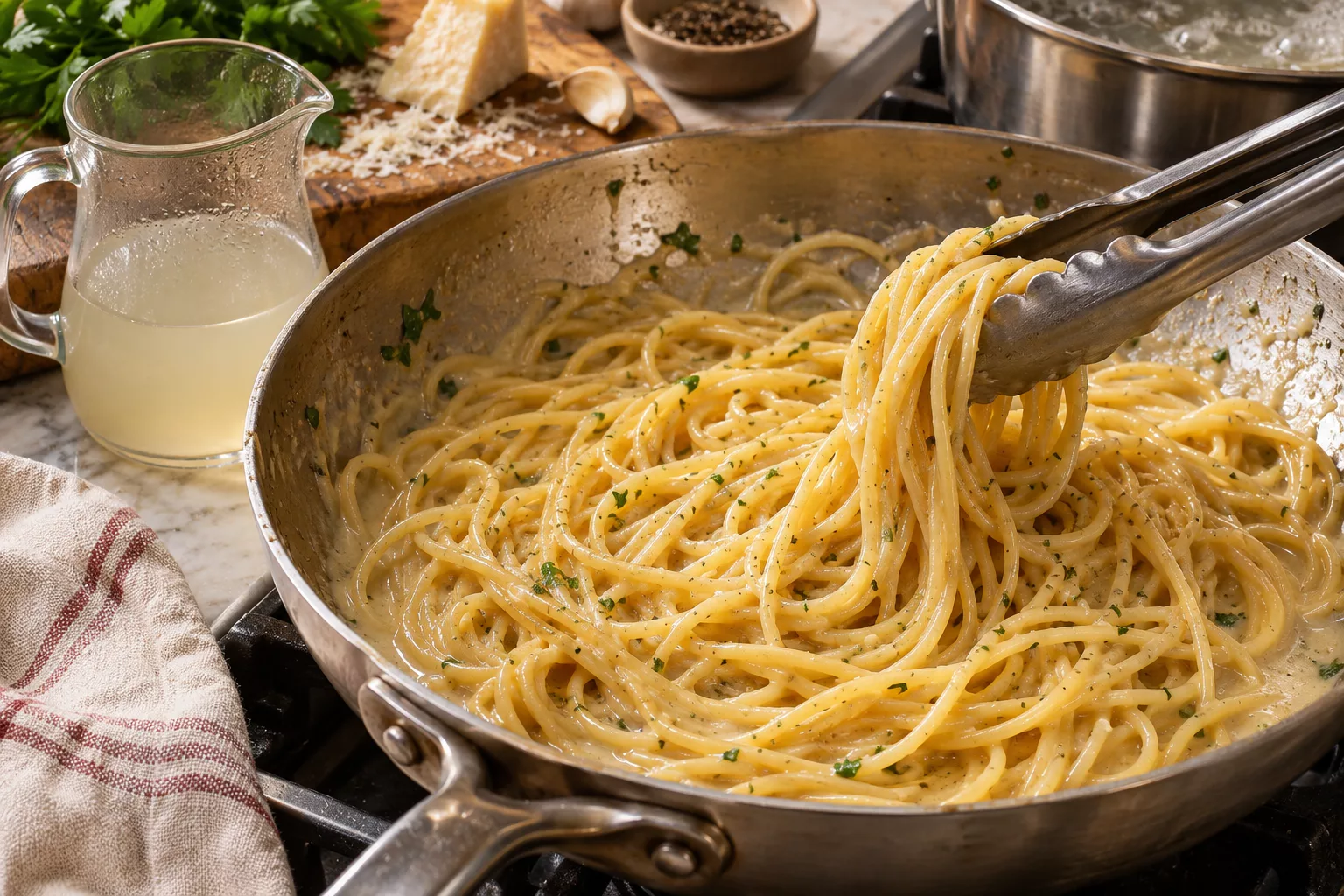
What is happening under the gloss?
Oil and water do not readily mix. Shake them together and the oil breaks into droplets. Leave the mixture still and the droplets meet, merge and eventually form a separate layer. An emulsion holds one liquid in small droplets throughout another. For dinner, that arrangement need only last long enough for the sauce to travel from pan to plate and coat the pasta as you eat it.
Stirring, tossing or whisking supplies the movement that breaks up the fat. Ingredients in the watery part help determine how quickly the droplets can meet again. Starch released from pasta thickens that liquid, which can make the mixture more stable. Cheese brings proteins and fat of its own. A sauce can look glossy because it contains a pool of oil, too. Tilt the pan and check whether the shine moves with the sauce or runs ahead of it.
Choose water by taste as well as appearance
Scoop some cooking water before draining. A pot of pasta releases starch as it cooks, but the concentration varies with the amount of pasta, the amount of water and when you take your cupful. Cloudy water can help give an oil dressing body. It cannot bring a large quantity of oil and a trickle of water into lasting balance by itself.
Taste a cooled spoonful. If the sauce contains anchovies or a salty cheese, plain warm water may be a better adjustment than more salt from the pot. Add enough liquid to allow the pasta to slide, then watch it for a few turns. If it disappears immediately and the sauce still drags, add a little more. A whole mug in one go may leave you boiling away water while the pasta loses its bite.
Three pans that need different finishes
Olive oil and garlic
After flavouring the oil, lower the heat so it is warm and no longer fiercely sizzling. Add damp pasta, then a little cooking water, and turn the strands through the liquid at the bottom. With aglio e olio, the dressing is light enough that you can see the pasta through it. If a trail of clear oil remains after lifting the strands, work in moisture and move them again. A deep layer of oil may need spooning off first.
Tomato and oil
A tomato base comes with water and suspended fruit solids. Its thickness can conceal unmixed fat, so look around the rim for a bright orange slick. Stir a little liquid through a very concentrated base before adding pasta. If the tomatoes are watery, cook them down first, while the noodles are still in their pot. Once the consistency is close, turn the pasta through the sauce to distribute the oil and finish coating the surface.
Butter and grated cheese
For Roman-style Alfredo, hot ribbons supply enough warmth to soften butter. Take the pan off the burner or use a warm bowl. Scatter fine cheese over moving, moist pasta so the particles have room to hydrate and disperse. A mound of cheese on a hot, dry patch tends to form a lump. Research with pecorino sauces shows how closely clumping depends on temperature, water and starch. A single target temperature for every cheese and pan would miss those differences.
Separate the texture problems
A thin but evenly cloudy sauce has plenty of water. For an oil-based dressing, modest heat and movement can evaporate a little liquid and bring it together. For a delicate cheese sauce, first give the pasta a few turns off the heat. It may thicken as it stands. Boiling it hard to chase the last spoonful of water risks tightening the cheese proteins and leaving oily grains behind.
A greasy, tight sauce usually needs a cooler pan and some water. Add it beside the pasta and draw it into the dressing where you can see the two meet. Stringy clumps are a different problem. Remove the pan from the heat and gently disperse what is still soft. Cheese that has already set into rubbery pieces may never smooth out. Pick out the worst lumps and save the texture of the remaining pasta.
Finish by lifting a forkful
Lift and lower several strands or roll a tube through the sauce. The coating should travel with the pasta and leave a little moisture where it rested. A completely dry pan can mean that the dressing will tighten before it reaches the table. Serve in warm bowls if convenient. For ravioli, move the pan in a gentle circle and spoon sauce over the parcels instead of tossing hard enough to open a seam.
Emulsification questions
Do I need to flip pasta in the air?
No. Tongs, a spoon or a gentle shake of the pan can bring fat and liquid into contact. Use a bowl large enough to turn the pasta without crushing it. If stirring only moves the top layer, reach down and draw the liquid from the bottom through the noodles.
Can I just add more starch?
First check whether the dressing contains enough water and whether the pan is too hot. Starch helps a balanced sauce hold together, but enough to turn it sticky can mask both the flavour and the feel of the pasta. Adding flour straight to a finished dish can leave raw-tasting lumps. Small changes in liquid and movement give you a better view of what the sauce actually needs.