PastaBible Cooking guide
Why You Should Save Pasta Water
A cup of cooking water gives you something valuable at the last moment: control. It can loosen a thick tomato sauce, help a cheese dressing spread, and supply moisture while pasta finishes in the pan. Saving it before draining is a small habit that makes the final stage much less rushed.
Its usefulness is not mystical. Pasta water is water carrying some released starch and, if you salted the pot, salt. The amount of starch varies, so it is better treated as an adjustable ingredient than a guaranteed sauce thickener.
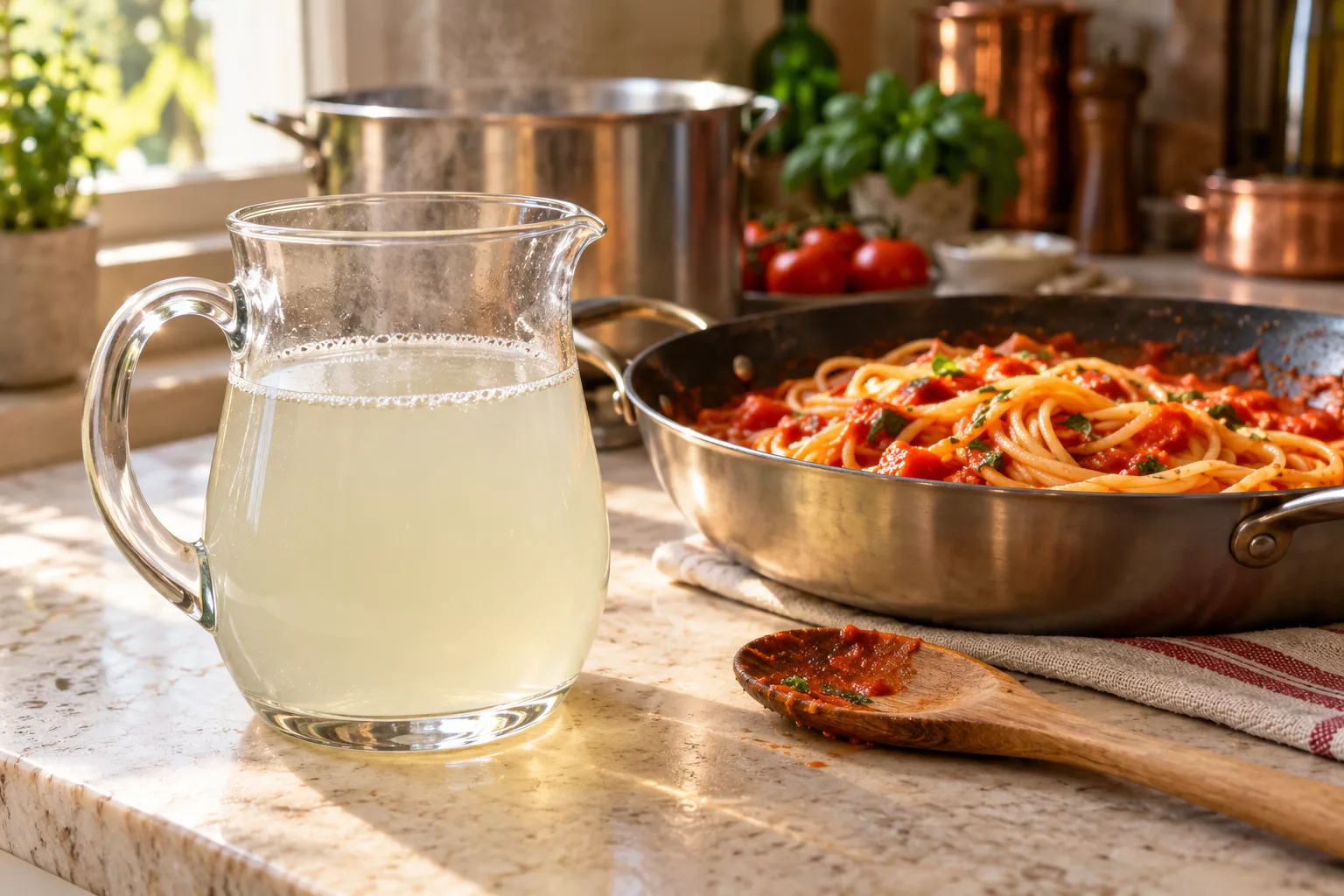
What the water actually contributes
Water is the main contribution. A sauce can become too tight through reduction, the addition of cheese, or contact with pasta. Liquid lets the dressing spread between the pieces instead of collecting in sticky patches.
Starch released during cooking can give that liquid some body. In a sauce containing oil or butter, movement helps disperse fat through the watery portion, while starch can help the mixture remain cohesive. The result may look creamy without containing cream. However, watery liquid from a large pot will not behave like a concentrated starch paste.
The salt matters just as much as the starch. Every addition seasons the pan. If your pot was heavily salted, several generous ladles can make an otherwise balanced sauce too salty. Consider liquid, body, and seasoning separately instead of assuming that more pasta water always improves everything.
Reserve enough to make adjustments
For a typical pan serving a few people, keeping roughly 250–500 ml nearby is a convenient working reserve. That is approximately 1–2 US cups, rounded for kitchen use. It is not an instruction to pour all of it into dinner. A small portion may need only a splash.
Use a heatproof jug or mug with a handle. Put it where you will see it before draining, then collect the water toward the end of cooking. Keep your hands clear of the steam and do not use a thin drinking glass that is unsuitable for boiling liquid.
If you transfer pasta directly with tongs or a skimmer, you still have the pot available. Keep a separate reserve if the pot needs to move or the hob is crowded. A predictable setup prevents the familiar moment when the useful water disappears down the sink.
Judge concentration rather than cloudiness alone
Water from a smaller-volume cook may contain more starch per spoonful than water from a very large pot. The amount and type of pasta, the water volume, and the cooking method all influence what you collect. Fresh pasta dusted with flour can produce a different liquid again.
Cloudiness is a clue, but it is not a reliable measurement. Taste a cooled spoonful for salt and watch how the liquid behaves in your sauce. A thin reserve may work mainly as moisture; a more concentrated one may noticeably change the coating.
There is no need to force every pasta into a tiny pan to obtain thick water. Enough space and attentive stirring still matter. Choose a cooking method that suits the shape, then adapt the sauce to the water you actually have.
Add, move, and reassess
Start with a little water, stir or toss, and look again before adding more. For a small pan, a tablespoon or two is a manageable adjustment. A larger batch needs more, but the same sequence works: add liquid, distribute it, allow a brief moment for the sauce to respond, then decide.
With cooked tomato sauce, a gentle simmer can help the sauce and pasta come together. With pesto, loosen the dressing away from direct high heat. With grated cheese, control the pan temperature instead of boiling aggressively and hoping the water will fix clumps.
A good coating moves with the noodles rather than dropping away into a puddle. Stop when the pasta tastes cooked and the sauce is slightly more fluid than you want on the fork: it often tightens as you portion and eat it. See finishing pasta in sauce for the full sequence.
When plain hot water is more useful
If the sauce already tastes salty enough, plain hot water can supply moisture without adding more salt. It may contribute less body, but that is often a better trade than over-seasoning the dish. A cheese-rich or strongly reduced sauce may not need extra starch anyway.
If you forgot to save the cooking water, do not stop dinner. Add plain hot water sparingly and work with the sauce you have. The pasta itself can still bring some surface starch to the pan. Stock is another ingredient, not a neutral replacement: it brings flavour and may bring considerable salt.
Do not shake raw flour into the finished sauce as a quick imitation. It can create lumps and a floury taste, and raw flour needs proper cooking. For most ordinary pasta dishes, a modest adjustment with hot water is a more sensible recovery.
Problems pasta water cannot solve
It cannot reverse overcooked pasta or remove burned garlic. Nor can it turn any quantity of oil into a stable coating without the right balance and movement. If a pan looks greasy, first stop pouring oil and assess whether it needs a little water and more mixing.
If the dish is soupy but the pasta is nearly done, avoid a long, hard boil that sacrifices the noodles. Reduce excess sauce separately where practical, or serve a looser result and use less liquid next time. Prevention is easier: reserve generously, add cautiously.
For an overly sticky pan, lower the heat and add a small splash while separating the pieces gently. Do not keep cooking a dry mass while searching for a dramatic tossing technique. A spoon, tongs, and a little attention are enough.
Pasta-water questions
Should I rinse pasta before adding it to sauce?
For a hot sauced dish, generally skip rinsing. It removes surface starch and cools the pasta. A recipe designed around rinsed noodles or a cold preparation is a different method and should be followed on its own terms.
Is the first ladle as useful as the last?
Water collected soon after adding pasta may have less released starch. Collecting near the end is a convenient default, but do not let that preference make you miss the pasta’s doneness. Saving some earlier is better than having none when you need it.