Pasta Bible · Sauces
Alfredo Sauce: The Roman Dish and Its Global Evolution
In Rome, fettuccine Alfredo arrive as hot egg ribbons dressed with butter and finely grated Parmigiano Reggiano. A little moisture from the pasta brings them together as the ribbons are turned. In much of the world, ordering Alfredo brings a cream-based sauce, sometimes scented with garlic and served with chicken or vegetables. Both uses of the name are well established. The first decision in the kitchen is which texture you want on your fork.
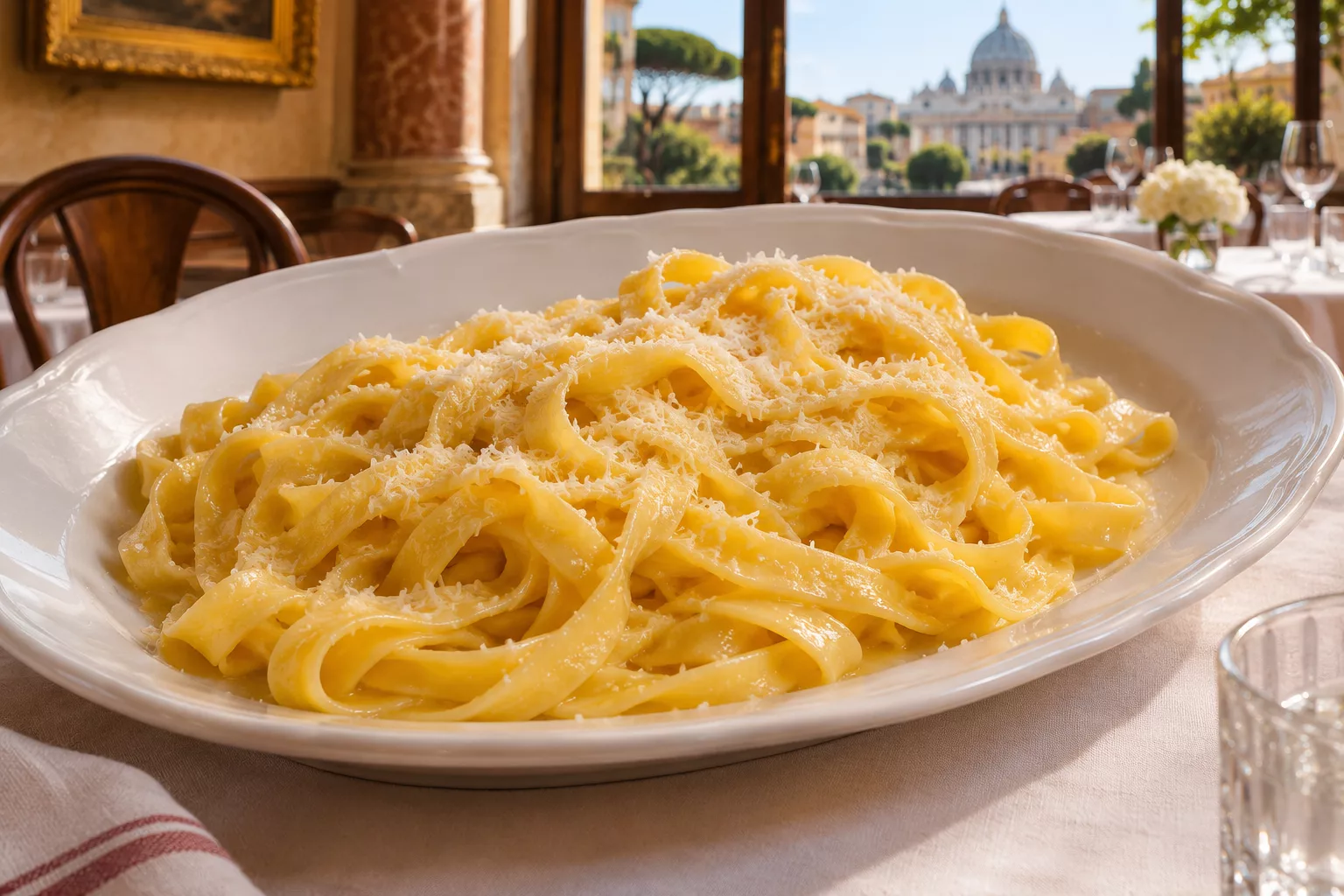
A dish finished in the dining room
Pasta al burro, or pasta with butter, is a broader idea than the named restaurant dish. In early twentieth-century Rome, restaurateur Alfredo Di Lelio became associated with a particularly rich treatment of fettuccine. The tableside finish helped make it famous among visitors. Accounts of the restaurant's history tell of Hollywood guests taking their enthusiasm home. They describe one route by which a Roman speciality found an audience abroad.
The way the restaurant serves it explains more than an ingredient list can. Hot, thin egg ribbons land on butter and receive a fine covering of cheese. The server lifts and turns them on a platter, bringing moisture up from below and distributing cheese from above. That movement is part of the preparation. If the same ingredients sit untouched on a plate, the cheese can cake where it lands while melted butter collects underneath.
What makes the coating creamy
Butter brings milk fat, a little water and a gentle dairy flavour. The heat in the ribbons softens it. Parmigiano Reggiano contributes savoury flavour and salt, but also protein and fat that change the texture of the dressing. Grate it finely enough that a pinch looks fluffy between your fingers. Large curls make an attractive garnish on other dishes and take considerably longer to disperse here.
Water is the least conspicuous ingredient on the plate. Some travels with freshly lifted fettuccine, and a small cup from the pot gives you more control. It loosens the cheese and allows the fat to spread through a continuous liquid coating. The starch in the water helps that coating hold together. Pasta lifted straight from the pot may carry all you need at first. Ribbons drained in a colander for several minutes will need more.
Bring the platter method home
Choose a broad bowl with enough room to get under the pasta. Warm it gently, empty it, and have soft butter and grated cheese within reach before draining the ribbons. The bowl should hold warmth comfortably. A heavy frying pan taken straight from a high burner can stay hot enough to seize the cheese even after the flame goes out.
Turn the hot, damp fettuccine through the butter until the ribbons slip past each other. Scatter in cheese in light passes, lifting gently between additions. Fresh egg pasta can tear if pinched hard with tongs. A spoon and fork let you support the ribbons from below. If a turn leaves a dry trail of cheese on the bowl, add a small splash of warm cooking water where the utensils are moving.
A good stopping point is when the ribbons gleam and separate as you lift them, with a little soft dressing between the folds. Serve then. As the platter cools, butter firms and the noodles take up liquid. A coating that looked exactly as thick as you wanted in the bowl can feel heavy by the time it reaches the table. Warm plates buy a little time.
How cream changes Alfredo
A cream-based Alfredo begins with a liquid sauce that can be made in a pan before the pasta arrives. Cream already carries fat dispersed in water. Gentle simmering reduces its water content and gives it more body. Stir in finely grated cheese with the heat low or the pan off the burner, and stop reducing while the sauce can still flow around the pasta. The cheese and the pasta will thicken it further.
This style makes room for additions because the sauce can coat several different surfaces. If adding cooked mushrooms, let their released moisture cook away before combining them with the cream. Otherwise the balance you achieved in the pan changes as soon as they go in. A little garlic suits a savoury cream version, while plain butter allows the sweetness of egg pasta and the aroma of Parmigiano to come through more clearly.
Read the signs of separation
Clear yellow fat gathering around the edges usually means the dressing needs water and movement. Take it off the heat, work in a little warm water and turn again before adding more butter or cheese. Rubbery threads or hard grains point to cheese that overheated or collected in one place. Extra heat tends to tighten those clumps. Lift out a stubborn lump and gently dress the remaining ribbons rather than sacrificing the pasta to melt it.
The same distinction helps with cacio e pepe, whose cheese and pepper give a different flavour. Our guide to emulsifying pasta sauce explains why adding water can make a greasy pan look creamier, even as the total quantity of fat stays the same.
Alfredo questions
Will dried fettuccine work?
Yes. They usually have a firmer bite and may be thicker than the delicate fresh ribbons used at the Roman restaurant. Follow the cooking cues for your pasta and reserve water before draining. A timing intended for freshly rolled egg pasta can leave a dried ribbon hard in the middle.
Can I use another grating cheese?
A comparable finely grated hard cheese can make a pleasant butter dressing. Taste it first. A saltier sheep's-milk cheese changes the flavour markedly and may require less seasoning elsewhere. Compare Parmigiano and pecorino if you are deciding which piece to grate.
Can I make the Roman-style sauce ahead?
Grate the cheese, soften the butter and set the table ahead. Leave the mixing until the fettuccine are ready. The pasta supplies heat as well as moisture, and the platter is where the dressing comes together. For several diners, a wide bowl that lets you reach the bottom is more valuable than an extra pan of sauce.