Pasta Bible · Recipes by Collection
Vegetarian Pasta
Vegetarian pasta works best when vegetables and other meat-free ingredients give the dish its character from the beginning. Sweet tomato, browned mushrooms, tender beans, fragrant herbs, or a tangy cheese can each lead a bowl. Removing meat from a finished recipe is only one approach, and often not the most interesting one.
This guide is for choosing and building meat-free pasta meals, with attention to ingredients that are easy to overlook. It is not a claim that every cheese-based recipe on Pasta Bible is vegetarian. The current library is small, and its recipes retain their not-kitchen-tested notices. Use the distinctions below before choosing a published recipe or planning an adaptation.
Define what your diners need
Vegetarian meals exclude meat and fish, but eggs and dairy may be acceptable depending on the person. Vegan meals exclude those too. Ask rather than assuming that “no visible meat” answers the question. A vegetable sauce made with chicken stock or a dressing containing anchovies does not become vegetarian because the main ingredient is a plant.
Read labels on filled pasta, stock, sauces, and cheese. Plain dried pasta often contains wheat and water, while fresh pasta may contain eggs; neither colour nor shape proves the ingredient list. Dietary preferences and food allergies are separate questions. A vegetarian choice can still contain wheat, milk, eggs, or nuts.
Give cheese a proper ingredient check
Traditional Parmigiano Reggiano uses animal rennet, so it is not suitable for vegetarians avoiding animal-derived rennet. Other cheeses vary. A name that sounds similar, a pale wedge, or a packet described simply as “Italian hard cheese” does not settle the matter. Look for a clear vegetarian statement or ask the producer about the rennet.
For a meat-free adaptation, choose a suitable hard cheese whose flavour and texture fit the job. It may have different saltiness, moisture, and melting behaviour from the original. Calling the substitution an adaptation keeps expectations honest. Our Italian cheese guide explains why hard grating cheeses and soft fresh cheeses are not interchangeable in every sauce.
Build around a vegetable’s useful qualities
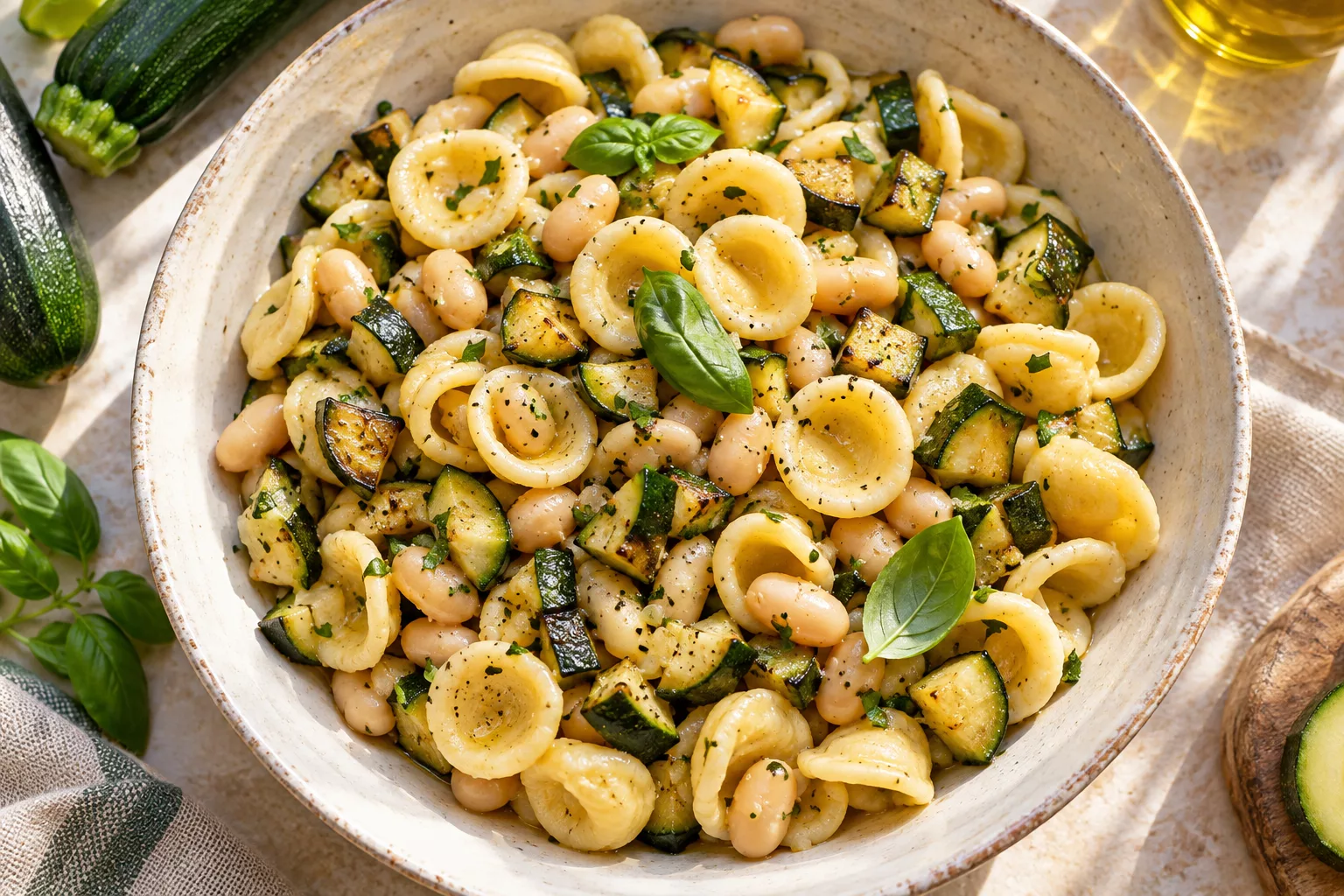
Choose whether you want sweetness, freshness, a soft coating, or distinct pieces. Tomato can become the sauce itself. Mushrooms can provide savoury browned pieces. Courgettes, also called zucchini, can give gentle flavour and tenderness. Leafy greens can bring a pleasant bitter edge. These are cooking directions to explore, not interchangeable ingredients with identical timings.
Prepare vegetables so they are enjoyable when the pasta is ready. Dense pieces may need more time than thin slices, and watery ingredients can loosen a sauce unexpectedly. If you want browned mushrooms, give them room in the pan rather than piling them into a deep wet heap. If you want soft greens, cook them to that texture before the final combination.
Cut the vegetables for the way the dish will be eaten. Small pieces can settle into orecchiette; ribbons or a fine sauce can accompany long strands. A whole piece too large for a comfortable forkful makes the pasta feel like a side dish underneath a separate vegetable course.
Add substance without hiding the vegetables
Cooked beans or lentils can make a vegetable pasta feel more substantial. Keep some whole for texture and mash a portion if you want a thicker coating. Use cooked pulses appropriate to the recipe, rather than expecting dried beans to become tender during the pasta’s boiling time. Their cooking requirements are separate.
Nuts and toasted breadcrumbs offer different kinds of contrast. Nuts bring their own flavour and richness; crumbs bring crunch. Neither has to imitate cheese. Add a small amount, taste the whole forkful, and decide whether it improves the dish. Check allergies before serving nuts, and check the bread ingredients if your diners have additional requirements.
Keep flavour balanced
A vegetable dish can become flat when every ingredient is soft and sweet. Consider an aromatic, some acidity, or a crisp finishing element, but do not add all three automatically. Lemon zest gives fragrance; lemon juice changes acidity. A little caper can be lively, but its salt needs to be considered alongside the pasta water and cheese.
Olive oil can carry the flavour of aromatics and help a coating feel rounded. More oil is not the answer to every dry or dull sauce. The dish might need moisture, seasoning, or simply better-cooked vegetables. Start with the ingredient you want to taste most clearly and make each addition support it.
Use the current Pasta Bible library carefully
The tomato sauce guide is a useful place to begin with a vegetable-led sauce. Read the actual ingredients of any version you make, particularly stock and finishing cheese. A tomato-based dish can be vegetarian without needing to resemble a meat ragù.
Our Spaghetti al Limone and Pasta with Pesto Genovese are published editorial drafts containing traditional cheeses. They are relevant for understanding lemon and herb dressings, but should not be presented as vegetarian as written. A suitable cheese substitution creates a separate adaptation; it does not change the status or facts of the published recipe.
The meat ragù recipe is not part of this collection. If you want a mushroom or lentil sauce, use guidance intended for those ingredients rather than swapping them into the meat recipe gram for gram and expecting the same reduction. Different ingredients release different amounts of liquid and respond differently to heat.
Avoid the overloaded vegetable bowl
More vegetables do not automatically create a more coherent sauce. Choose one leading ingredient and perhaps one supporting ingredient before adding garnishes. A tomato-and-bean bowl, a mushroom-and-herb bowl, and a green vegetable pasta can each be satisfying without combining all three ideas in the same pan.
At serving time, taste the pasta with its vegetables and dressing together. Correct the complete bite, not just a spoon of sauce. The goal is pasta that remains central, with enough coating and contrasting texture to make the next forkful appealing.
Vegetarian-menu questions
Is pesto automatically vegetarian?
No. Its cheese may use animal rennet, and prepared products differ. Check the complete ingredient information. Dairy-free pesto can be useful, but it still needs checking for nuts and any other dietary restrictions.
Does a vegetarian sauce need a meat substitute?
No. Vegetables, pulses, herbs, and suitable dairy products offer many ways to build a meal. Choose an ingredient for the flavour and texture it contributes, not because every pasta bowl must contain something that resembles meat.