Pasta Bible · Explore Italy
Liguria: Pesto, Pasta Shapes & Gentle Dressings
In a well-dressed bowl of pesto pasta, the basil remains fragrant and the dressing reaches the pasta’s folds without turning into an oily pool. Liguria offers a useful setting for understanding that balance. Pasta shape, vegetables, nuts, and cheese each have a role, while gentle handling can matter more than a dramatic final toss.
Genoese pesto is an inviting starting point, but it is not the whole regional repertoire. Filled pasta with walnut sauce and other local preparations broaden the picture. Explore the particular dish and its intended dressing rather than assuming that every Ligurian pasta is simply another shape covered in green sauce.
Understand the identity of Genoese pesto
Pesto alla genovese combines basil with garlic, pine nuts, hard cheeses, olive oil, and salt. A mortar is central to its traditional preparation, though modern kitchens also use machines. Variations in proportions exist; that does not make every green herb mixture the same named sauce.
When shopping, taste and freshness matter alongside the label. A prepared pesto can differ substantially in nuts, cheese, oil, salt, and herb content. Read the ingredient list before deciding how to use it. If you make a sauce with a different herb or nut, give that variation a clear name rather than claiming nothing important has changed.
Our pesto guide covers the dressing in more detail. This regional introduction focuses on how it relates to the pasta and the meal, so use the dedicated guide when you want to examine its ingredients and preparation more closely.
Trofie and trenette make different forkfuls
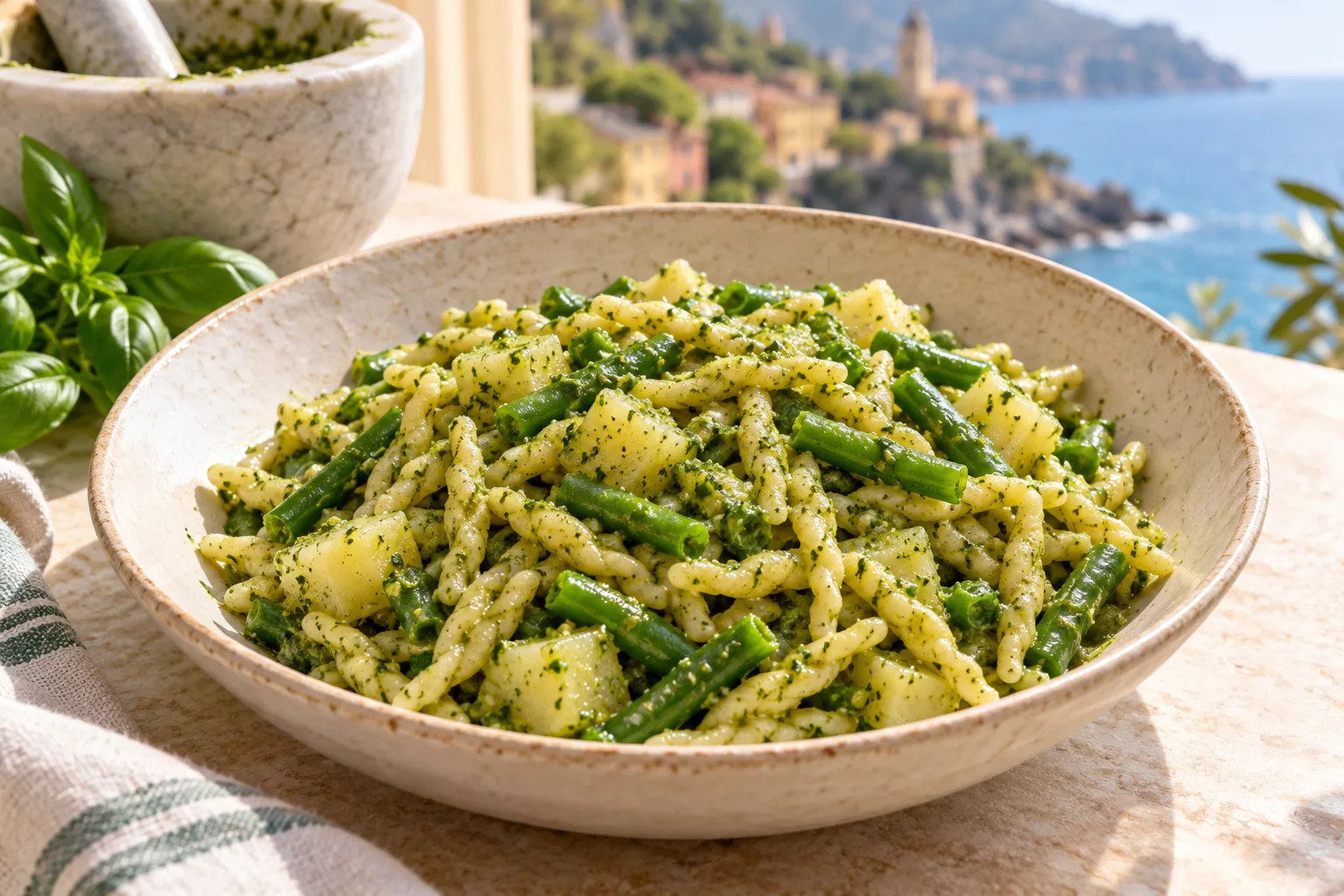
Trofie are small twisted pasta pieces strongly associated with Ligurian pesto dishes. Trenette are long, narrow, flattened strands. Both provide recognised ways of serving pesto, but they distribute the dressing differently and feel different on the fork.
With a small twist, pay attention to whether the dressing reaches the folds. With long strands, look for a continuous coating that lets them separate comfortably. In either case, an excessive mound of thick pesto can overwhelm the pasta, while a thin oily residue can leave it tasting disconnected.
Read whether the pasta you buy is fresh or dried. Do not borrow cooking times from a photograph or from a recipe using another form. The fresh-and-dried comparison explains why the name of a shape does not settle its moisture, ingredients, or cooking requirements.
Potatoes and green beans belong to a composed dish
Potatoes and green beans are documented accompaniments to Ligurian pesto pasta. They are cooked components of the finished dish, not ingredients that must be ground into the pesto itself. Their presence changes the forkful by adding soft and firmer vegetable textures alongside the pasta.
For the home cook, coordinating doneness is the main practical issue. Potato pieces, beans, and pasta do not necessarily need the same time. Follow a recipe that gives a sequence for the actual sizes and products used, rather than dropping everything into the pot together and hoping it finishes at once.
The published Pasta with Pesto Genovese draft includes a separate potato-and-green-bean option. Follow that option’s quantities and sequence if you choose it. The recipe remains labelled as not kitchen-tested; this article does not turn it into a tested result or alter its method.
Dress pesto pasta away from direct heat
Have the pesto and its mixing vessel ready before the pasta finishes cooking. The final combination needs enough moisture to distribute the dressing and enough care to preserve its fresh character. A boiling pan treatment appropriate to a tomato sauce is not the default approach for this herb dressing.
Add reserved water gradually and mix before deciding on more. The dressing should spread around the pasta rather than slide to the bottom as a watery layer. If you are using salty cooking water and a salty prepared pesto, taste before adding another cheese garnish. A small adjustment can change the balance of the whole bowl.
Do not respond to a dry coating automatically by pouring in more oil. It may need water to help it spread, or it may simply have waited too long before serving. Our pasta-water guide explains the difference between adding moisture and adding more fat.
Pansoti and walnut sauce widen the picture
Pansoti, also spelled pansotti, are a Ligurian filled pasta associated with greens and commonly served with walnut sauce. Their filling deserves attention alongside the dressing. They offer a different experience from pesto-coated trofie, with the pasta enclosing part of the dish’s flavour.
When buying filled pasta, ask what the greens and other ingredients are. Local mixtures and commercial fillings differ. Choose a dressing intended for the product, and use a gentle transfer from cooking water to serving vessel. A fragile parcel does not benefit from the same vigorous movement you might use with sturdy tubes.
Walnut sauce brings its own nutty character. It should not be described merely as pesto with the basil omitted. If you want to make it, choose a complete method for that sauce rather than subtracting ingredients from an unrelated pesto recipe and expecting the same texture.
Make substitutions with a clear purpose
If you cannot find a traditional pasta shape, choose one that carries the dressing comfortably and acknowledge the substitution. The pairing guide can help you consider surface, folds, and the size of any vegetable pieces. The goal is an enjoyable meal with an honest description.
For vegetarian diners, check the cheese’s rennet rather than assuming that basil and nuts make the whole dish vegetarian. For anyone avoiding nuts or dairy, both pesto and walnut sauce need careful ingredient checking. A green colour or a vegetable filling is not enough information.
Keep a Ligurian dinner focused
For a first exploration, choose either a pesto-and-pasta combination or a filled-pasta preparation. Give its characteristic flavour room to remain clear. A collection of unrelated garnishes can make a dish more elaborate while making the regional connection less intelligible.
Prepare accompaniments before the pasta, keep the dressing ready, and serve promptly once everything is combined. That modest sequence allows the fragrance, texture, and chosen shape to do the work. The meal need not be technically extravagant to teach you something useful about the region.
Liguria questions
Is the genovese sauce from Naples the same as Genoese pesto?
No. The Neapolitan dish is an onion-and-meat preparation. See the Campania guide for that distinction; the similar wording does not describe the same ingredients.
Must every pesto dish include potatoes and beans?
No. They form a recognised preparation, not a compulsory addition to every bowl. Choose the version you intend to make and follow its cooking sequence.