Pasta Bible · Explore Italy
Campania: Pasta, Tomatoes & Slow Sauces
Campania offers several answers to the question of what makes a memorable pasta dish. A tomato dressing can leave the noodle’s texture plainly visible. A slow meat sauce can bring depth and a more substantial coating. Pasta with beans can make the relationship between liquid and starch part of the dish itself.
The region includes Naples, coastal towns, and inland areas with different ingredients and traditions. Its celebrated dried pasta is a useful starting point, but it should not turn the region into a postcard of spaghetti and tomatoes alone. Look at the particular sauce, the shape, and the way the meal is served.
Understand what Gragnano tells you
Gragnano is a town in Campania with an established pasta-making identity. Pasta di Gragnano IGP is a protected geographical indication, known in English as PGI. Its specification describes dried pasta made from durum wheat semolina and water, with production requirements tied to the designated area. It is a product designation rather than the name of one pasta shape.
At the shop, distinguish that designation from general Italian branding. Read the package for the actual product name, ingredients, and cooking guidance. A picture of a southern Italian town is not the same information as the protected designation. Nor does a geographical label make every shape equally suitable for your intended sauce.
For understanding the raw material, see durum wheat semolina. When comparing packets, choose a shape you want to cook and assess its result in your own kitchen. Geography provides context; the eating test is still whether the pasta has a pleasant texture and works with the dressing.
Let a tomato sauce reveal the pasta
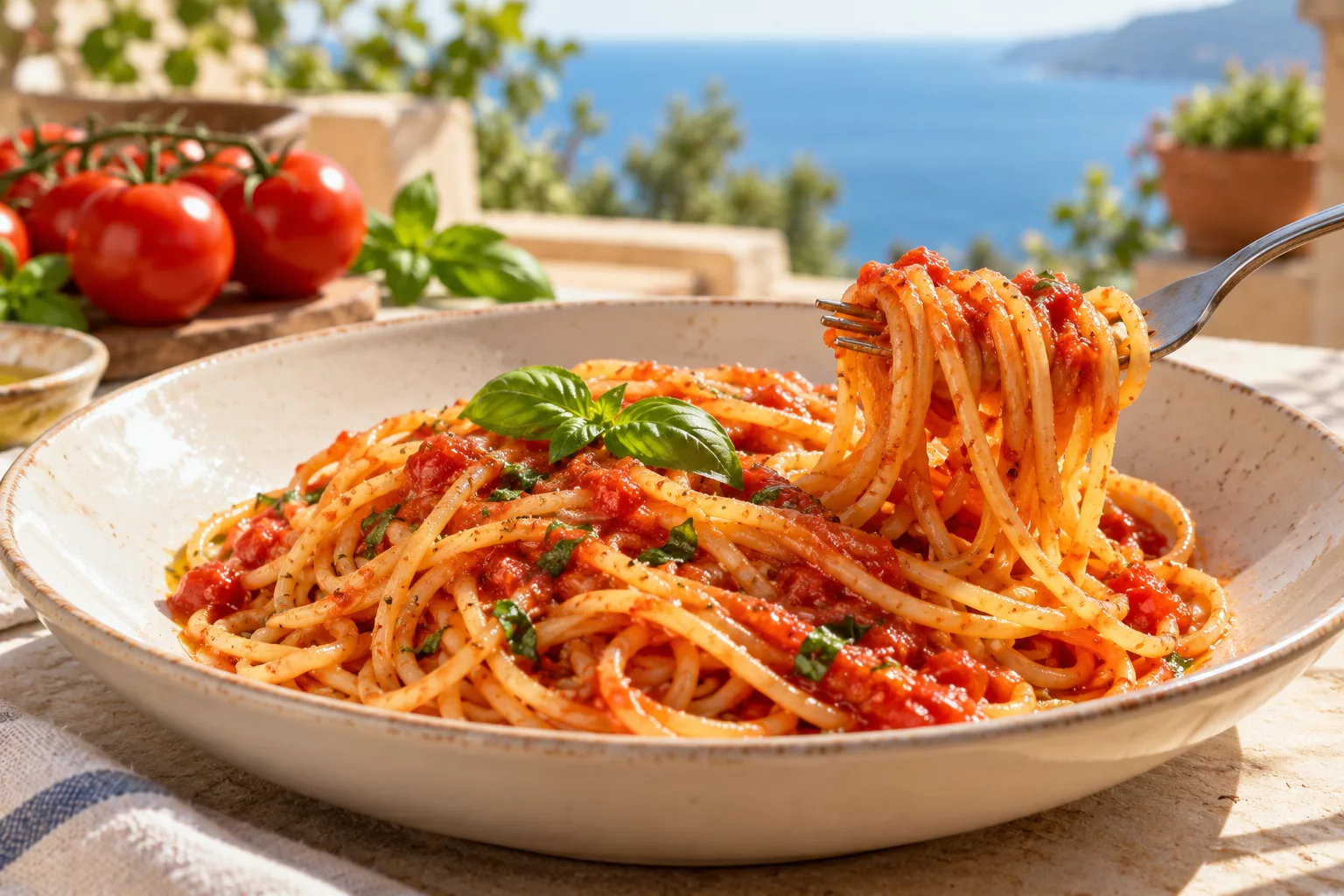
Spaghetti with tomato is a useful way into Campania’s pasta repertoire because it places a few decisions in plain view. Is the sauce smooth or textured? Does it taste bright or deeply cooked? Does it coat each strand, or collect separately at the bottom? A short ingredient list makes those choices more noticeable.
Use a tomato product suited to the method you intend to follow. Good fresh tomatoes, whole peeled tomatoes, and passata do different jobs. A famous tomato name should not replace reading the tin or tasting the contents. The tomato guide explains the practical differences without insisting that every sauce requires one premium product.
When dressing spaghetti, leave enough fluidity for the sauce to travel between strands. The pasta should taste seasoned and coated, not like a plain nest beneath a red topping. That is a cooking goal, not a claim that all Campanian households use the same sauce consistency.
Do not confuse genovese with pesto
Despite its name, the genovese associated with Naples is an onion-and-meat preparation, not the basil pesto associated with Genoa. Campania’s traditional-food record describes it as a pasta condiment built from meat and onions, with the meat also served separately. The name is a good reminder that a direct geographical guess can be misleading.
For the eater, the important distinction is the sauce’s sweet onion depth and its long-cooked character. This is a different dinner from a fresh herb dressing. If you see “pasta alla genovese” on a menu, ask about the preparation rather than assuming it will be green or vegetarian.
For the home cook, treat genovese as its own project with an appropriate complete recipe. Do not try to obtain it by stirring onions into pesto or by shortening an onion-and-meat method to match the pasta’s boiling time. Understanding the identity of the sauce comes before improvising its execution.
Give ragù its regional context
Campanian pasta also includes rich meat-and-tomato preparations. The broad word ragù does not mean a single finely minced sauce everywhere. The way meat is cut, cooked, and served can change the relationship between sauce and pasta. Ask what a particular ragù contains and how that version is intended to be eaten.
Our ragù guide introduces the wider family. Pasta Bible’s published rigatoni recipe is a specific tomato-rich minced-meat draft, not a declaration of the definitive Neapolitan method. Use it for the meal it describes rather than renaming it according to whichever regional article you read last.
Notice pasta dishes with pulses
Pasta and beans appear in Campania’s food repertoire alongside the better-known tomato and meat dishes. Such combinations can place small pieces of pasta within a spoonable mixture rather than treating sauce as a coating on a dry plate. The liquid level and the tenderness of both components then become central to the eating experience.
If you explore this style at home, use a recipe designed for it. Cooked beans and dried beans are different starting ingredients, and adding pasta to a liquid mixture changes how that liquid is absorbed. Do not import the draining step from an ordinary spaghetti recipe into a method intended to keep the cooking liquid.
Choose shapes by the sauce you have
A long strand highlights a continuous dressing; a tube can accommodate smaller pieces. Campania’s many pasta forms invite experimentation, but a large shape does not automatically demand a dense sauce. Consider the size of the pieces and whether they can reach the mouth comfortably with the noodle.
When you substitute a familiar tube such as rigatoni, follow its own cooking requirements. Do not assume a timing for a different shape applies because both are dried durum pasta. Finish with enough moisture to let the sauce enter and cling, then taste a complete bite.
Bring one clear idea to the table
For a first exploration, choose between a tomato-led pasta, a deliberate slow sauce, or a pulse-based dish. That choice guides both shopping and schedule. It also keeps you from combining several regional references into a crowded bowl that no longer has a clear flavour.
A tomato dinner might lead you towards a sauce ready before the pasta boils. An onion-and-meat preparation requires a longer plan. A bean dish may need a different pot and serving bowl. Regional curiosity is most rewarding when it changes practical decisions, not just the name written above dinner.
Campania questions
Does Gragnano mean spaghetti?
No. It refers to a place and, in the protected product name, a pasta designation. Many shapes can be made under that designation. Read the shape name separately and choose it for the sauce you want.
Should every Campanian pasta have tomato?
No. The onion-led genovese alone shows why that would be too narrow. Read the specific dish rather than assuming that the region’s association with tomatoes makes them compulsory in every preparation.
Can I understand the region through one famous dish?
One dish is an excellent beginning, but it cannot represent every coastal and inland tradition. Compare two contrasting preparations and notice what changes in the pasta, sauce, and serving style.