Pasta Bible · Recipes by Collection
Creamy & Comforting Pasta
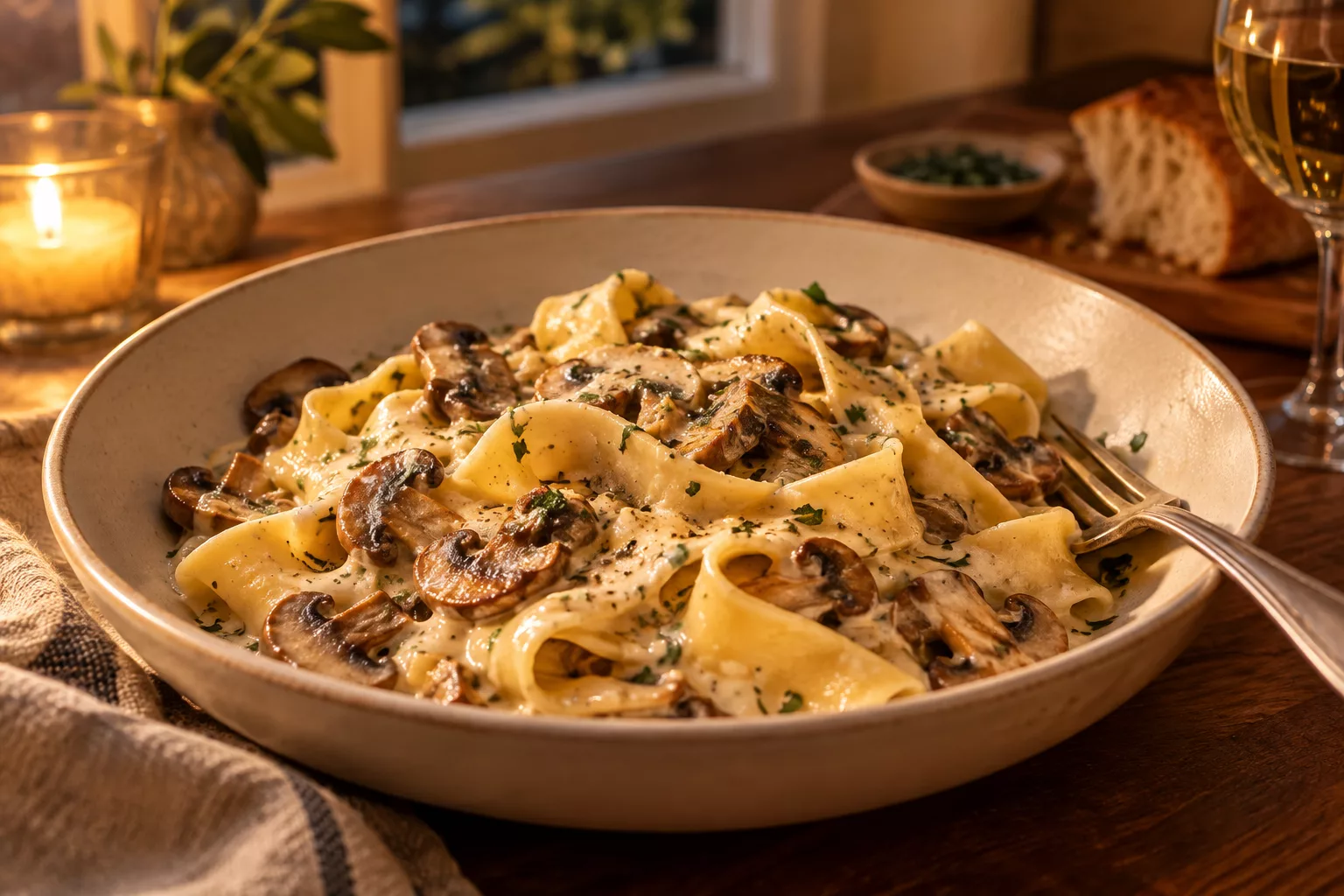
A creamy pasta sauce should move between the noodles and stay attached to a forkful. It can be rich or restrained, smooth or lightly textured, made with cream or without it. The pleasure comes from a cohesive coating and a well-balanced bite, not from making the sauce as thick as possible.
This collection explores that broad idea of comfort. Pasta Bible’s published lemon pasta is the clearest current recipe example; its slow-cooked ragù offers a different kind of satisfying dinner. Both remain editorial drafts with their testing status visible. The other combinations described here are guidance for choosing a style, not additional recipes claimed to exist in the library.
Decide which kind of creaminess you want
Cream-based sauces
Cream brings dairy flavour and body, but it still needs a purpose in the dish. Think about what will lead: mushrooms, an aromatic, a vegetable, or the cream itself. Reducing until a sauce looks thick in an empty pan can leave it too dense once pasta absorbs liquid. Judge the finished coating with the noodles included.
Different cream products have different fat levels and cooking behaviour. Follow the recipe’s specified product rather than treating all pouring creams, cultured creams, and milk as identical. A substitution can work in a method designed for it, but it changes both flavour and consistency. There is no need to force cream into a recipe that gets its texture another way.
Butter, cheese, and water coatings
A sauce can feel creamy when fat and water are brought together around the pasta, sometimes with finely grated cheese. Heat, moisture, and movement all matter. The aim is a smooth coating, not strings of melted cheese floating in oil. Adding more cheese before correcting an overly hot or dry pan may make the problem worse.
This is the approach behind our Spaghetti al Limone draft. It combines lemon, butter, olive oil, Parmigiano Reggiano, and reserved water without a cream ingredient. Follow its measured sequence and off-heat finishing steps. Its 35-minute stated total still includes an attentive final stage, so have the cheese grated and the lemon prepared beforehand.
Vegetable and pulse purées
Soft cooked vegetables or beans can provide a substantial coating when mashed or blended with suitable liquid. The texture will differ from dairy cream: some purées are naturally coarse or dense. Choose whether that character suits the pasta rather than treating every visible fibre as a defect that must be hidden.
For general meal planning, consider a smooth squash base with a crisp finishing element, or a bean sauce with some whole beans left intact. These are directions to explore with an appropriate recipe, not instructions to cook raw vegetables in the time it takes pasta to boil. Make the coating ready first.
Match the pasta to the eating experience
Long strands emphasise a continuous, silky coating. Broad ribbons make each forkful feel more substantial, while short tubes give small pieces a place to collect. If mushrooms or vegetables are part of the sauce, cut them so they can share a comfortable bite with the pasta instead of falling away as separate toppings.
Farfalle offer broad wings and a thicker centre, so taste the centre when judging doneness. Rigatoni bring hollow tubes and ridges to a chunkier coating. Neither shape requires an extremely thick sauce. Let the sauce move into the folds and spaces rather than sealing them with a paste.
Make richness enjoyable across a whole bowl
A first spoonful can taste luxurious while a full portion feels monotonous. Consider contrast: a little acidity, an aromatic herb, some pepper, or a small crisp topping. Select one that belongs with the main flavour. Lemon may brighten a butter sauce, but adding it indiscriminately to every creamy preparation does not guarantee balance.
Season after considering the cheese and cooking water. Hard cheeses contribute salt as well as flavour. Taste a dressed noodle before reaching for the salt bowl. If the dish already has enough fat but feels heavy and sticky, a little appropriate liquid may be more useful than another lump of butter.
Reserve room for the final adjustment
Keep some cooking water available until the pasta is on the table. Add it gradually when the sauce needs loosening, allowing it to mix before deciding whether more is needed. Water from different pots varies in salt and starch. The reserved-water guide explains why it is useful without treating it as a cure for every sauce problem.
Some coatings tighten as the plate waits. Aim for a slightly mobile finish rather than a stiff mound in the pan, and serve promptly. If guests are not ready, delay cooking the pasta where possible. A delicate finished cheese sauce is an awkward place to pause an otherwise relaxed meal.
Comfort also includes slow-cooked sauces
Our Rigatoni with Slow-Cooked Ragù draft belongs here for warmth, depth, and a substantial texture, not because it is a cream sauce. Its stated two-and-a-half-hour schedule makes it a deliberate cooking project. The meat and tomato coating should still be fluid enough to combine with the pasta.
Choose between the lemon and ragù recipes by the evening you want. Lemon gives a shorter, brighter dinner with a sensitive finish. Ragù asks for a longer sauce stage. Their shared comfort comes from a coherent plate; they do not need the same ingredients or the same texture to be satisfying.
Mistakes that turn comfort into heaviness
Do not reduce a sauce repeatedly just because it looks loose before the pasta goes in. Do not add cheese by the handful without tasting. Avoid coating the noodles, leaving them standing, and then interpreting their dryness as proof that the original recipe needed much more fat. Timing and moisture can be the missing pieces.
Choose a manageable serving dish and bring the pasta to the table ready to eat. A generous garnish cannot repair a sauce that has separated or a noodle that has lost its texture. Start by correcting the coating, then decide whether a finishing touch is needed at all.
Creamy-pasta questions
Does creamy mean the dish contains cream?
No. It describes a texture. Check the ingredient list if dairy matters to you: a sauce without cream may still contain butter or cheese, while a vegetable purée may be made without either.
Can I replace hard cheese with mozzarella?
Not as a direct substitute in a finely emulsified dressing. Mozzarella brings moisture and an elastic melt; a hard grating cheese behaves differently. Use it in a dish designed for that texture rather than expecting an identical sauce.