PastaBible Cooking guide
How to Salt Pasta Water Properly
Salt the water to season the pasta itself. A well-balanced sauce cannot quite reproduce that effect when the noodles underneath taste flat. The useful question is not whether the pot tastes like the sea, but how much seasoning the finished dish needs after the pasta, sauce, cheese, and cooking water come together.
Start with a measured amount, then adjust your next pot from experience. There is room for personal preference here: lightly dressed spaghetti, pasta with salty cured ingredients, and noodles finished in a reducing sauce do not need identical treatment.
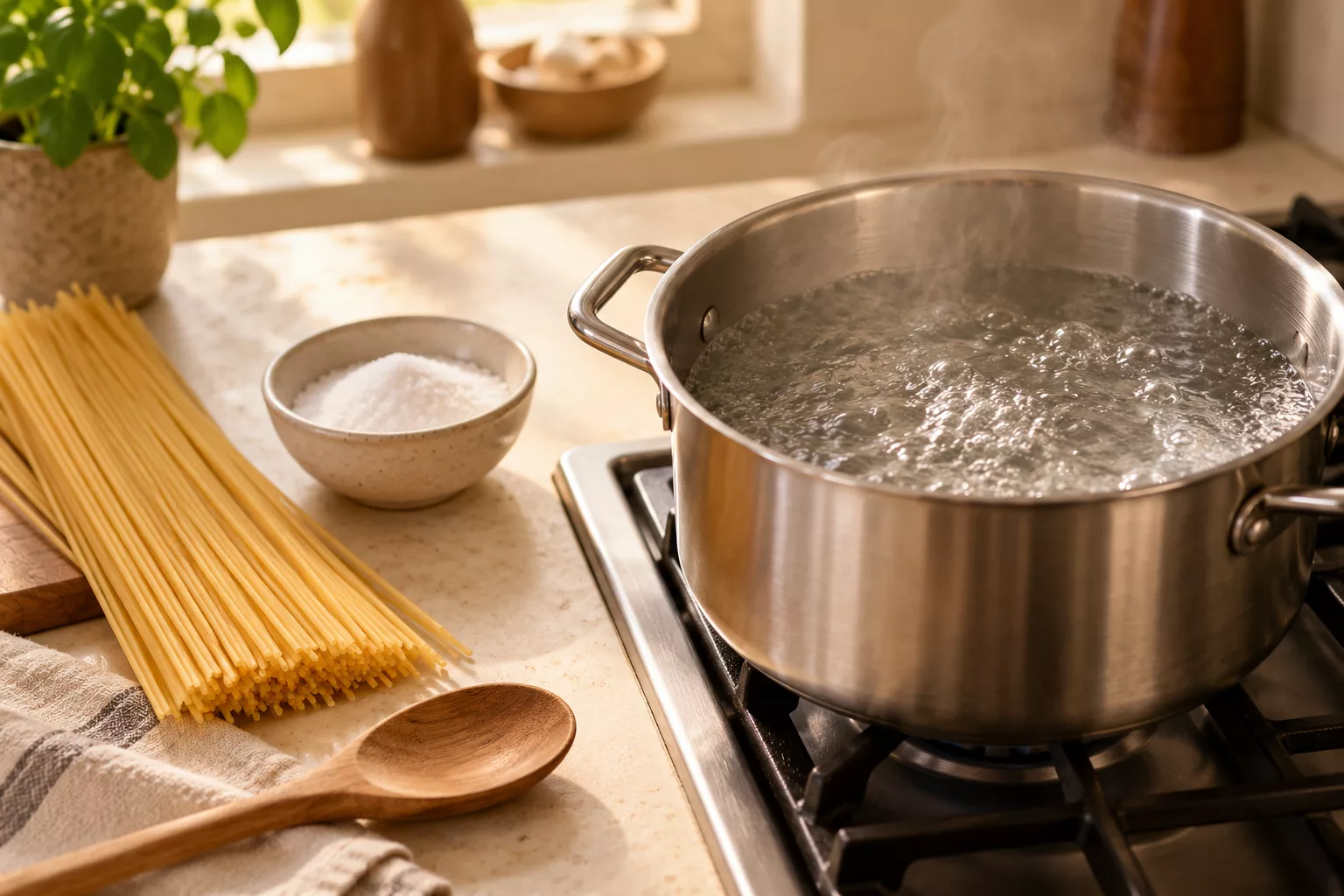
A practical starting point
For an ordinary pot of dried wheat pasta, about 7 grams of salt per litre of water is a useful starting point, also used in Barilla’s guidance for some products. It is a starting point rather than a compulsory Italian formula. Use less when the dressing will contain a substantial amount of salty cheese, anchovies, capers, or cured meat, or when you expect to transfer plenty of cooking water into the sauce.
At that concentration, 2 litres of water take 14 grams of salt; 3 litres take 21 grams. One US quart is approximately 0.95 litres, so about 6.6 grams per US quart gives the same concentration. These figures describe the pot, not the amount of salt someone eats: much of the water will be discarded.
A scale makes the decision repeatable. You can still cook by feel, but first learning what a measured quantity tastes like gives that instinct something dependable to work from.
Measure the water, not just the pasta
Salt concentration depends on how much water surrounds it. A spoonful added to a small saucepan makes a stronger solution than the same spoonful in a stockpot. If you switch to a wider, shallower pan or cook a smaller batch, rethink the salt instead of repeating yesterday’s handful.
Measure your usual pot once with a jug and remember the fill level. You do not need to weigh the saucepan every evening. For a conventional boil-and-drain method, use enough water to keep the pasta moving and stir it promptly. A deliberately low-water method needs its own seasoning decisions, particularly when most of the liquid stays in the dish.
A long uncovered boil also loses water through evaporation while leaving the salt behind. Avoid keeping an already salted pot simmering for an extended period before the pasta goes in. If you top it up, add plain water and reassess rather than automatically adding another full dose of salt.
Different salts need different spoonfuls
Fine table salt, flaky sea salt, and coarse cooking salts pack into a spoon differently. Equal spoonfuls can contain quite different weights. This is why an instruction such as “one tablespoon of salt” is incomplete unless the salt and water quantity are clear.
By weight, ordinary culinary salts provide a much more consistent starting point. For boiling pasta, choose a plain salt you can measure comfortably; an expensive finishing salt offers little practical advantage once dissolved. Save delicate flakes for food where their texture can actually be appreciated.
If you do not have scales, use the same salt and the same measuring spoon each time. Note the amount and water level when a batch tastes right. Treat conversions printed for a different brand or crystal size cautiously, and do not mistake a heaped spoon for a level one.
When to add it and when to taste
Adding salt once the water boils is an easy routine: bring the pot up to temperature, stir in the salt until dissolved, then add the pasta. The important culinary point is that the pasta cooks in seasoned water, rather than receiving all its seasoning after draining.
Keep the tasting process safe and useful. If you taste the water, let a small spoonful cool first. A mouthful of steaming liquid tells you little beyond how hot it is. Later, taste a cooked piece of pasta and then a bite with the sauce. That combined bite is the better guide to dinner.
Do not add a second handful just because the timer is nearly finished. Late additions make it harder to predict the result, especially if the sauce is also being seasoned independently.
Leave room for the sauce
The salt in reserved cooking water joins the sauce when you add it. If the sauce then reduces, its seasoning becomes more concentrated. This matters in cheese-heavy dishes and in pans that need repeated additions of water to finish the pasta.
For a simple tomato sauce, season the tomatoes lightly at first and make the final adjustment after combining. With salty grating cheeses, allow the cheese to contribute before deciding whether more salt is needed. Read the guide to saving pasta water for choosing between that water and plain hot water during finishing.
Do not interpret “salty as the sea” literally. It is an imprecise expression, not a kitchen measurement. A noticeably salty pot is not proof of a better dish, and a gentler concentration can be the more useful choice.
If the result is too salty or too bland
Before cooking, an over-salted pot is straightforward to correct: replace some of the water with plain water. During finishing, stop adding salty pasta water and use plain hot water if liquid is needed. Adding unsalted sauce or more unsalted ingredients can dilute the dish, though it also changes the balance and quantity.
Extra lemon, sugar, or oil does not remove salt. Those ingredients can alter flavour, but repeatedly adding them often turns one problem into several. If a finished plate is too salty, accept that there may be no tidy rescue and make a note for the next batch.
If it tastes flat, add seasoning in small increments to the combined dish. Keep your next adjustment specific: a little more salt in the water, rather than more salt everywhere.
Questions at the stove
Should fresh pasta get the same water?
It can, but check the dough and filling. Fresh pasta varies in thickness, ingredients, and cooking time. Filled pasta may already contain well-seasoned cheese or meat, so the finished combination matters more than matching a dried-pasta formula.
Can I leave salt out altogether?
Yes. Pasta can be cooked in unsalted water. Its flavour will differ, but salt is not a requirement for the pot to cook the noodles. Follow any personal dietary instructions rather than treating a culinary preference as an obligation.