PastaBible Ingredients guide
Olive Oil in Pasta Cooking
Olive oil can be the cooking medium, part of the sauce, or the final aroma above a bowl of pasta. Those are different jobs. Choosing when to add it matters as much as choosing the bottle, especially in a simple dish where there are few other ingredients to balance its flavour.
You do not need to pour oil at every stage. Put it where it contributes: around gently cooking aromatics, in a dressing brought together with liquid, or in a restrained finish. The pot of boiling pasta water is generally not one of those places.
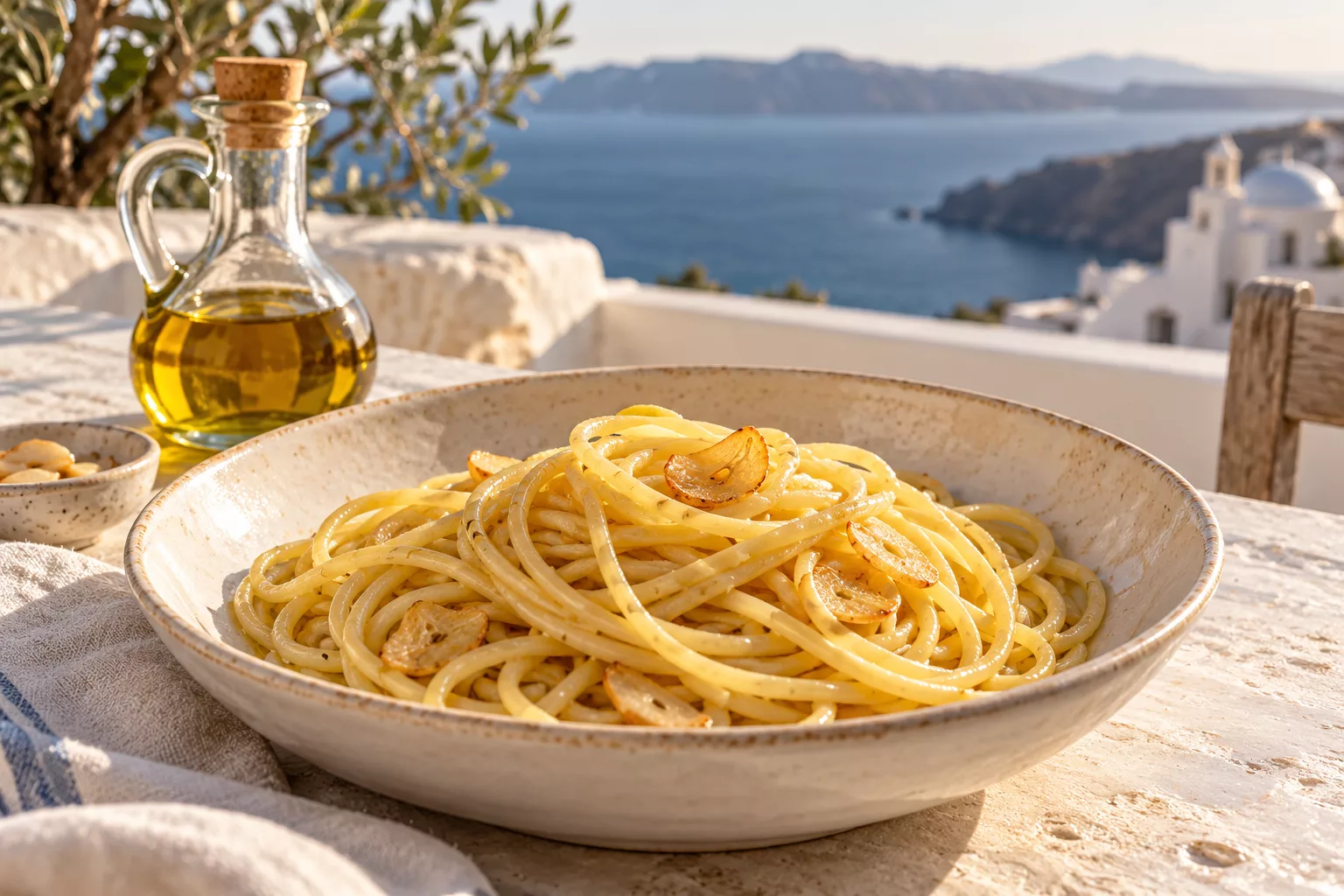
Choose an oil for its role
Extra virgin olive oil offers the aromas and flavour of the olives as well as fat. Depending on the oil, that character can seem grassy, fruity, bitter, or peppery. A robust bottle may suit a strongly flavoured vegetable dish but dominate a delicate lemon dressing.
Products labelled simply “olive oil” can include refined olive oil blended with virgin oil. They generally offer a different flavour profile from extra virgin oil. Read the category on the label rather than assuming every green bottle contains the same product.
There is no need to use your most aromatic bottle for every task. Choose an oil you like and can use comfortably. A useful kitchen arrangement is one dependable cooking oil and, if desired, a more distinctive oil for dishes where its uncooked aroma will be noticeable.
Use heat to cook aromatics, not punish them
Olive oil is suitable for cooking. The idea that extra virgin oil can only be used raw is too restrictive; the International Olive Council describes virgin olive oil as suitable for culinary uses, while noting the value of enjoying its aroma without cooking.
For garlic, chilli, or finely cut onion, start with a level of heat that lets you observe the change. You want the aromatics to flavour the oil and cook as the recipe intends, not race from pale to burned while the pasta is still far from ready.
If the oil is smoking or garlic is darkening too fast, take the pan off the heat and reassess. Turning down the burner does not instantly cool a heavy pan. A specific smoke-point number is less useful here than controlled heat and attention to the ingredients actually in it.
Build a sauce instead of an oil slick
Oil alone can make pasta shiny without making the dish cohesive. Many oil-based preparations also need water, movement, and the pasta’s surface starch to spread the fat through a lighter coating. The aim is a dressed noodle rather than a pool of oil below it.
Keep some cooking water available. Add a little to the pan, combine with the pasta, and stir or toss until the mixture spreads. If the coating looks dry, adjust with a small splash before deciding it needs more oil. If it looks greasy, more oil is unlikely to be the first useful correction.
The pasta-water guide explains the limits of this ingredient: starch concentration varies, and salty cooking water can over-season a pan. Plain hot water may be the better adjustment once the sauce tastes sufficiently salted.
Leave oil out of the boiling water
Adding oil to the water is not an effective way to prevent pasta sticking together. Stir the pasta after adding it, keep it moving as needed, and use a pot and water quantity appropriate to the batch. Oil at the surface does not replace those actions.
Likewise, do not automatically oil drained pasta that is about to meet a sauce. Moving it promptly into the prepared dressing is usually more useful. Leaving a mound in the colander while you finish everything else is a coordination problem, not a shortage of oil.
A recipe may deliberately dress cooked pasta with oil for a particular cold or prepared-ahead dish. Follow that method on its own terms. It does not mean all pasta needs oil before saucing, and it does not make the boiling-water shortcut more effective.
Match the finish to the sauce
A small drizzle added near serving can make olive oil’s aroma more noticeable. Try it when the sauce has room for that flavour, then taste before adding more. A rich dressing may already be complete and need no extra fat.
With tomato sauce, oil can contribute during the aromatic base and, optionally, at the end. With pesto, it is already part of the dressing, so an additional drizzle is a choice rather than a requirement. For the existing Spaghetti al Limone editorial-draft recipe, keep to its specified method before experimenting.
If you want to compare oils, taste small amounts on otherwise similar finished portions. Pouring several strong oils into one pan will not help you learn which flavour you preferred. Keep the comparison simple enough that the difference is noticeable.
Buy and store for flavour
Choose a bottle size you can use at a sensible pace rather than buying the largest container automatically. Follow the producer’s storage guidance and protect the oil from unnecessary heat, light, and air. A tightly closed bottle away from the hob is a practical starting point.
Do not judge freshness or quality solely by colour. Different oils can look different, and a green tint is not a substitute for a reliable label and a flavour you enjoy. Likewise, bitterness or pepperiness can be part of an oil’s character rather than an immediate sign that it is spoiled.
If an oil tastes stale or unpleasant, do not expect a simple pasta dish to hide it. The fewer ingredients you use, the more obvious their individual flavours become. Buy another suitable oil rather than trying to balance a tired bottle with extra garlic and cheese.
Olive-oil questions
How much should I use per portion?
There is no useful universal amount across every sauce. A tomato dish, a pesto dressing, and an oil-led preparation start from different formulas. Follow a coherent recipe, then adjust texture with water and flavour with oil rather than treating both jobs as identical.
Can I replace butter with olive oil?
Sometimes, but the flavour and behaviour change. Treat it as a variation, especially in a sauce built around butter and cheese. Use a method designed for oil if you want a dependable first result.
Is a finishing drizzle necessary for shine?
No. A well-combined sauce can already look glossy. Add oil because you want its flavour or richness, not because every plate is supposed to receive a final pour.