Pasta Bible · Cooking
How to Cook Pasta: From Pot to Plate
A successful pasta dinner depends on what happens before the pasta enters the water. The sauce needs somewhere to wait, the draining equipment needs to be ready, and the people eating need to be close to the table. Once the pasta is nearly cooked, those small preparations matter more than an elaborate flourish with the pan.
This is a practical sequence for ordinary dried wheat pasta served hot with a sauce. Fresh, filled, gluten-free, baked, and soup pastas need adjustments, so check their own instructions. Start with a familiar shape and a straightforward sauce; learn the order of operations before trying several unfamiliar techniques at once.
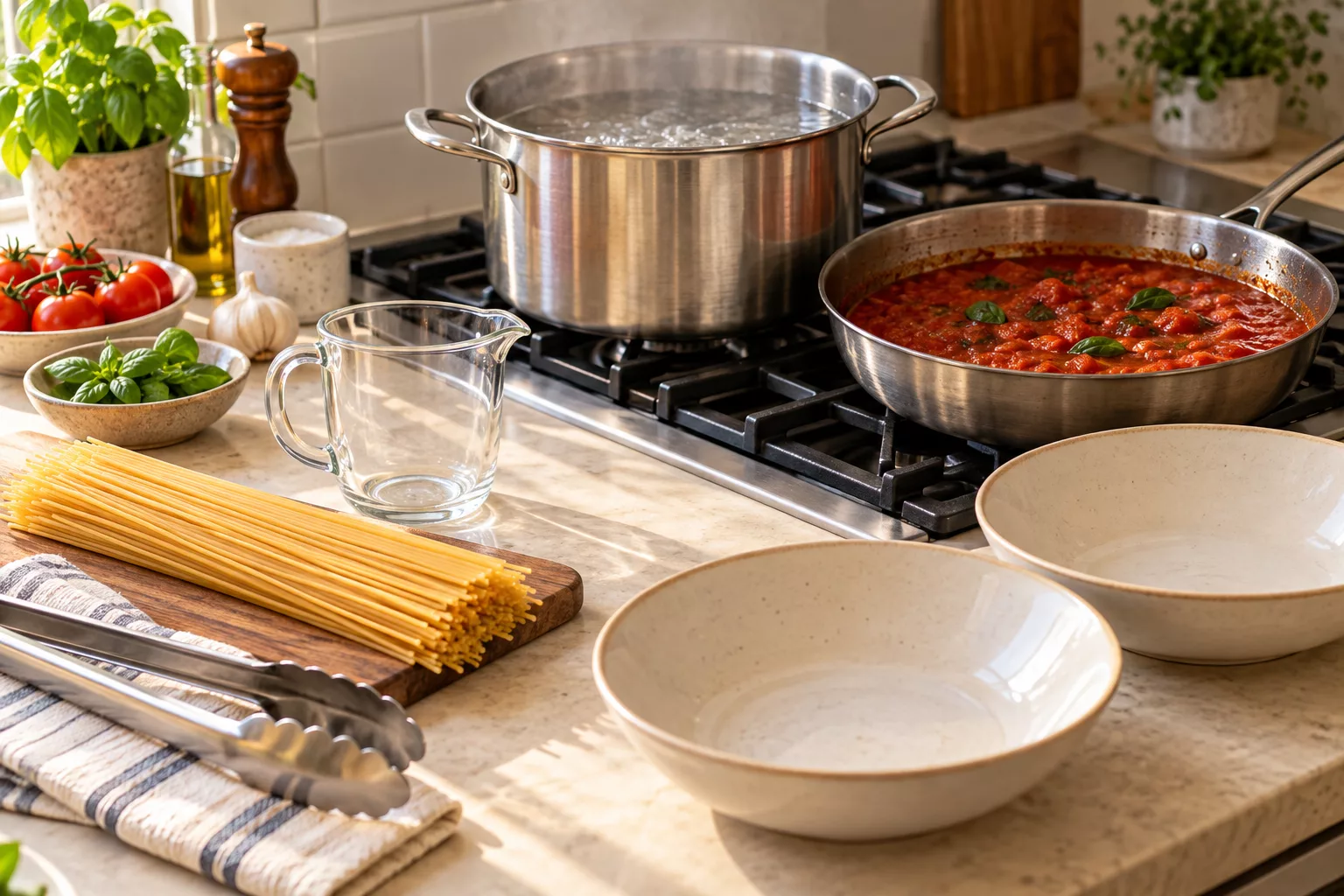
Read the meal from the finish backwards
First establish what must happen just before serving. A tomato sauce can usually wait while pasta boils. A cheese dressing needs attention at the end. Pesto should be ready in its mixing bowl before the pasta is drained. A slow meat sauce needs to be cooked long before you start thinking about the water.
Read a recipe all the way through, including reserved ingredients and equipment. “Add the remaining butter” is much less confusing when you have already divided it. Set out the serving bowls, a tasting spoon, and a place for the hot pan. If you are also making a salad, finish that first rather than chopping leaves during the final toss.
Choose quantities and equipment together
Use the serving guidance in your chosen recipe or on the packet, then consider appetite and the rest of the meal. A pasta course followed by another substantial dish is different from pasta as the whole dinner. Weigh dry pasta before cooking if you want repeatable portions; an apparently small dry pile expands considerably in the pot.
Pick a pot that leaves enough room for water, pasta, and stirring without threatening to overflow. A wide pan is useful for combining pasta with a cooked sauce. For a small meal, an unnecessarily huge pot can mean a long wait for boiling; for a large meal, a cramped saucepan makes stirring awkward. Match the equipment to the actual batch.
Place a colander securely in the sink, or set out tongs for long strands and a slotted utensil for short shapes. Keep a heatproof jug beside the stove for reserved water. Clear the route between pot and sink before lifting anything hot. A stable setup is more useful than trying to drain one-handed while holding a sauce spoon.
Prepare the sauce before committing the pasta
Chop aromatics, grate cheese, wash herbs, and measure any additions. Begin the sauce according to its recipe. You want it ready, or predictably close to ready, when the pasta reaches the right texture. If the sauce still needs substantial cooking, leave the pasta dry and wait. Uncooked pasta is a much more forgiving holding point than drained pasta.
For a first attempt, the tomato sauce guide offers a useful starting framework. Keep the final coating fluid enough to spread between the noodles. If you choose a cold herb dressing instead, set up a mixing bowl away from direct heat. The same boiling sequence can lead to different finishing methods.
Boil, season, add, and separate
Bring the water to a boil and dissolve the salt before adding pasta. Measure deliberately rather than treating “salty as the sea” as an instruction. Our pasta-water salting guide explains a useful starting concentration and how salty sauces change the decision. Oil in the pot is unnecessary; separating the pasta with a utensil is the useful action.
Add the pasta and stir so pieces do not settle together. Long strands can soften and bend into the water; ease them down gently rather than forcing brittle ends. Once the boil returns, adjust the heat to keep the water moving without spilling over. Stay nearby, stir again as needed, and use the package time as a reminder to check.
Make the tasting checkpoint count
Lift out a piece before the suggested cooking time finishes, let it cool enough to taste safely, and bite through it. Ask whether the centre is cooked, whether the texture is pleasant, and whether the pasta will have further cooking in sauce. The aim is an enjoyable finished plate, not winning a contest for the firmest noodle.
For the sensory distinctions, see what al dente really means. Taste again when necessary. Thick tubes, thin strands, and different brands do not move through their cooking stages at identical speeds. If a sauce needs a pan finish, transfer the pasta while it still has enough structure for that next step.
Reserve, transfer, dress, and serve
Scoop some cooking water into the jug before draining. Transfer the pasta to its prepared sauce or mixing bowl. For most hot sauced dishes, do not rinse it or leave it standing in the colander. Combine promptly, adding reserved water in small amounts if the coating needs loosening. Stop when pasta and sauce eat well together.
Hot tomato and meat sauces can usually finish over controlled heat; herb and cheese dressings require more care. Follow the specific recipe, or use our pan-finishing guide for the separate heat decisions. Taste a dressed piece before final seasoning. Serve while the sauce is still mobile, with any appropriate finishing ingredients already within reach.
When the schedule slips
If dinner is delayed before boiling, pause there. If the pasta is already cooking, simplify the remaining work: abandon an optional garnish rather than letting the noodles overcook while you prepare it. If you drained too soon and the pasta is still hard, it needs further cooking with sufficient liquid, not just an extra spoonful of oil.
For your next attempt, note the bottleneck. Perhaps the cheese needed grating earlier, the sauce pan was too small, or the water took longer to boil than expected. Change that one part of the setup. A repeatable dinner comes from recognising your equipment and your sequence, not memorising one timing that must fit every kitchen.
First-dinner questions
Can I cook two different shapes together?
Only when their cooking requirements are compatible. Different packet timings and thicknesses make a mixed pot harder to judge. For a beginner, one shape gives a much clearer tasting checkpoint and a more even result.
What if I only have one burner?
Choose a sauce that can be prepared first and set aside briefly while the pasta cooks, following its handling instructions. A ready pesto dressing is another option. Avoid a first attempt that needs two pans maintained at precise temperatures simultaneously.