Pasta Bible · Explore Italy
Emilia-Romagna: Egg Pasta & Local Traditions
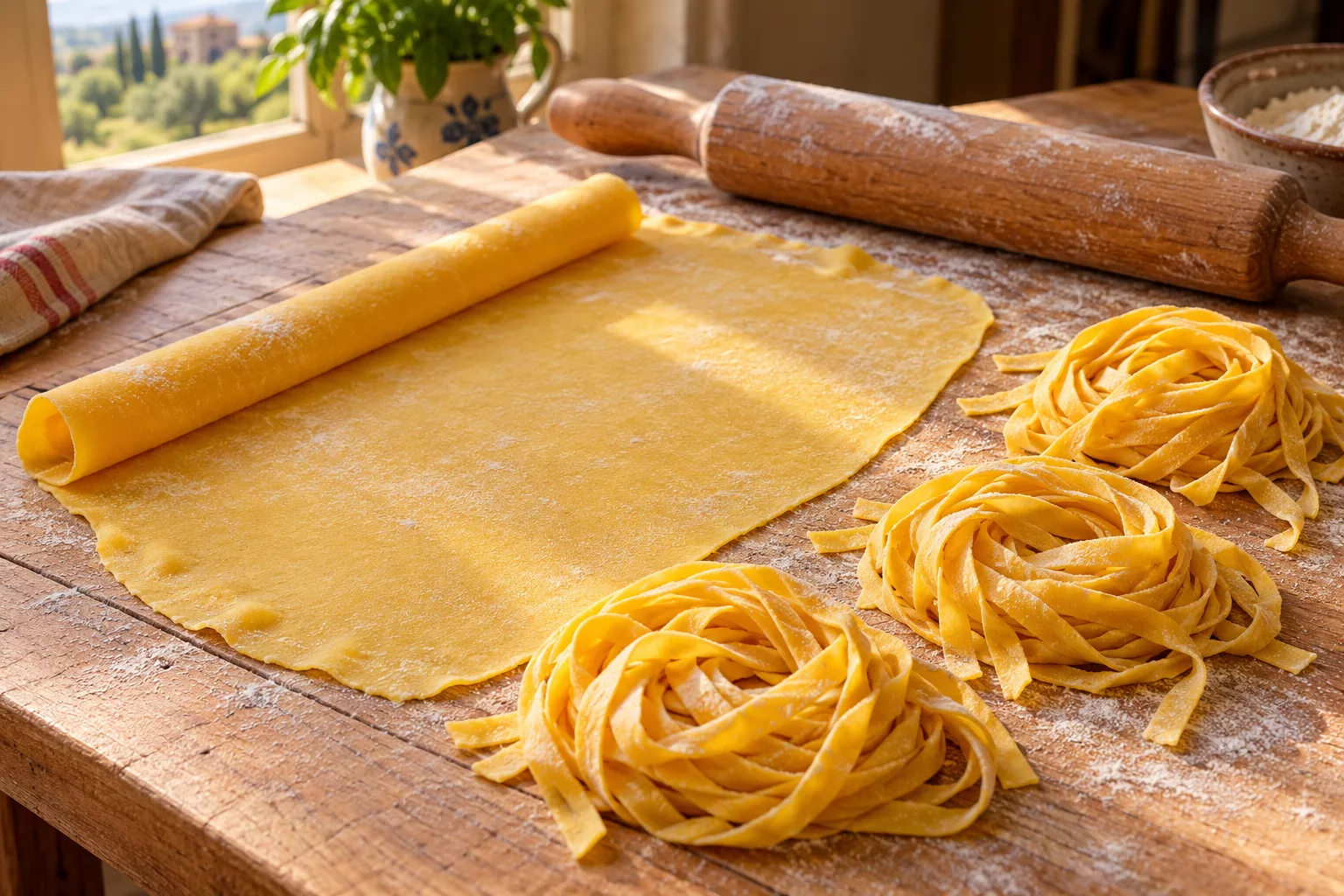
A sheet of egg pasta can become a ribbon, a layered dish, or a small parcel with a carefully chosen filling. In Emilia-Romagna, that flexibility is a useful way to understand a rich repertoire. The pasta sheet is not merely packaging for sauce: its thickness, tenderness, and shape help define the meal.
Look closely at the place names. Bologna and Modena, Ferrara, Parma and Piacenza, and the towns of Romagna have different associations. The region’s familiar dishes share techniques, but their fillings and serving methods should not be flattened into one universal “northern Italian pasta” formula.
Begin with the sheet and its purpose
The Italian word sfoglia refers here to the rolled pasta sheet. Once made, it can be cut or folded in different ways. A ribbon needs to lift comfortably on a fork; a filled shape needs a sound seal; a sheet destined for a baked dish has another role. Those are practical differences even before a sauce enters the picture.
If you are buying pasta rather than making it, ask about the intended preparation and follow the producer’s instructions. Fresh and dried egg ribbons can both be useful, but they do not necessarily share cooking times or weights per portion. The fresh-versus-dried guide helps separate the ingredient question from the moisture question.
Read tagliatelle and ragù together
Tagliatelle with ragù is a recognised Bolognese pairing. The ribbons and finely textured meat sauce form one eating experience rather than a large mound of sauce sitting on unrelated noodles. Bologna’s food institutions document the association, while everyday cooks still work within their own households and preferences.
When exploring the pairing, look at how much sauce adheres to a lifted ribbon. Too little leaves dry folds; too much can hide the pasta’s own texture. The useful lesson is balance between the two components. It is not a demand to make every meat sauce more concentrated or to replace every dried shape with an egg ribbon.
Pasta Bible’s ragù guide explains the sauce family. The current rigatoni ragù recipe is a different, clearly named preparation. It offers slow-sauce practice, but should not be presented as a substitute for a complete regional tagliatelle recipe.
Distinguish the filled shapes
Tortellini and the broth setting
Tortellini are closely associated with Bologna and Modena, including meat-filled preparations served in broth. The broth is part of the dish, not an optional decoration beneath the pasta. A delicate parcel and a clear, well-seasoned liquid ask for a different approach from a thick tomato coating.
When choosing filled pasta, ask what is inside and what liquid or sauce is intended. A visually similar folded shape may contain a different filling. Do not identify a parcel’s dietary suitability from its size, colour, or name alone.
Cappelletti and local variation
Cappelletti have strong associations with Romagna, but their fillings vary by locality. Cheese-led and meat-containing versions both occur. Treat a menu description or a producer’s ingredient list as useful information, rather than assuming one filling represents every town.
Pumpkin and green fillings
Ferrara is associated with pumpkin-filled cappellacci. Other areas, including Parma and Piacenza, have traditions of tortelli with greens and ricotta. These examples show why learning the filling is often more helpful than trying to rank similar-looking parcels by size alone.
At the table, notice whether the dressing allows that filling to remain clear. A sweet pumpkin centre and a delicate green filling may call for different balances. Adding a powerful sauce simply because it is already available can turn the filling into an expensive detail you can no longer taste.
Understand baked pasta as a composed dish
Lasagne associated with Bologna bring together pasta sheets, ragù, béchamel, and cheese, with green egg-pasta versions especially recognisable. The pleasure comes from the relationship between layers. It is not just a way to place any cooked noodle beneath a thick lid of cheese.
If you choose to make a layered dish, follow a recipe that specifies the pasta type and its preparation. Fresh sheets, dried sheets needing pre-cooking, and products intended for direct baking are different starting points. The sauce moisture and baking method have to suit the product, so avoid exchanging them without considering the consequences.
Choose a realistic home project
Start with one unfamiliar task rather than several. Buying good filled pasta and preparing its suggested dressing lets you focus on cooking and serving. Making ribbons with a sauce you already understand lets you concentrate on the dough. Making dough, a new filling, and a new broth together is a much larger project.
Read a method before shopping, and allow space for shaping if you make pasta. A clean work surface, a place for finished pieces, and an organised cooking setup matter. Fresh pasta can cook quickly, so its accompaniment should be ready before the parcels or ribbons enter the water.
Handle delicate pasta with restraint
Filled pasta needs enough room to move without rough handling. Follow the package or recipe for heat and cooking time, then transfer with a suitable utensil. Vigorous tossing that works for a sturdy tube may damage a thin parcel. Match the movement to the structure you are trying to preserve.
Do not treat floating as a universal test of readiness, and do not taste raw filling to judge seasoning. For uncooked meat-filled products, follow their full cooking instructions. If you are unfamiliar with making such fillings, choose a reliable complete method rather than improvising food-safety decisions from appearance.
Let the cheese support the dish
Parmigiano Reggiano has important regional connections and a distinctive savoury role, but sprinkling it heavily over everything can blur differences between preparations. Taste the broth, filling, or sauce first. Our cheese guide explains its identity and how it differs from other grating cheeses.
If vegetarian suitability matters, check rennet and all filling ingredients. A cheese-and-greens description does not answer every dietary question. For an adaptation, choose a suitable product and acknowledge the change rather than assuming the protected cheese name still describes what you used.
Emilia-Romagna questions
Are tortellini and cappelletti simply two names for the same thing?
No. They have distinct local associations and can differ in shaping, filling, and service. Ask about the particular version rather than relying on a quick visual comparison.
Must a regional pasta dinner include a heavy sauce?
No. Broth preparations show a different kind of richness and balance. A restrained dressing can also leave the pasta sheet and filling more apparent than a large amount of sauce would.