Pasta Bible · Explore Italy
Tuscany: Pici, Ribbons & Filled Pasta
Tuscan pasta is more varied than a single bowl of broad ribbons with a rich sauce. Thick hand-rolled strands, filled parcels, and different doughs offer several ways into the region. The name of a town or district can tell you as much as the word Tuscany itself.
Start with the shape and what it asks of the cook. Pici bring a substantial strand; pappardelle spread a sauce over a broad surface; tortelli place attention on a filling. Understanding those differences makes both ordering and home cooking more rewarding than treating every Tuscan pasta as a vehicle for the same meat sauce.
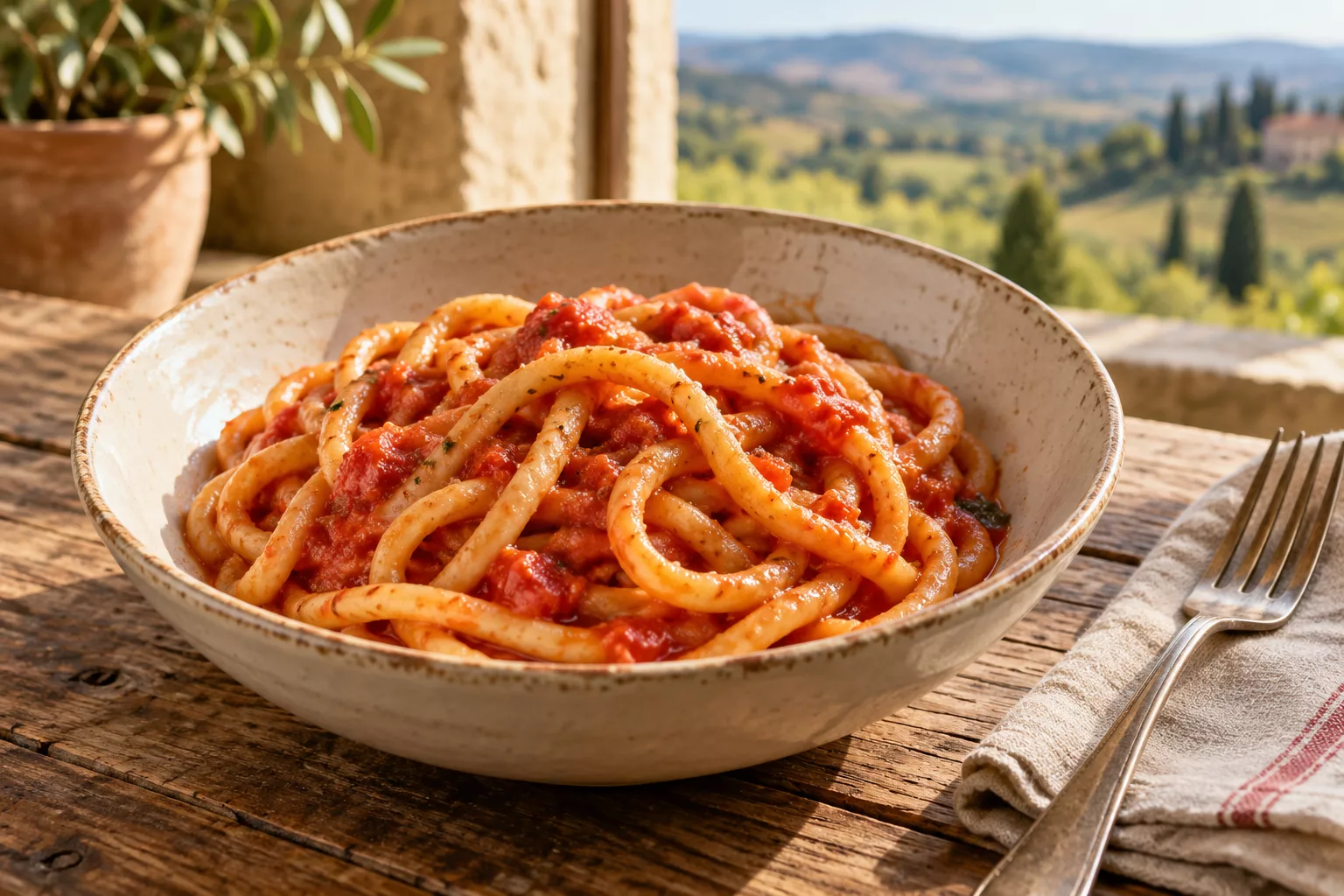
Meet pici as a pasta in its own right
Pici are thick strands strongly associated with the Sienese area and southern Tuscany. They are commonly made with a flour-and-water dough, though recipes and commercial products vary. Their hand-rolled character is part of their appeal: the strand is substantial, with a different eating experience from thin machine-made spaghetti.
When buying pici, look at whether the product is fresh or dried and follow its actual cooking guidance. Thickness changes the time needed to cook the centre. Do not assume that a thicker noodle should be drained while its middle remains unpleasantly hard. Firmness is valuable only when the finished bite is enjoyable.
For a home-cooking comparison, spaghetti can help you think about strand thickness and sauce coverage, but it is not identical to pici. If you use it because that is what you have, describe it as a substitution. The sauce may still make a good dinner while the texture changes.
Understand aglione without guessing by size
Pici all’aglione brings the pasta together with tomato and the large, mild allium known locally as aglione. It is a recognisable association with the Valdichiana area. The name does not simply mean using an unusually large quantity of ordinary garlic and expecting the same result.
If aglione is unavailable, choose a recipe written for the garlic you can obtain, or clearly treat the result as an adaptation. Strong raw garlic, gently cooked garlic, and a mild local product make different impressions in a sauce. Taste and method matter more than trying to reproduce an ingredient by increasing its volume.
Give pappardelle enough space
Pappardelle are broad ribbons, often encountered with meat and game sauces in Tuscany. The broad surface changes the balance of a forkful: a folded ribbon contributes a noticeable amount of pasta alongside the dressing. A sauce that is too dry can gather in heavy patches instead of spreading across it.
For a practical pairing, think about the size of the sauce pieces and how they will sit between the ribbons. A finely textured ragù behaves differently from large chunks of meat. Choose a complete recipe appropriate to the cut and cooking method rather than swapping game into an unrelated quick sauce.
The ragù guide gives the wider context. Pasta Bible’s current rigatoni ragù draft is a separate preparation, not a Tuscan game recipe. Use its techniques where relevant without implying that changing the pasta shape transforms the dish into a documented regional version.
Read tortelli through the local filling
Mugello: potato at the centre
Potato-filled tortelli are associated with Mugello, north of Florence. Their character depends on both the dough and the soft filling. A filling of potato is a different starting point from a leafy-green and ricotta mixture, even when the finished parcels share a similar outline.
When ordering, ask about the dressing as well as the filling. A vegetable-based centre does not guarantee that the sauce is vegetarian. At home, follow the producer’s instructions and select an accompaniment that respects the filling rather than obscuring it.
Maremma: ricotta and greens
In Maremma, tortelli commonly feature ricotta and greens such as spinach, with local variation in seasoning and preparation. The greens should be part of the filling’s identity, not merely a colour. Different moisture levels in ricotta and cooked leaves can matter greatly when making filled pasta.
If you are buying parcels, ask whether the filling is mild or strongly seasoned before choosing a sauce. If you are making them, use a full method that addresses draining the ingredients, sealing, and cooking. Those practical details are more valuable than an instruction to fill the pasta “generously” without regard for its structure.
Notice the edges of regional categories
Tuscany also includes border traditions that do not fit neatly into ribbons and parcels. Testaroli, associated with Lunigiana, begin with a batter cooked as a sheet before further preparation. Their presence is a reminder that pasta traditions can share techniques across neighbouring areas rather than stopping at a modern regional boundary.
You do not need to make every unusual form to understand the lesson. Read the method behind the name. A batter-based preparation should not be treated as ordinary dried pasta simply because both appear among first courses. Choose instructions that describe the actual product in front of you.
Plan a Tuscan-inspired dinner around one texture
Choose thick strands when you want the pasta’s bite to be prominent, ribbons when you want broad folds carrying sauce, or filled pasta when the centre is the main point of interest. This is a practical selection tool rather than a rule about what every Tuscan cook must serve.
Then organise the accompaniment. A slow ragù should be ready before delicate fresh ribbons cook. A tomato dressing should have the desired texture before pici are drained. A restrained finish for filled pasta should be prepared where it can receive the parcels gently. The last stage should bring the components together, not begin the sauce from scratch.
Avoid an all-purpose “Tuscan” label
A creamy sauce with a few recognisable ingredients does not describe the full pasta culture of Tuscany. If you make a contemporary dish inspired by the region, that is a useful and honest description. Reserve more specific names for preparations that actually match what those names promise.
For readers new to Italian geography, the regional overview explains why local names matter. A meal becomes more interesting when Mugello, Maremma, and the Sienese area remain distinct references rather than disappearing beneath a single regional adjective.
Tuscany questions
Are all Tuscan fresh pastas made with eggs?
No. Pici provide a familiar flour-and-water example, while other pastas may contain eggs. Read the specific recipe or product label rather than treating “fresh” as an ingredient list.
Can I serve pappardelle without a game sauce?
Yes. Their regional associations do not make game compulsory. Choose a sauce with a texture and flavour you enjoy, and keep its consistency suited to broad ribbons.
What should I ask about a plate of tortelli?
Ask what the filling contains and how the pasta is dressed. Those two answers tell you far more about the dish and its dietary suitability than the shape name alone.