Pasta Bible · Sauces
Vodka Sauce: Tomato, Cream and Emulsion
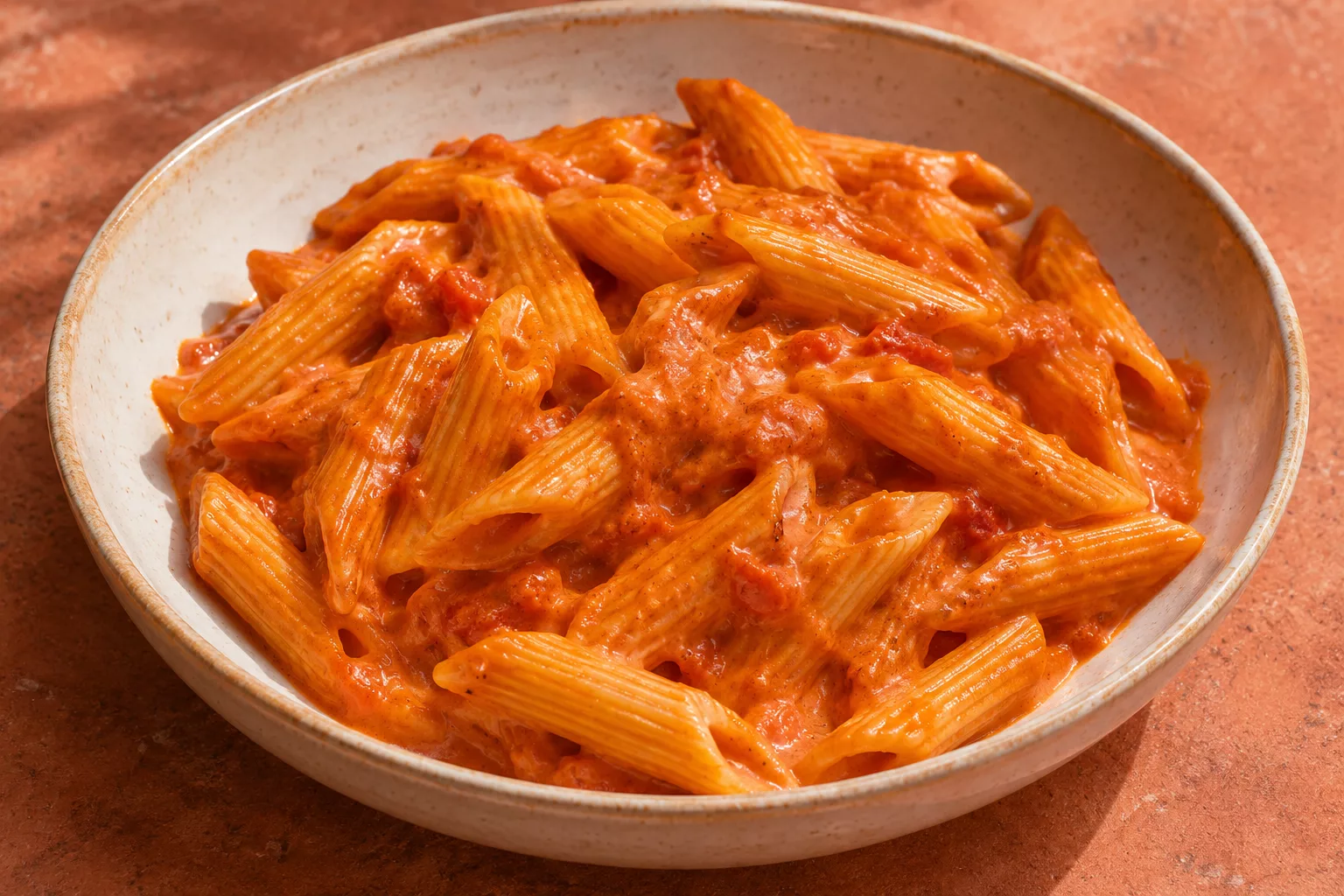
Vodka sauce is a tomato and cream dressing that coats pasta in a glossy orange-red film. Cook the vodka with the tomato base before adding cream, then finish the pasta in the sauce with just enough water to keep it moving. Vodka contributes aroma and a little bite. The cream, tomato solids and mixing do much of the work of making the sauce feel smooth. When serving children or someone who avoids alcohol, make the tomato-cream base without vodka from the outset.
Where the name takes us
Penne alla vodka has a place in both Italian and Italian-American cooking. There are competing accounts involving restaurants in Italy and New York, along with recollections of the dish's popularity in the late twentieth century. They do not establish a single uncontested inventor. The point on which diners can more readily agree is the pairing in the name: short, angled tubes carrying a pinkish tomato dressing.
Even two dishes called penne alla vodka may look quite different. One cook starts with crushed tomatoes and ends up with a light, slightly pulpy sauce. Another builds on concentrated tomato paste, producing a deeper colour and an almost smooth finish. Some versions include pork or chilli and others keep the focus entirely on tomato and dairy. Consider these choices separately when deciding what you want to taste.
Choose the tomato before the cream
A base of crushed or peeled tomatoes brings its own water. Give it time to soften and thicken enough to cling to the back of a spoon. Break up the larger pieces as they cook. If you want a smoother dressing, begin with passata. A little texture is quite at home on penne, provided the pieces are small enough to ride along with a forkful.
Tomato paste takes the opposite approach. It supplies concentrated flavour and little free liquid. Warm it with the aromatics in oil or butter, stirring until the colour deepens slightly and the raw smell softens. If it starts sticking in dark, dry streaks, lower the heat. Loosen it before it scorches. A paste-based sauce needs water to become a dressing. Trying to supply all that liquid with cream can leave it heavy and barely recognisable as tomato.
Give the vodka a cooking stage
Alcohol can carry aroma compounds, and a modest addition of vodka brings a different aroma to tomato than either water or a strongly flavoured spirit. Adding more does not necessarily make the tomato more fragrant. A harsh spirit note can drown out the fruit. Measure a little into a separate cup, move the pan away from the burner, and add it there. Return it to gentle heat and stir the liquid through the base.
Simmer so the flavours come together and the raw spirit smell recedes. Smell is a cooking cue, never a measure of remaining alcohol. How much remains depends on the quantity, cooking time, pan and method. A brief simmer cannot guarantee an alcohol-free meal. There is no need to ignite the vodka, and lighting it would not establish that all the alcohol had gone.
For a table where alcohol is being avoided, use plain water to loosen the tomato instead. If the sauce is already made with vodka, set up a separate pan with fresh ingredients for the alcohol-free portion. Extra boiling cannot give you the same assurance. A bright tomato base, fragrant aromatics and a restrained amount of cream make a satisfying dressing in their own right.
Bring the cream and pasta together
Once the tomato has reached the flavour you want, ease down the heat. Stir in cream gradually so you can see the change from red to warm orange and taste as you go. Cream contributes dairy sweetness, fat and water. Oil or butter used earlier carries the flavour of the aromatics. As you stir, small droplets of fat spread throughout the liquid, and the tomato solids give the sauce body.
A fierce boil can shrink the liquid faster than you expect, especially in a broad frying pan. If beads of oil appear, pull the pan off the burner and stir in a little warm water. Check the consistency again before adding cheese. A handful of grated cheese adds salt and solids and can turn a perfectly mobile sauce stiff. For more on correcting the balance, see how to emulsify pasta sauce.
Why penne work
Penne offer two places for the dressing to cling: the outer surface and the inside of each angled tube. A sauce that runs slowly off a spoon can reach both. One so thick it sits in a heap coats only the outside. Move the pasta into the pan while still firm enough for a short finish and fold the tubes through the sauce. Check the centre of one before serving.
Rigatoni work well for a coarser tomato base and offer a larger opening. If using long pasta, keep the sauce slightly looser and chop any onion or pork finely so the pieces do not all slip to the bottom. Serving the dish promptly matters more than finding a particular tube in the cupboard.
Vodka sauce questions
Why is mine pale pink and bland?
Taste for tomato before adjusting the salt. Excess cream can mute both acidity and aroma. Cook a little more tomato base separately and fold it in until the fruit comes forward. Colour alone can mislead you because different tomato products start at different shades of red.
Can I substitute wine for vodka?
Wine can taste good with tomato and cream, but it brings its own acidity and fruit. The result will taste different, and wine still introduces alcohol. For a spirit-free tomato sauce made with no alcoholic ingredient, use water and choose the aromatics you would like to taste in the finished dish.
Should I add more vodka at the table?
A late pour makes the spirit itself much more obvious and bypasses its cooking stage. If you want a livelier finish, first taste a dressed tube. Black pepper or a little chilli can give it a lift without changing the balance between tomato and cream.