Pasta Bible · Sauces
Butter and Sage Sauce: Heat, Browning and Pasta Pairings
For a soft, sweet filling such as ricotta, melt butter gently with sage and spoon it over the hot pasta. For pumpkin ravioli or potato gnocchi, let the butter's milk solids turn hazelnut brown for a deeper, toasted flavour. For a lighter coating on ribbons, work a little warm pasta water into the fragrant butter. These finishes use the same few ingredients, but they ask you to stop the heat at different moments.
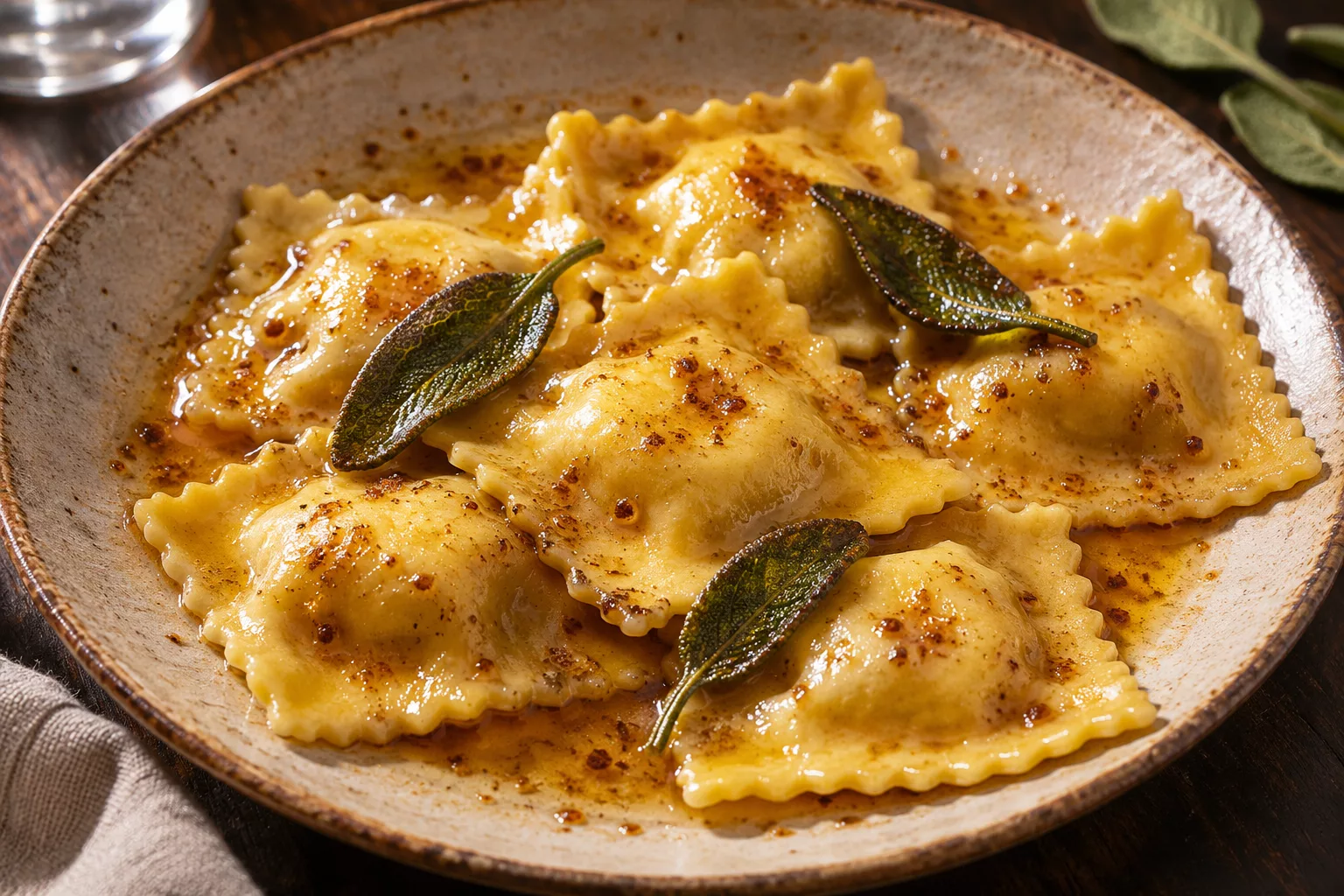
Three finishes from a piece of butter
Whole butter contains fat, water and milk solids. Melt it slowly and it keeps a fresh dairy flavour, especially if it goes straight from the pan onto the pasta. This is a good choice when the filling is the most interesting part of dinner. A thin dress of butter lets you taste the greens, cheese or herbs inside the pasta from the first bite.
As butter heats further, it foams while water escapes. Under the foam, tiny milk solids begin to colour. Those toasted particles give brown butter its nutty scent. A golden pool of fat alone tells you little about how far along it is. Tilt a pale-bottomed pan slightly or draw a spoon through the foam and look at the specks on the bottom. Clarified butter has lost most of those solids and behaves differently.
An emulsified finish brings some water back into the picture. Swirl warm water and butter together until they form a fluid coating that moves across the pan as one. This works with pale butter or with butter already browned and allowed to cool a little. Use the amount of water that makes the dressing spread over your particular pasta. A ladleful poured over a small portion can wash the sage flavour away.
What to do with the leaves
Remove tough stems and pat washed sage leaves dry. Whole leaves give the cook a handle on intensity. You can lift one out and taste the butter, then decide whether the perfume is strong enough. Large leaves have a more prominent bite on the plate. Slender strips are easier to distribute if you want small pieces of sage in several mouthfuls.
For tender, fragrant leaves, warm them gently with the melting butter. For a crisp garnish, let them sizzle in the fat and lift them out as soon as they crisp. Set them aside and add them at the table. A leaf left in the pan while you wait for milk solids to brown may go from fragrant to acrid. It can also lose its crispness if you later add cooking water.
Catch brown butter before it burns
Stay beside the pan once the foam rises. Swirl to move the solids and watch for pale brown flecks and a toasted aroma. A heavy pan can carry on browning the butter after the burner is off. If the pasta still needs time, pour the butter, including the fragrant sediment, into a heatproof bowl. Leaving it in the hot pan while you drain the pot is often long enough to overshoot.
Dark brown specks with a sweet, nutty smell are very different from black sediment with an acrid smell. Taste a cooled drop if you are uncertain. If it tastes burnt, start with fresh butter in a clean pan. More sage cannot disguise scorched milk solids. When browning just a small quantity, choose a small pan so the butter has some depth and you can see the change.
Dress parcels, dumplings and ribbons differently
With filled pasta, keep the sauce ready before the parcels are done. Lift them out with a slotted spoon so you can judge how much water comes along. Spoon the dressing over them or ease them through it with a tilt of the pan. Forceful tossing can split a seam and turn a delicate cheese filling into an accidental thickener.
Soft potato gnocchi suit a little brown butter, particularly with crisp sage for contrast. If the dumplings have a tender exterior, arrange them in shallow bowls first and spoon on the butter. Pan-seared gnocchi already carry some fat from browning. Start with a smaller dressing and keep the crisp sides facing up. A pool underneath softens a crust you took time to build.
For tagliatelle and other broad ribbons, try the emulsified version. Fold the damp pasta through the dressing and add warm water a spoonful at a time until the ribbons separate easily. A little finely grated cheese can add savour at the table. Taste first if either the pasta filling or the butter is well salted. Sage is assertive enough to carry the dish without a heavy topping.
Butter and sage questions
Why is the pasta greasy even though the butter tasted good?
Look underneath it. If the butter has drained to the bottom, lift the pasta and swirl a little warm water into the dressing before turning the pieces through it again. If there is simply much more butter than the pasta can carry, spoon some out first. Our emulsion guide explains what that little addition of water does.
Can I use dried sage?
Yes, for fragrance. Rub a little between your fingers and start sparingly. The small dry pieces infuse quickly and are difficult to fish out if the flavour is too strong. They will not give you the effect of a whole crisp sage leaf. Keep them away from prolonged high heat, especially in a pan that is already browning.
When is pale butter the better choice?
Choose it when you want the sweetness of fresh dairy alongside a subtle filling, such as ricotta and lemon zest. Brown butter is lovely against roast squash, but the same toasted note can dominate a more delicate parcel. Taste the filling, then choose a finish you would enjoy with it on a spoon.